

Deepfakes and AI deception used to belong to research labs and movie studios. Now the same technology sits behind fraud that has already cost real victims real money.
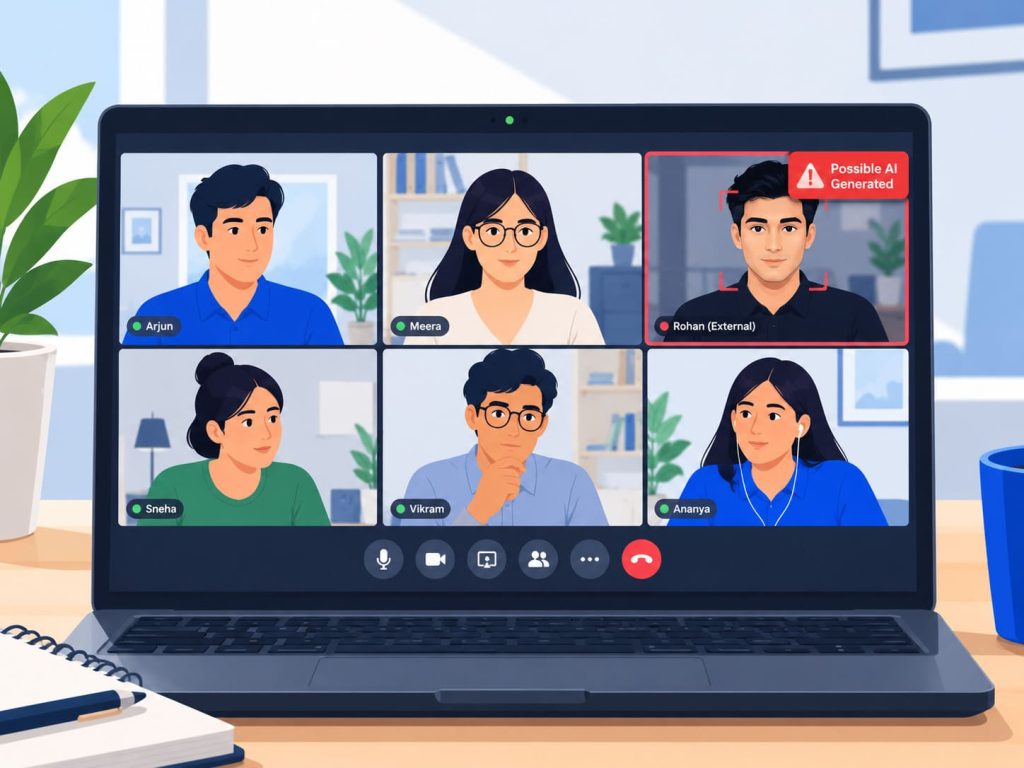
A finance employee at Arup, a global engineering firm, joined what looked like a routine video call in Hong Kong with the company’s CFO and several colleagues. He transferred HK$200 million, roughly ₹211 crore, across 15 separate payments.
Every single person on that call was an AI-generated deepfake.
This post covers how deepfake video and audio are actually created and used in fraud, how AI-generated identities show up in communications and relationships, what to check in forged documents and fake PDFs, and practical ways to verify whether what you are seeing is real. It is part of our wider guide to how fake messages, emails and calls deceive people every day.
How Are Deepfake Video and Audio Actually Created and Used in Fraud?
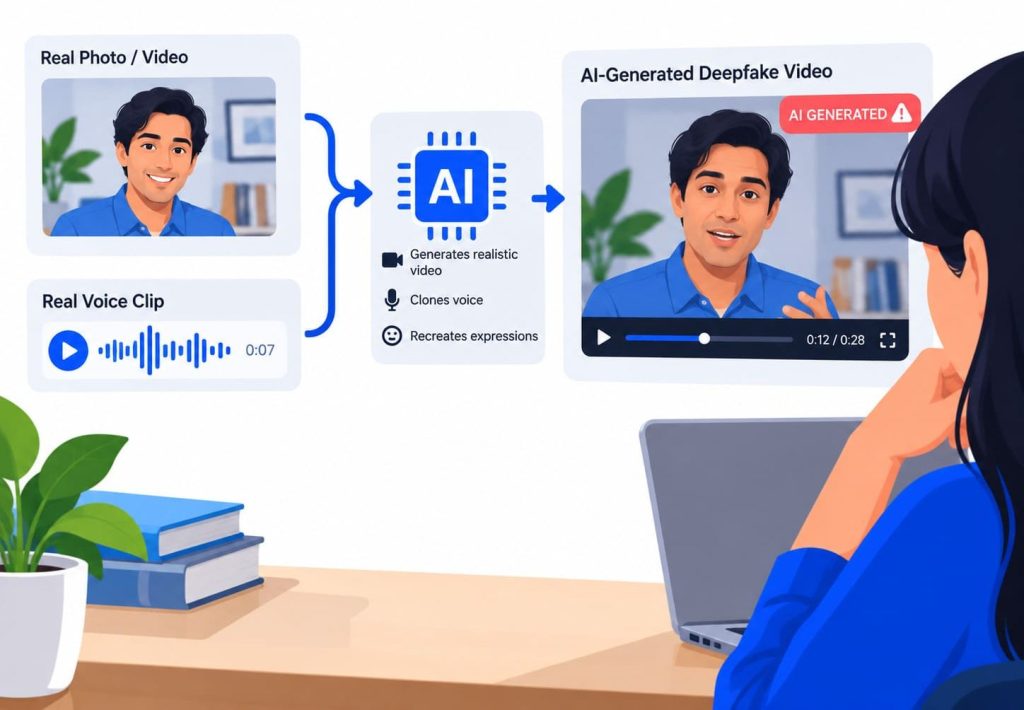
Modern deepfake tools need surprisingly little source material, a few minutes of someone’s real voice pulled from a social media clip, or a handful of clear photos, to generate a convincing likeness.
Deepfake-driven fraud caused 1.65 billion dollars in losses worldwide in 2025, with fake investment videos of celebrities and officials accounting for the largest single share, 1.13 billion dollars, according to Surfshark’s analysis of AI Incident Database and Resemble AI data.
The same underlying technology reaches Indian phones too, cloned voices used in family emergency calls and fake celebrity endorsement videos promoting bogus investment schemes on social media, both built from the same publicly available source material.
In the Arup case, none of the HK$200 million had been recovered as of early 2025, illustrating how completely deepfakes and AI deception can bypass the usual internal checks a business relies on before authorising a large transfer.
Voice cloning is used just as often as video, and considerably more cheaply, a short clip lifted from a public reel is often enough to generate a call demanding urgent payment from someone who sounds unmistakably familiar.
Businesses face a distinct version of deepfakes and AI deception too, an internal video call, exactly like the Arup case, where every visual and audio cue an employee would normally trust to confirm a colleague’s identity has been fabricated in advance.
How Do AI-Generated Identities Show Up in Communications and Relationships?
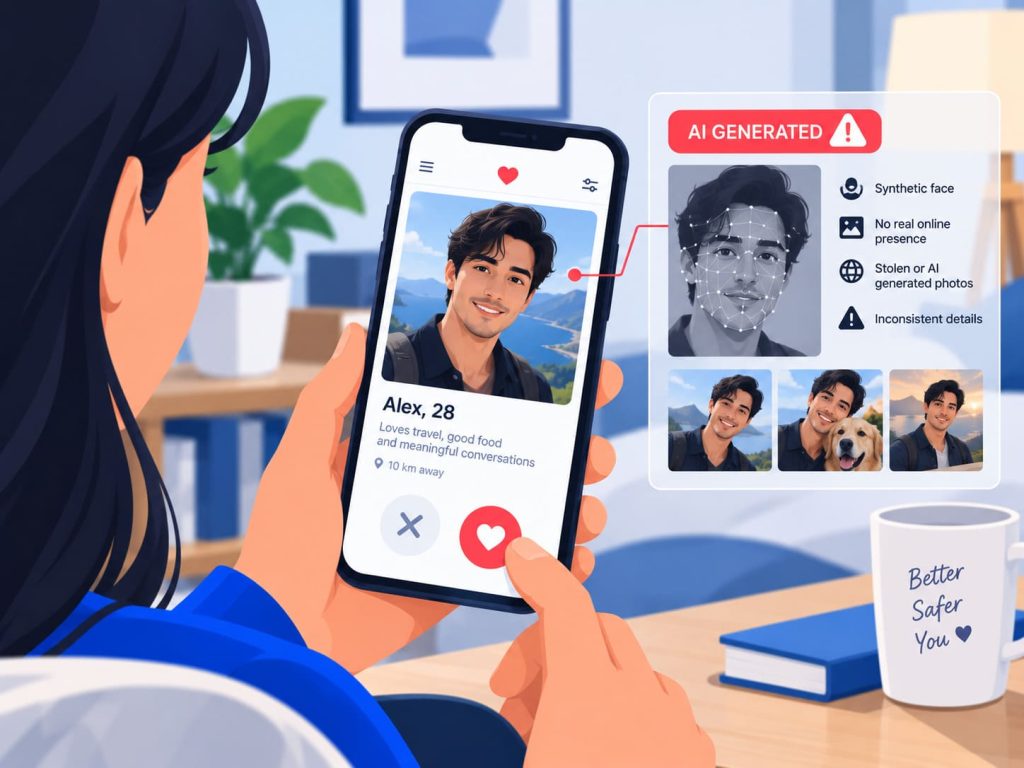
A synthetic face attached to a fabricated profile can sustain a convincing conversation for weeks, building exactly the kind of familiarity a romance or investment scam depends on before the financial ask ever appears.
These personas are increasingly used in the wider AI-generated content landscape too, a subject covered in more depth in our guide to how AI-generated content is everywhere and how to spot it, since a synthetic profile picture is often just the first layer of a much larger fabricated identity.
Sextortion cases now sometimes involve deepfake images created from a victim’s genuine social media photos, threatening exposure of content that was never actually real, a specific and distressing use of this technology covered in our guide to sextortion and non-consensual image sharing, your rights and options.
None of this requires the target to have done anything wrong. A handful of public photos is often all a fabricated identity needs to get started.
Weeks of consistent, warm messaging from a synthetic persona can feel more convincing than a rushed scam ever would, precisely because the relationship was built slowly enough to earn genuine trust before any request for money appeared.
What Should You Check in Forged Documents and Fake PDFs?
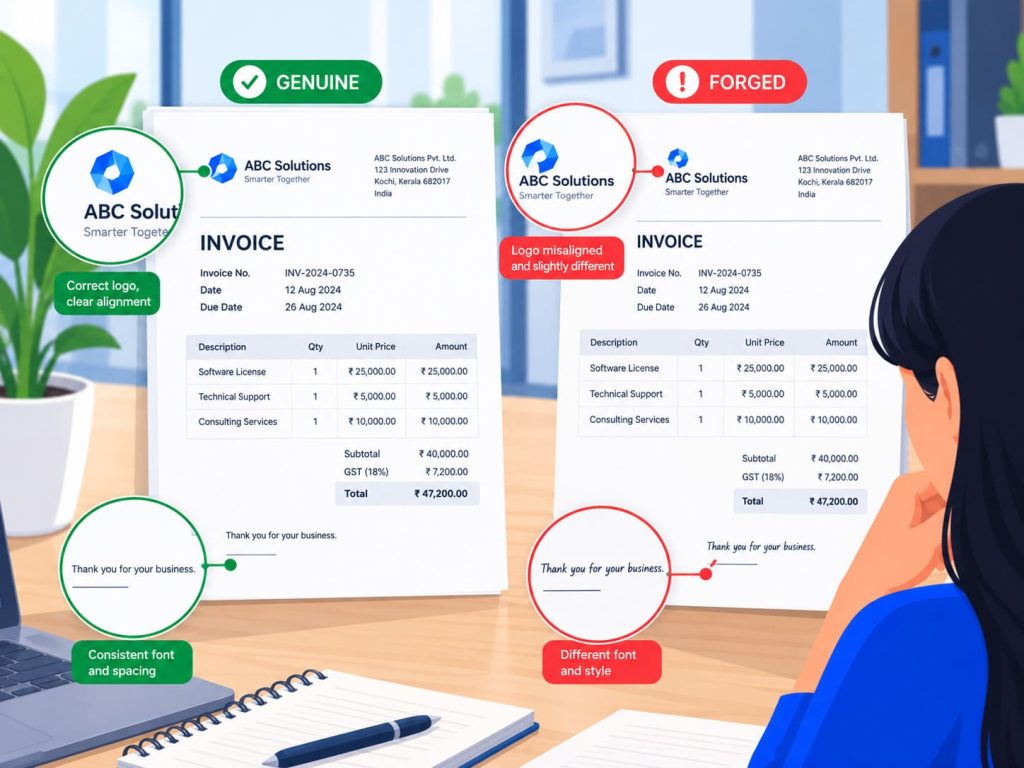
A forged invoice, ID document, or bank statement now only needs to be formatted correctly to pass a quick glance, since the underlying content is trivial to fabricate with widely available tools.
Font inconsistencies, misaligned tables, and slightly wrong official seals or letterheads are still worth checking closely, since these small production errors often survive even in an otherwise convincing forgery.
Metadata can reveal a forgery too, a document supposedly issued years ago that shows a creation date from last week, though this check requires slightly more technical comfort than most people have on hand in the moment.
Verifying a document through the issuing organisation directly, a bank, a government office, an employer, rather than trusting the document on its own, catches most forgeries that would otherwise pass a visual check.
Cross-referencing a document’s details against something you already know independently, an account number, a reference from a previous genuine statement, adds another layer that a fabricated document usually cannot match.
Forged documents rarely arrive alone either. They tend to accompany a message or call built with the same deepfakes and AI deception toolkit, so treating an unexpected document with the same caution as an unexpected call is worth building as a single combined habit.
What Are Practical Ways to Verify Whether Something Is Real?
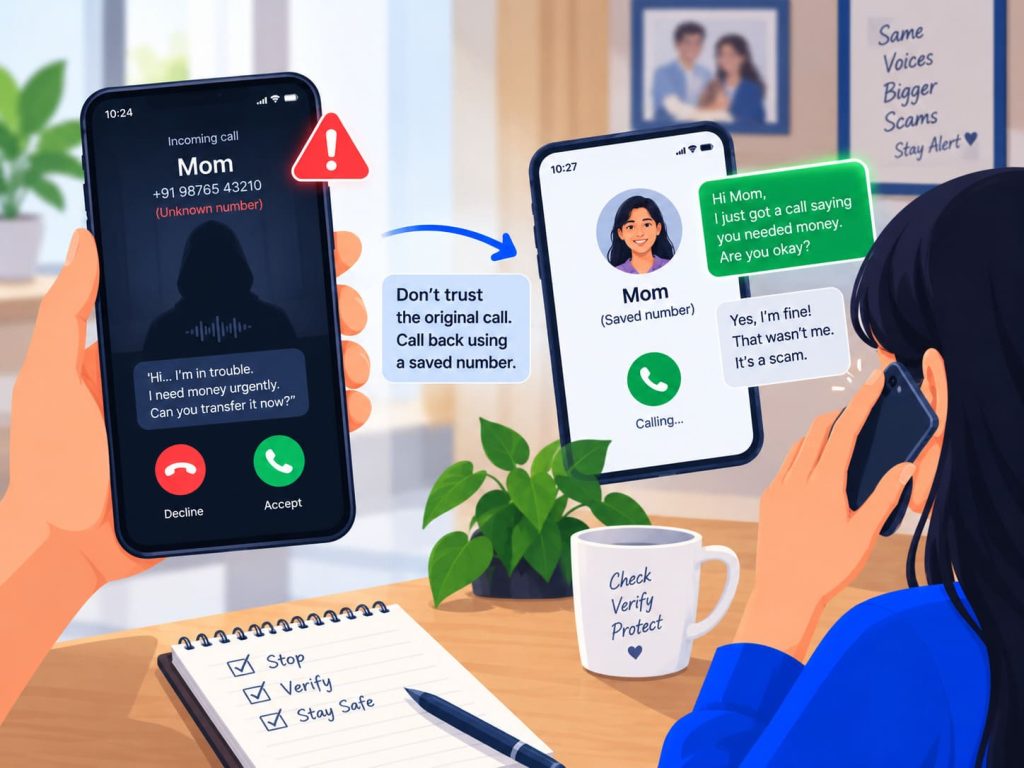
Verification through a separate channel the other person does not control is the single most reliable check available, phoning someone back on a number you already had, rather than continuing on the call or chat where the request appeared.
Free tools like Resemble AI’s deepfake detection tool can check whether an audio clip has been artificially generated, useful when a recording arrives without any easy way to verify the speaker directly.
Agreeing on a private verification phrase with close family or colleagues in advance, something a cloned voice would have no way of knowing, gives you a fast, low-effort check for any urgent, unexpected request.
Workplaces benefit from a similar rule for financial transfers, a mandatory second approval through a separate channel for any large or unusual payment, regardless of how senior or familiar the person requesting it appears to be on the call.
If you believe you have already acted on a deepfake or forged document, contact your bank immediately and report it through India’s National Cyber Crime Reporting Portal or the 1930 helpline.
Frequently Asked Questions
How much material does someone need to create a convincing deepfake of me?
Surprisingly little. A few seconds of clear audio or a handful of photos, the kind most people already have posted publicly, can be enough for current AI tools to generate a passable likeness.
Can I trust a video call just because I can see the other person’s face?
Not automatically, especially for any call involving an urgent request for money or sensitive information. Verify through a separate channel, a text or call to a number you already had, before acting.
Is there a free way to check if an audio clip is AI-generated?
Yes. Tools such as Resemble AI’s detection tool can analyse a clip and flag signs of artificial generation, though no detection tool is completely infallible, so independent verification still matters most.
What This Comes Down To
Deepfakes and AI deception have made “I saw it” and “I heard their voice” far less reliable proof than they used to be, sometimes generated in a matter of seconds from almost nothing.
The one habit that protects you: verify anything urgent through a separate channel the other person does not control, no matter how convincing the face or voice on the other end sounds.
If this was useful, share it with someone who needs to know.


1 comment
Comments are closed.