

A charge appears on your statement that you never made. Somewhere else, an app you use every day for free is generating billions in revenue, and none of it comes from your wallet directly. Financial exploitation online covers both of these, the obvious theft and the quieter extraction.
Both are financial exploitation online, even though only one of them looks like theft at first glance. Money can be taken from you directly, through fraud and account takeover, or it can be extracted more quietly, through your attention and behaviour being sold without your full understanding of the exchange.
This guide covers both sides: unauthorised payment fraud and how to recover from it, SIM swap attacks that turn your own phone number into a weapon against you, and the economic model that makes “free” platforms some of the most profitable products in the world.
By the end, you will understand exactly how each form of exploitation works, and where to go for a deeper, practical guide on protecting yourself against it.
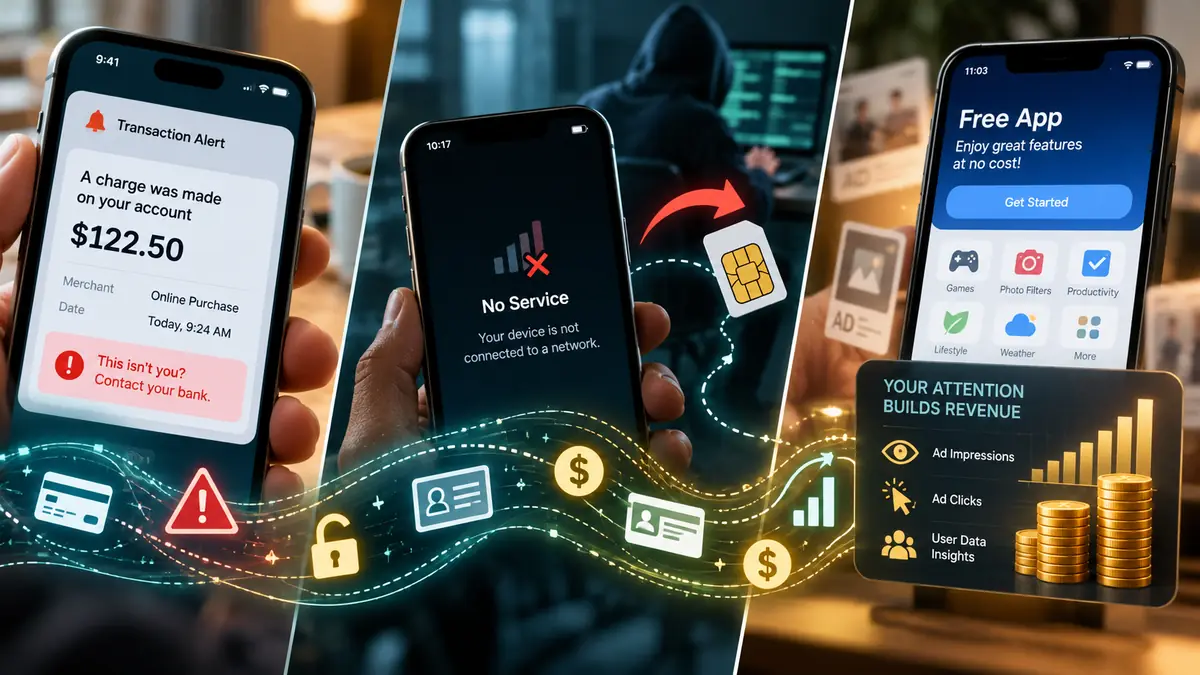
Why Do Direct Theft and Quiet Extraction Belong in the Same Conversation?
Payment fraud and SIM swap attacks are the visible, dramatic side of financial exploitation. Money disappears from an account, and the harm is immediate and unambiguous, prompting a call to the bank and a clear sense that something has gone wrong.
The attention economy works differently. No single transaction feels like theft, because the value extracted is spread across millions of small moments, a few minutes here, a notification check there, converted into advertising revenue at a scale that dwarfs most direct fraud losses combined.
Both forms share a common thread: they rely on you not fully understanding the mechanism until after the value has already moved. A SIM swap depends on you not noticing signal loss quickly enough. An attention-driven platform depends on you never quite calculating what your time is actually worth to it.
There is also a meaningful difference in who bears the cost of getting it wrong. When a bank fails to catch payment fraud, the bank increasingly absorbs at least part of that loss, particularly under newer reimbursement rules. When a platform extracts your attention more effectively than a competitor, there is no equivalent cost to the platform at all, only a benefit. That asymmetry, one side facing real financial consequences for failure and the other facing essentially none, is a large part of why attention extraction has grown so much faster and with so much less resistance than payment fraud.
Payment fraud losses reached 2.9 billion dollars in 2025, the fastest-growing fraud category tracked that year. Social media advertising, funded entirely by user attention and data, exceeded 230 billion dollars globally in the same period, a figure nearly eighty times larger, illustrating just how much more value the quiet extraction generates compared to outright theft.
The regulatory response to each has also developed on completely different timelines. Payment fraud has centuries of banking law behind it, chargeback rights, fraud liability rules, and criminal statutes that long predate the internet, simply extended to cover digital payments. The attention economy has almost none of that. Most of the laws governing what a platform can do with your attention and behavioural data are barely a decade old, and in many countries do not exist in any enforceable form yet, which is part of why direct fraud feels more “illegal” even though the attention economy extracts vastly more value overall.
Worth naming too: these three are not always separate incidents in a single person’s life. A SIM swap often exists specifically to enable payment fraud, using a hijacked phone number to intercept the very two-factor codes meant to prevent unauthorised transfers. Understanding all three together, rather than treating each as an isolated risk, gives a more accurate picture of how financial exploitation actually unfolds in practice.
There is a useful ordering principle hidden in all of this too. Fixing the attention economy angle, deleting an app, setting a screen time limit, delivers a slow, cumulative benefit over weeks. Fixing your exposure to payment fraud and SIM swap attacks delivers an immediate, one-time reduction in a specific, acute risk. Neither replaces the other, but if time is limited, closing the acute risks first, a carrier PIN, transaction alerts, an authenticator app, generally protects more value per minute spent than adjusting a habit that only compounds gradually.
What Happens in the First Hour After Payment Fraud?
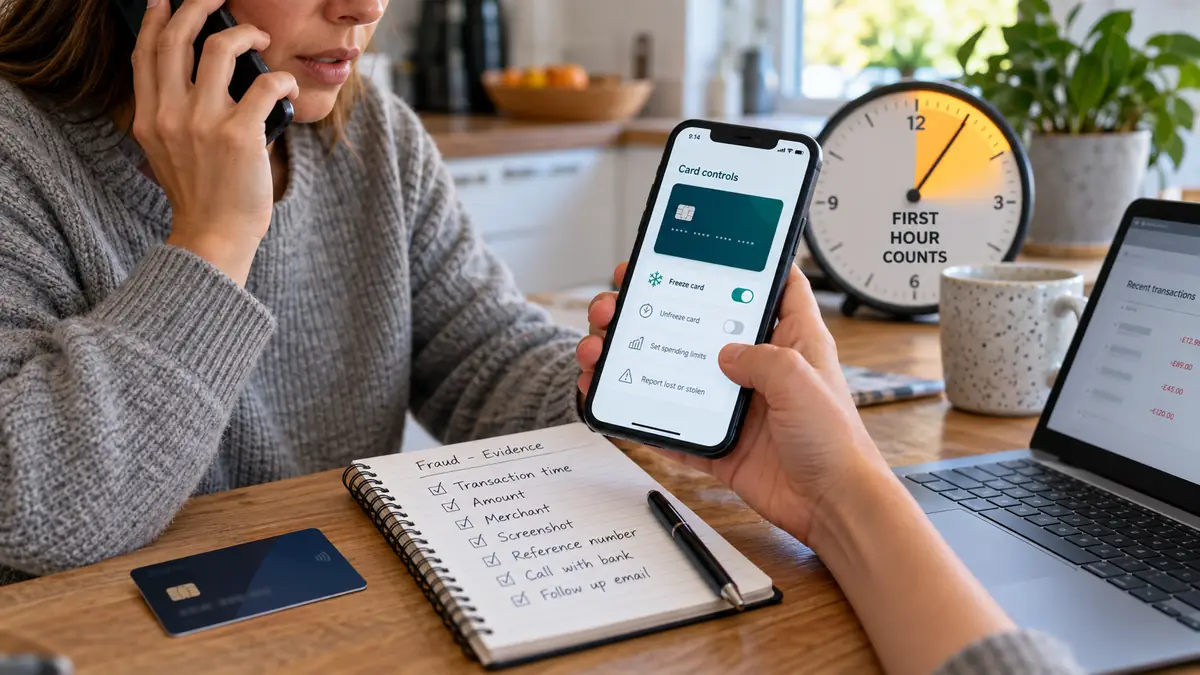
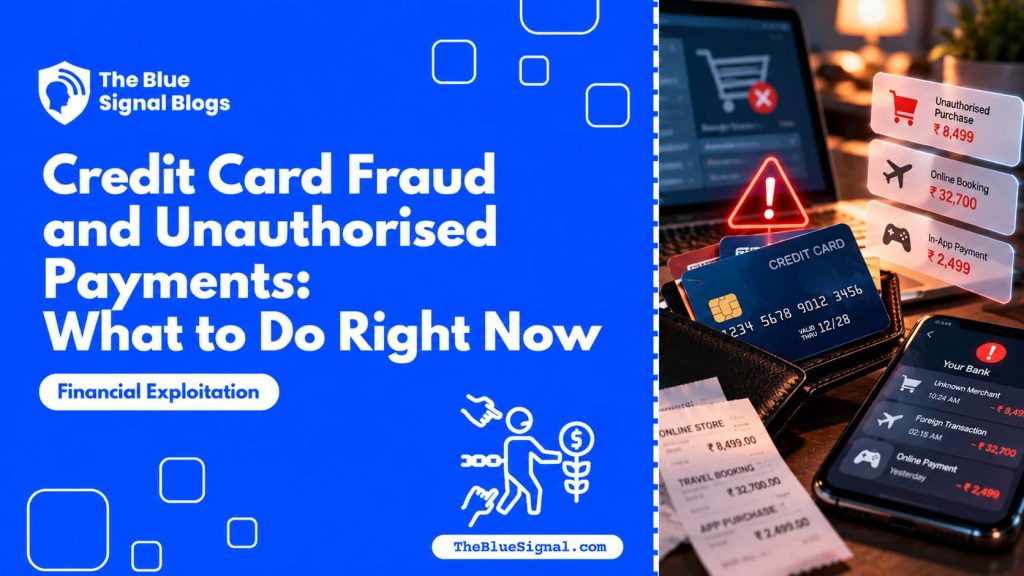
Unauthorised charges are most recoverable in the first sixty minutes after discovery, before the money moves further and the trail goes cold. Calling your bank on the number printed on your card, freezing the card through your app, and changing your online banking password are the three immediate steps that matter most.
Chargeback rights vary significantly by payment method. Credit cards generally offer the strongest protection, while instant payment app transfers, once authorised, are often the hardest to reverse. The UK’s mandate requiring bank reimbursement for authorised push payment fraud, in effect since October 2024, shows how regulation is starting to shift more of this burden onto financial institutions rather than victims alone.
India’s UPI ecosystem sits in an interesting middle ground here. Transfers are instant and, once completed, extremely difficult to reverse in the way a card chargeback can be, but the National Payments Corporation of India and individual banks have built increasingly fast fraud-freeze mechanisms specifically because UPI’s speed cuts both ways, helping legitimate users just as much as it helps a scammer trying to move money before anyone notices. Reporting a suspicious UPI transaction within minutes, rather than hours, meaningfully changes the odds of a freeze succeeding before the funds move on again.
Much of this fraud starts with a single convincing phone call. This connects to fake bank calls and account takeover scams, which covers exactly how attackers open that call and why it works.
Documentation matters more than most people expect in this first hour. Note the exact time you noticed the charge, screenshot the transaction before it disappears from a pending state, and write down the exact wording used if a scam call preceded the charge. Banks and card networks generally move faster on disputes that arrive with a clear, specific timeline than on vague after-the-fact reports, since it gives their fraud team something concrete to trace against transaction logs.
Small unfamiliar charges deserve exactly the same urgency as large ones, even though it rarely feels that way. Criminals frequently test a stolen card or compromised account with a tiny transaction, a few rupees or a couple of dollars, specifically to confirm the details work before attempting a much larger one. Reporting the small, easy-to-dismiss charge immediately is often what stops the large one from ever reaching your statement at all.
Read the full guide: Credit Card Fraud and Unauthorised Payments: What to Do Right Now
How Does a Simple Phone Call Take Over Your Entire Digital Life?
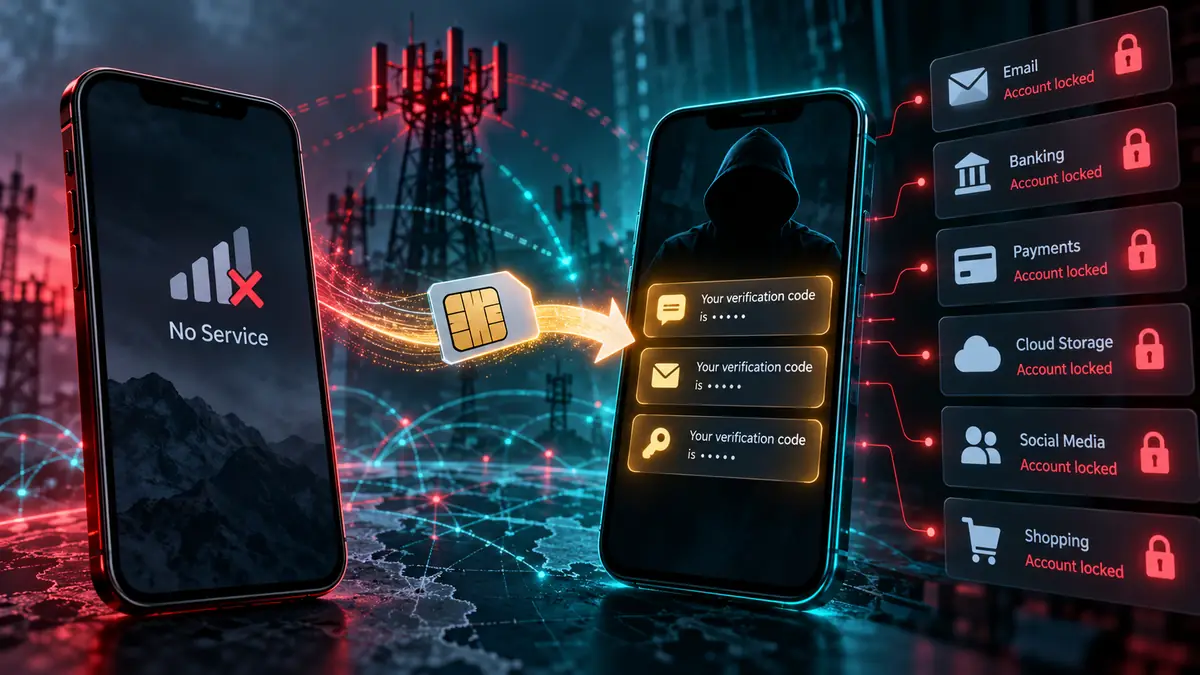
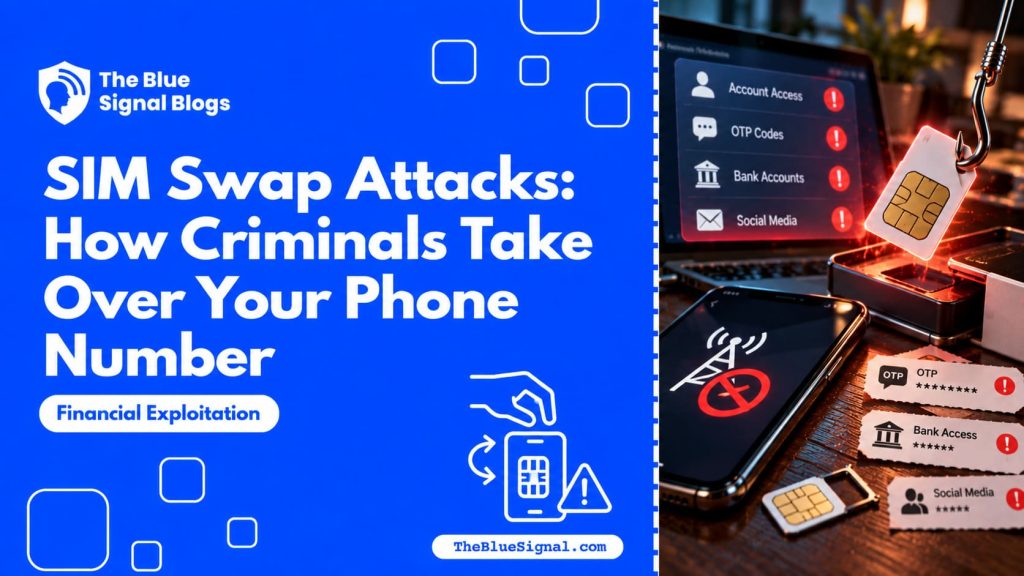
A SIM swap attack begins with a phone call to your carrier, an attacker convincing a representative they are you using details gathered from breaches or phishing. Once your number transfers to their SIM, every two-factor code meant for you goes to them instead.
From there, the damage cascades quickly. Your email, protected by SMS-based recovery, falls next, and from your email nearly every other linked account becomes vulnerable in turn. SIM swap attacks rose 20% year over year in 2025, and account takeover fraud reached 2.9 billion dollars in losses the same year, the fastest-growing fraud category recorded.
A carrier PIN and app-based two-factor authentication, instead of SMS codes, are the two most effective defences, closing off the specific mechanism this entire attack depends on. If an account has already been compromised, the exact steps to take right now matter more than anything else in the first hour.
The warning sign most people miss is subtle: your phone suddenly shows no service, no bars, no signal, for no obvious reason. Most people assume this is a network problem and wait it out. That waiting period is exactly when a SIM swap attacker is working through your accounts, since your device going silent is the direct result of your number being reassigned to their SIM. Treating unexplained signal loss as a possible SIM swap, rather than an annoyance, and calling your carrier from another phone immediately, is the single fastest way to catch this attack while it is still happening rather than after the damage is done.
Read the full guide: SIM Swap Attacks: How Criminals Take Over Your Phone Number
If It’s Free, Where Is the Actual Money Coming From?
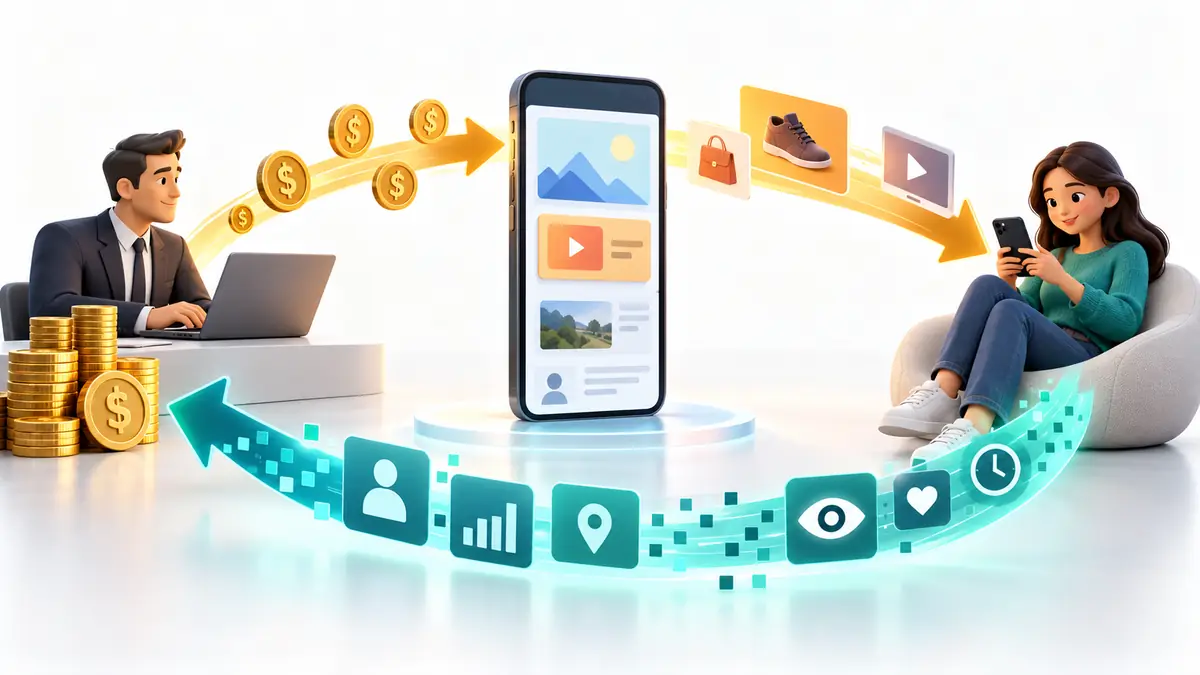
A platform that costs nothing to use and still earns billions in revenue is not an act of generosity. The money comes from you, packaged as attention and behavioural data and sold to advertisers, which makes you the product being delivered rather than the customer being served.
Time on platform is the core metric this entire model optimises for, which is why features are A/B tested on millions of users simultaneously to find whichever version keeps people engaged longest, sometimes retained even after internal research links them to measurable harm.
Recognising this exchange does not mean abandoning every free platform you use. It means knowing precisely what you are trading, so the choice to keep trading it is a deliberate one.
This is also why the attention economy tends to escalate rather than plateau over time. A platform that has already optimised every obvious lever, notification timing, feed ranking, autoplay defaults, needs to find new ones to keep growth metrics moving in the direction shareholders expect, which is part of why the specific tactics documented in this section keep evolving rather than settling into a stable, predictable set.
The clearest way to see this exchange in action is to check what a platform’s own investor materials say about you, rather than what its marketing says. Public companies routinely describe “average revenue per user” and “daily active user” metrics to shareholders in the same breath they describe features to the public as free and user-focused. Reading even a single quarterly earnings summary for a platform you use daily is often the fastest way to understand exactly how your attention is being valued and sold, in the company’s own words rather than anyone else’s interpretation of it.
Read the full guide: You’re Not the Customer. You’re the Product, Here’s the Proof
For further reading across this section, the FTC’s consumer protection guidance and the FBI’s IC3 offer additional depth.
Frequently Asked Questions
Which type of financial exploitation should I worry about most?
It depends on your specific exposure. If you use SMS-based two-factor authentication anywhere important, a SIM swap deserves immediate attention. If you have never reviewed your transaction alerts, payment fraud protection is the faster win. Nearly everyone benefits from understanding the attention economy angle too, since it shapes daily habits most people never examine.
Is there a single action that protects against all three?
Not one single action, but a common thread runs through all three: reduce what a single point of failure, a phone number, a reused password, an unexamined free platform, can cost you if it is compromised or exploited.
How quickly do banks and platforms typically respond once fraud is reported?
It varies considerably by category. Card-based payment fraud disputes typically move within days under long-established chargeback rules. SIM swap recovery can take longer, since it often requires coordinating between your carrier and every linked account separately. There is no equivalent recovery process for attention already extracted by a free platform, which is exactly why the more useful response there is prevention through awareness rather than after-the-fact recovery.
Your money can be taken from you directly, through fraud and account takeover, or extracted more quietly, through attention and behaviour sold without your full understanding of the exchange. Both are real, and both are worth understanding clearly.
Start with whichever module in this guide matched something you recognised, and read that one next.
If this was useful, share it with someone who needs to know.


2 comments
Comments are closed.