
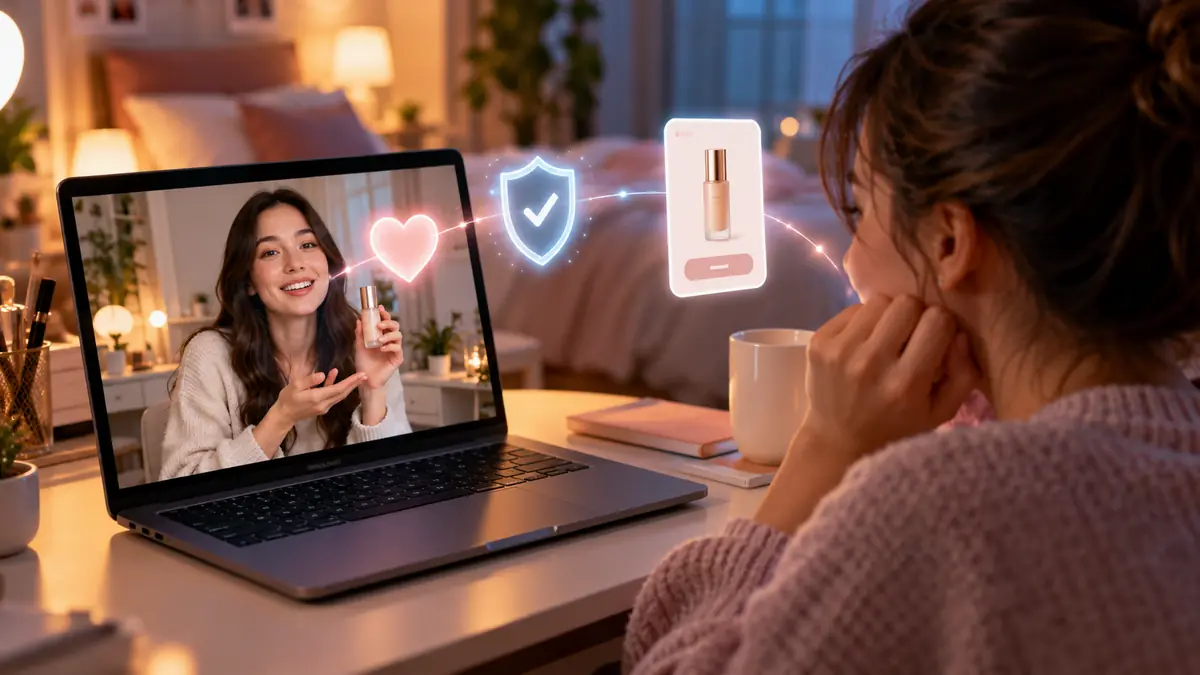
Someone you follow posts about a product with real enthusiasm. Not a formal advertisement, just a genuine-sounding recommendation from someone whose taste you trust. Influencer disclosure deception depends on exactly that trust going unquestioned, which is precisely why it works so well.
You have no way of knowing, from the post alone, whether that enthusiasm was paid for.
Influencer disclosure deception happens precisely in that gap. A genuine recommendation and a paid one can look identical, and the label required by law to tell them apart is routinely left off.
This post explains how undisclosed sponsorships and native advertising work, how fake influencers manufacture authority they have not earned, and how to spot commercial motivation before you trust a recommendation. For the full section overview, see how advertising really targets you.
How Do Undisclosed Sponsorships Actually Work?
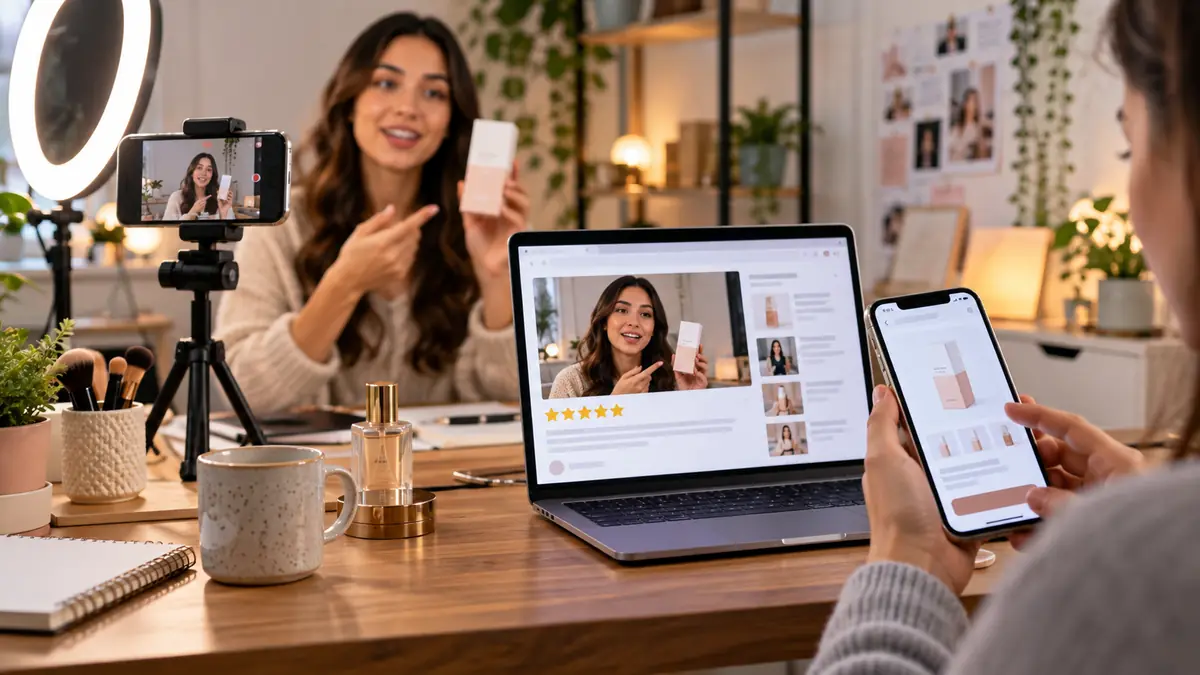
A brand pays a creator to feature a product, sometimes with a script, sometimes only with talking points. The creator then presents it in their own voice, filmed in the same style as their unpaid content, with no visual or verbal separation from genuine posts.
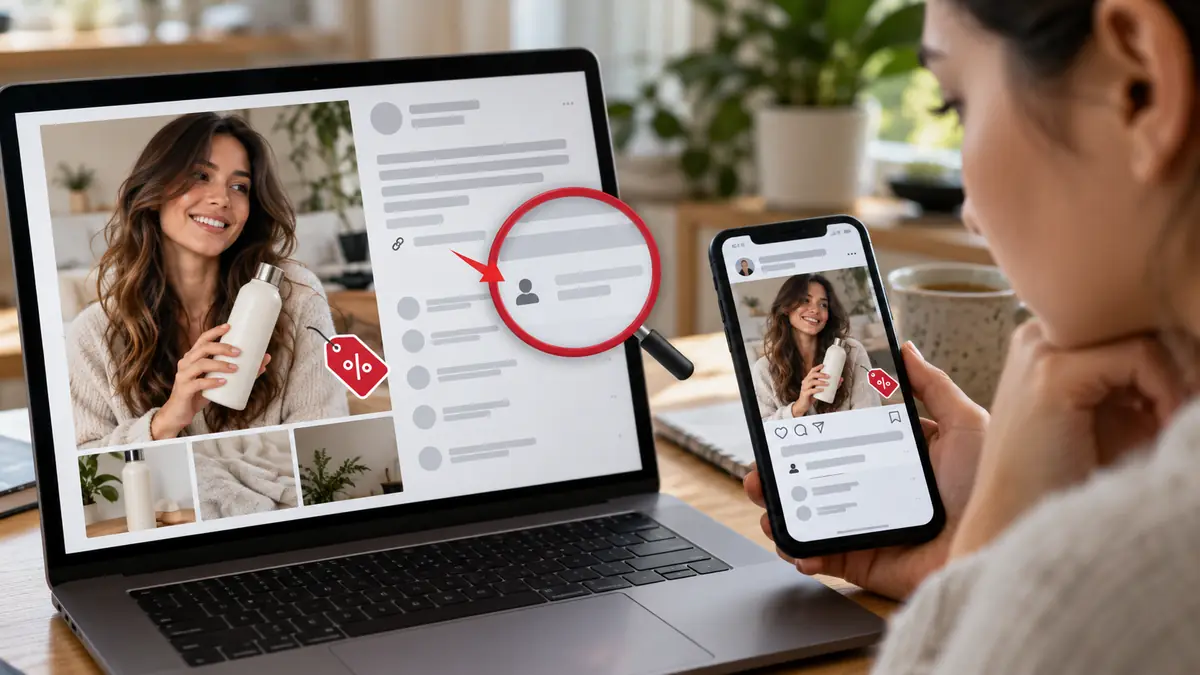
Disclosure, when it exists at all, is often buried: a tiny “#ad” hashtag lost among a dozen unrelated tags, or a mention that appears only in a video’s description rather than spoken aloud where viewers would actually notice it.
Only 14% of sponsored social media posts include clear, compliant disclosure language, despite disclosure being a legal requirement in many countries, according to enforcement data from the FTC’s Endorsement Guides. The FTC sent formal warning letters throughout 2025 to influencers and brands, including several major beauty and lifestyle accounts with millions of followers, for exactly this failure.
Some campaigns go further, providing creators with a specific script or a set of mandatory talking points while explicitly instructing them to present the content as spontaneous, personal opinion rather than a directed brief. When this practice surfaces publicly, usually through a leaked brand contract, it tends to generate exactly the backlash the undisclosed framing was meant to avoid, since audiences respond very differently to a paid script once they know it was one.
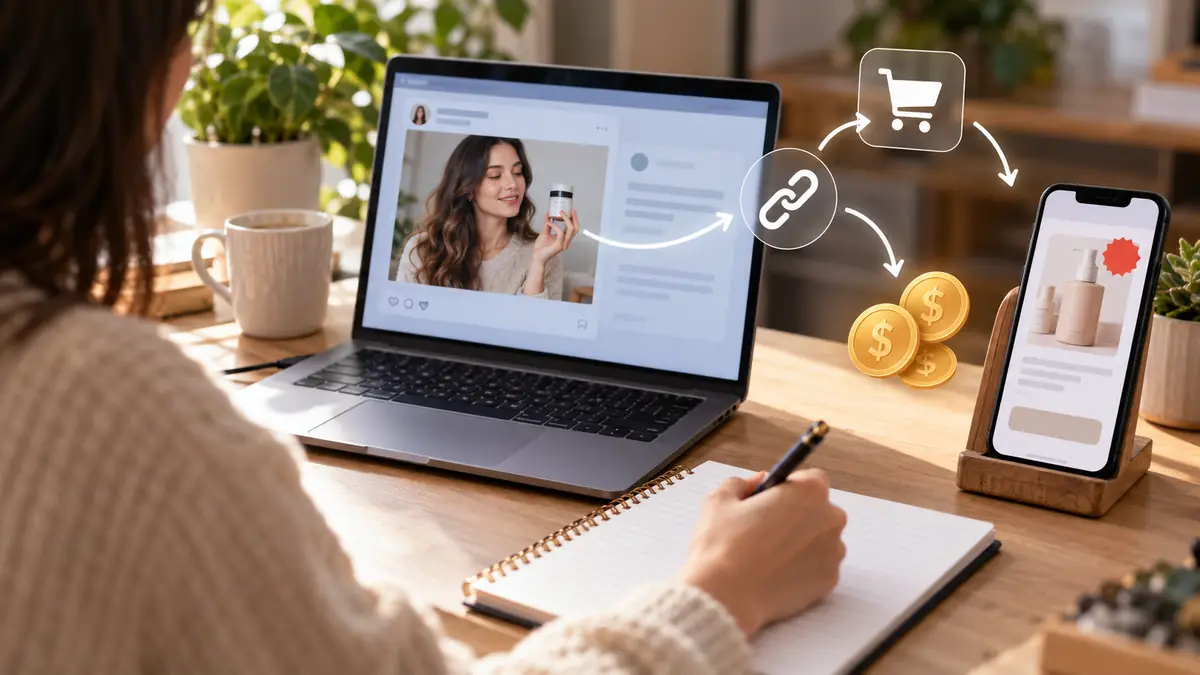
Affiliate links add a related but distinct incentive that rarely gets the same scrutiny as a direct sponsorship. A creator earns a commission on every sale generated through their specific link, which creates a financial motive to recommend a product even without any formal brand payment or contract, and this arrangement is often disclosed, if at all, in far vaguer terms than a paid partnership would require.
Why Does Native Advertising Blur the Line So Effectively?
Native advertising is built to match the surrounding editorial content in tone, format, and visual style. An article that reads like independent journalism may in fact be paid content, formatted deliberately to resemble the outlet’s genuine reporting.
This blurring matters because trust in a platform or a person transfers to whatever they present, whether or not that trust was earned honestly in that specific instance. This is the same mechanism behind fake reviews and manufactured social proof, borrowing credibility that was never actually offered freely.
Fake influencers add a further layer. Bought followers and bot engagement manufacture the appearance of a genuine audience and real influence, which brands then pay to access, treating an inflated follower count as evidence of real reach even when a significant share of it is fabricated.
Micro-influencers, accounts with smaller but more engaged followings, are increasingly favoured by brands specifically because their recommendations read as more authentic than a celebrity endorsement, even though the underlying commercial arrangement is frequently identical. The perceived authenticity of a smaller, more relatable account is, in this sense, itself part of what is being purchased.
India’s Advertising Standards Council has issued its own disclosure guidelines specifically for social media influencers, requiring labels such as “Advertisement” or “Collaboration” to be clearly and prominently displayed rather than folded into a caption’s closing hashtags, though enforcement across the sheer volume of daily influencer content remains genuinely difficult to keep pace with.
How Can You Tell When Content Is Commercially Motivated?
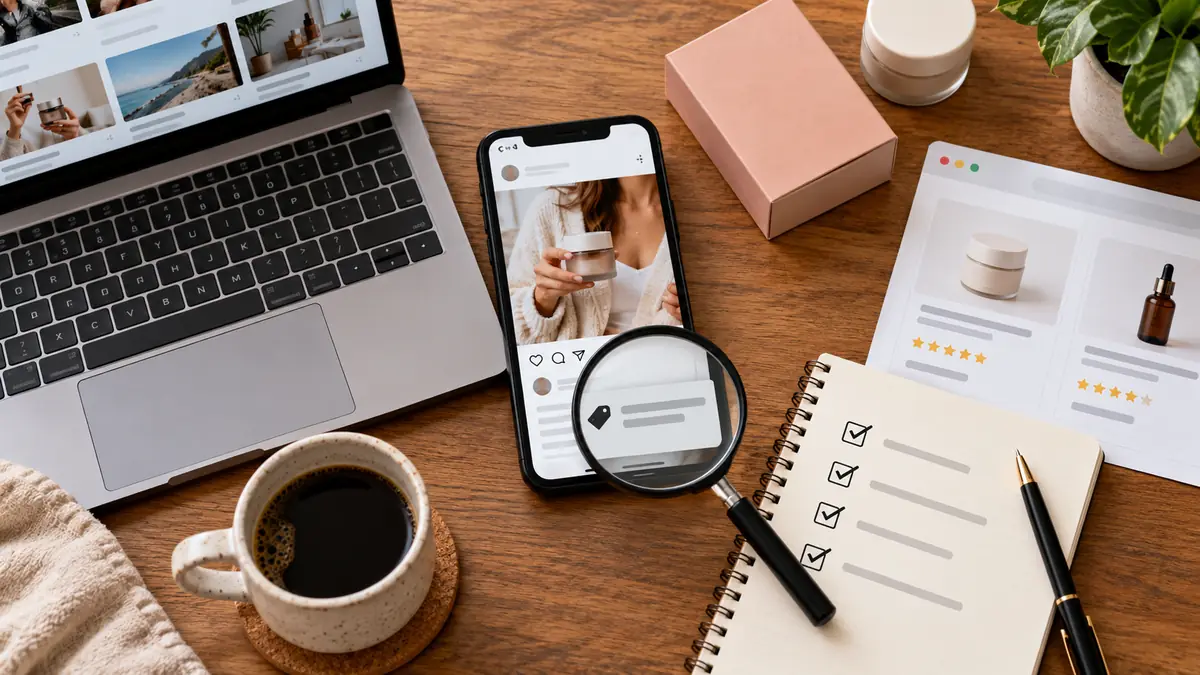
Look for consistent, repeated promotion of the same brand or product category across a creator’s content over a short period. Genuine enthusiasm for unrelated products tends to be more sporadic than a coordinated campaign.
Check whether disclosure, if present at all, is spoken or shown clearly at the start of the content, not buried at the end of a caption or hidden among unrelated hashtags.
Notice language that closely echoes brand marketing copy rather than a person’s usual voice, specific claims about ingredients, results, or comparisons that sound more like a press release than a casual recommendation.
Compare the same creator’s tone across a paid-suspected post and clearly organic older content, since a genuine shift in vocabulary, pacing, or enthusiasm level between the two is often more revealing than any single post examined in isolation.
Watch the comment section too, not just the post itself. Creators and brands sometimes quietly manage sponsored comment threads, deleting sceptical questions about payment or authenticity while leaving enthusiastic replies untouched, which can make a paid post look more genuinely well received than it actually was.
What Can You Do Before Trusting a Recommendation?
Search for whether the creator has disclosed a broader ongoing partnership with the brand, many do, in a pinned post or bio link, even when individual posts do not carry a clear tag.
Treat strong, repeated enthusiasm for a specific product category, skincare, supplements, trading apps, with a bit more scrutiny than a one-off mention, since these categories are disproportionately represented in paid influencer campaigns.
Report undisclosed sponsored content to the platform directly, and where relevant, to your national consumer protection authority. Documented complaints are part of what drives enforcement, in the same way they support action against misinformation and media manipulation more broadly. This pattern of manufactured trust also connects to how scammers build trust before they strike, even outside a commercial context.
For further reading, the FTC’s endorsement guidance, the UK Advertising Standards Authority, and the Advertising Standards Council of India each cover this topic in more depth.
Frequently Asked Questions
Is it illegal for an influencer not to disclose a paid partnership?
In most countries with active consumer protection regulators, yes. Disclosure rules exist specifically to prevent audiences from mistaking paid promotion for a genuine, independent recommendation, and enforcement has increased through 2025 and into 2026.
What’s the difference between a “gifted” product and a paid partnership?
A gifted product was given for free with no payment or formal agreement attached, though disclosure is still generally expected. A paid partnership involves direct compensation, and typically stronger contractual obligations about what must be said.
Influencer disclosure deception means a genuine recommendation and a paid one can look exactly the same on the surface. The disclosure that is supposed to separate them is required by law in many places, and routinely left off anyway.
The next time a recommendation feels a little too polished, check for influencer disclosure deception first, before you look for the product, and before you decide how much of that polish to trust.
If this was useful, share it with someone who needs to know.