

Trust building scams rely on one simple fact: in person, trust normally takes months or years to earn.
Online, that timeline compresses to days, sometimes hours. The techniques behind it have been tested on thousands of people before they ever reach you.
This is not an accident of fast-moving online life. It is a deliberate, repeatable process.
It works whether the goal is money, personal information, or access to a workplace system.
Scam losses that began on social media reached 2.1 billion dollars in the US in 2025. Facebook, WhatsApp and Instagram were the three largest sources, according to the FTC’s consumer scam data.
Reported losses starting this way were eight times higher in 2025 than in 2020. That rise tracks how quickly manufactured trust has scaled as a deliberate tactic, not just an unlucky coincidence.
This post explains exactly how trust building scams manufacture familiarity. It covers what warm-up attacks look like in practice, and how to separate a feeling of familiarity from trust that has actually been earned.
It connects to the wider pattern in our guide to how scammers manipulate people.
How Do Trust Building Scams Use Repeated Exposure Against You?
Familiarity grows the more often you encounter something, even when nothing about that thing has actually changed. Psychologists call this the mere exposure effect.
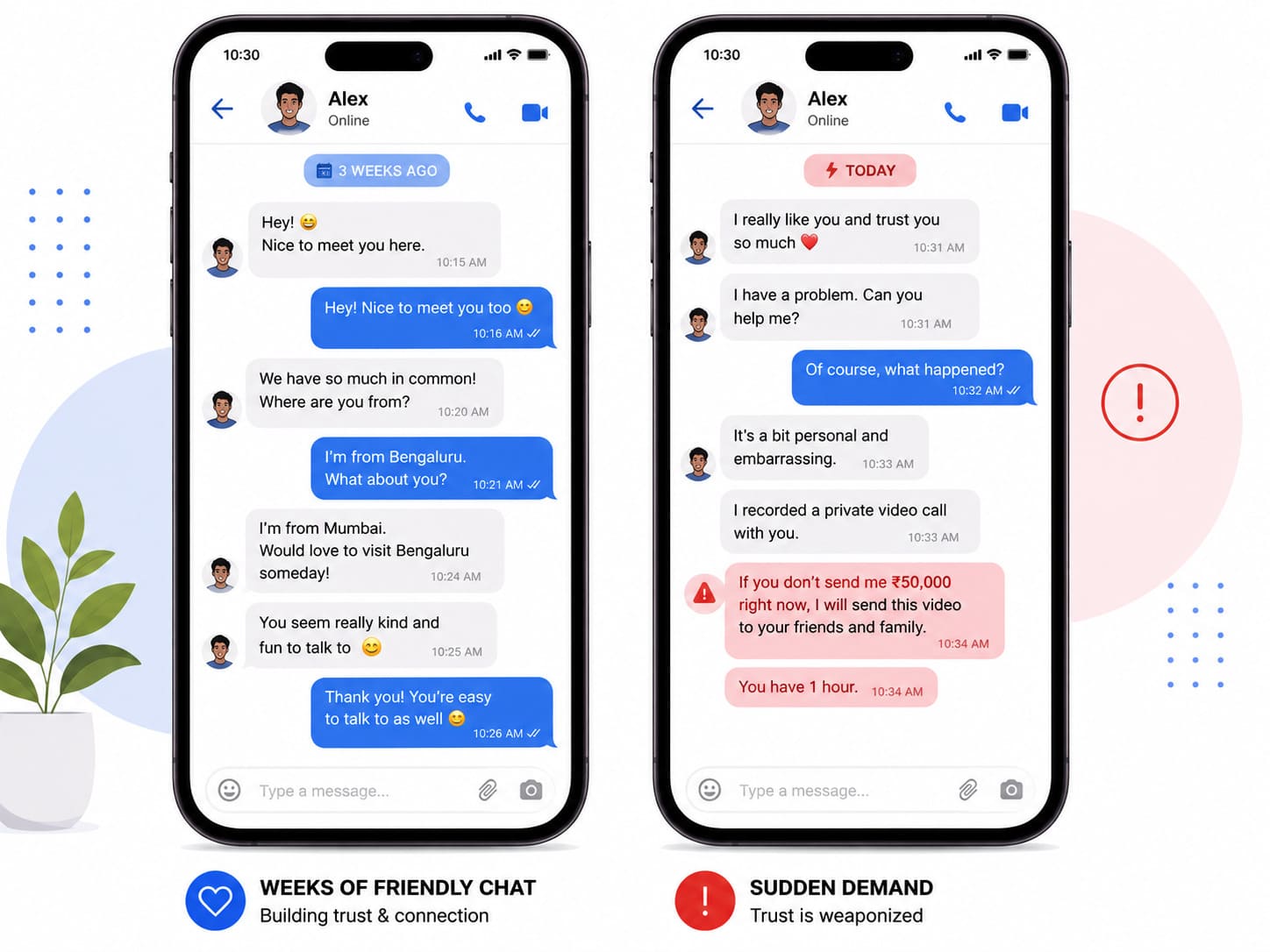
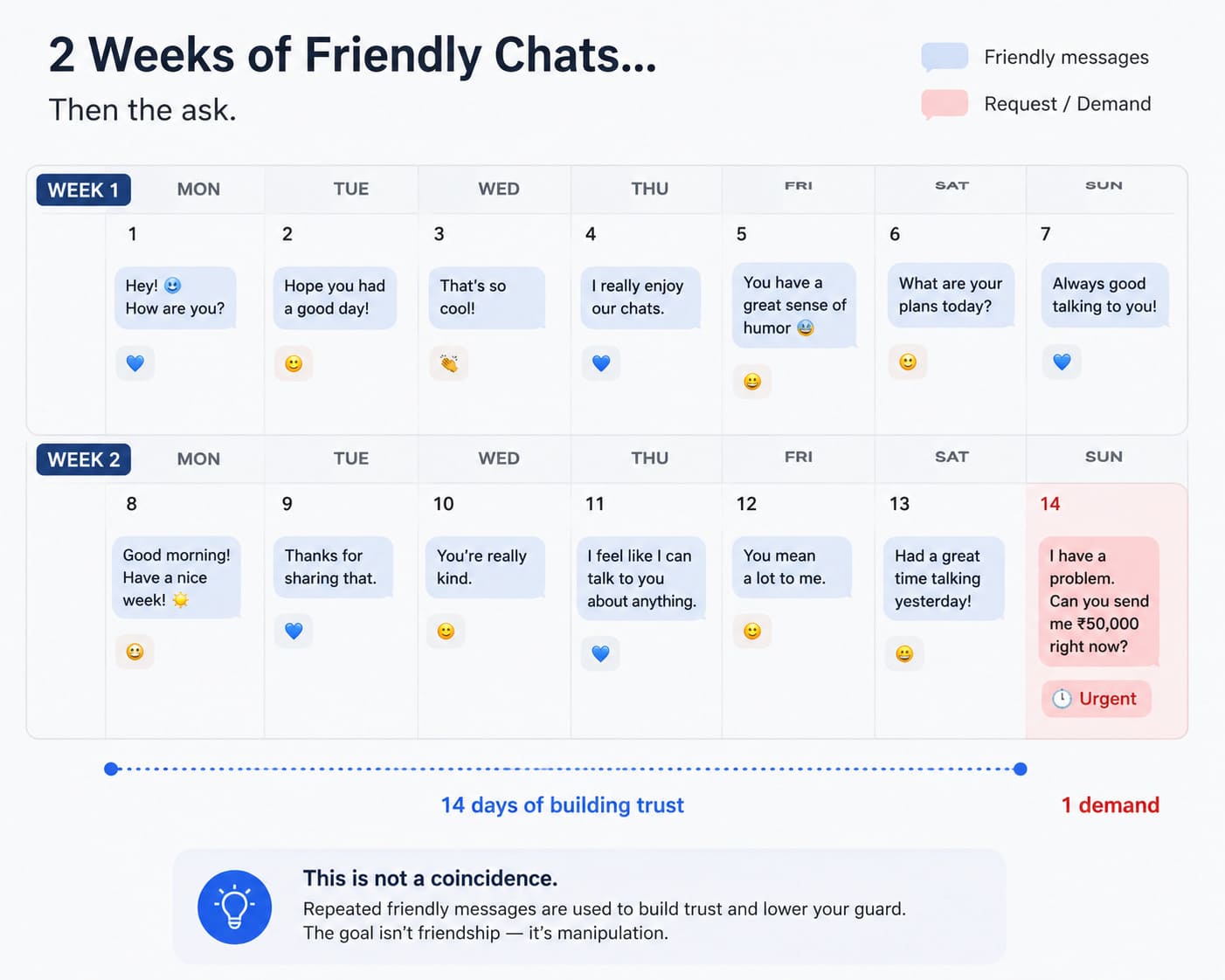
Trust building scams exploit this directly. A scammer who messages you daily for two weeks feels more familiar by day fourteen, whether or not anything they have said turns out to be true.
The content of the messages matters less than the pattern of them. Consistent, low-pressure contact does the real work, long before any request appears.
Nothing about the relationship needs to be verified for it to start feeling real. The brain treats repetition itself as a kind of evidence, even when no actual evidence exists.
This is also why a scammer will often disappear immediately after being questioned, only to return days later with a fresh account and the same script. The relationship was never about the specific person on the other end. It was always about the pattern.
By the time a financial or personal ask arrives, it lands inside a relationship that already feels established. Questioning it at that point can feel like questioning the entire friendship, not just one request.
What Do Warm-Up Attacks Actually Look Like?
A warm-up attack is any interaction designed purely to build rapport before the real request arrives.
On professional networks, this often takes the shape of a fake recruiter, a fabricated former colleague, or an impersonated executive sending a friendly connection request.
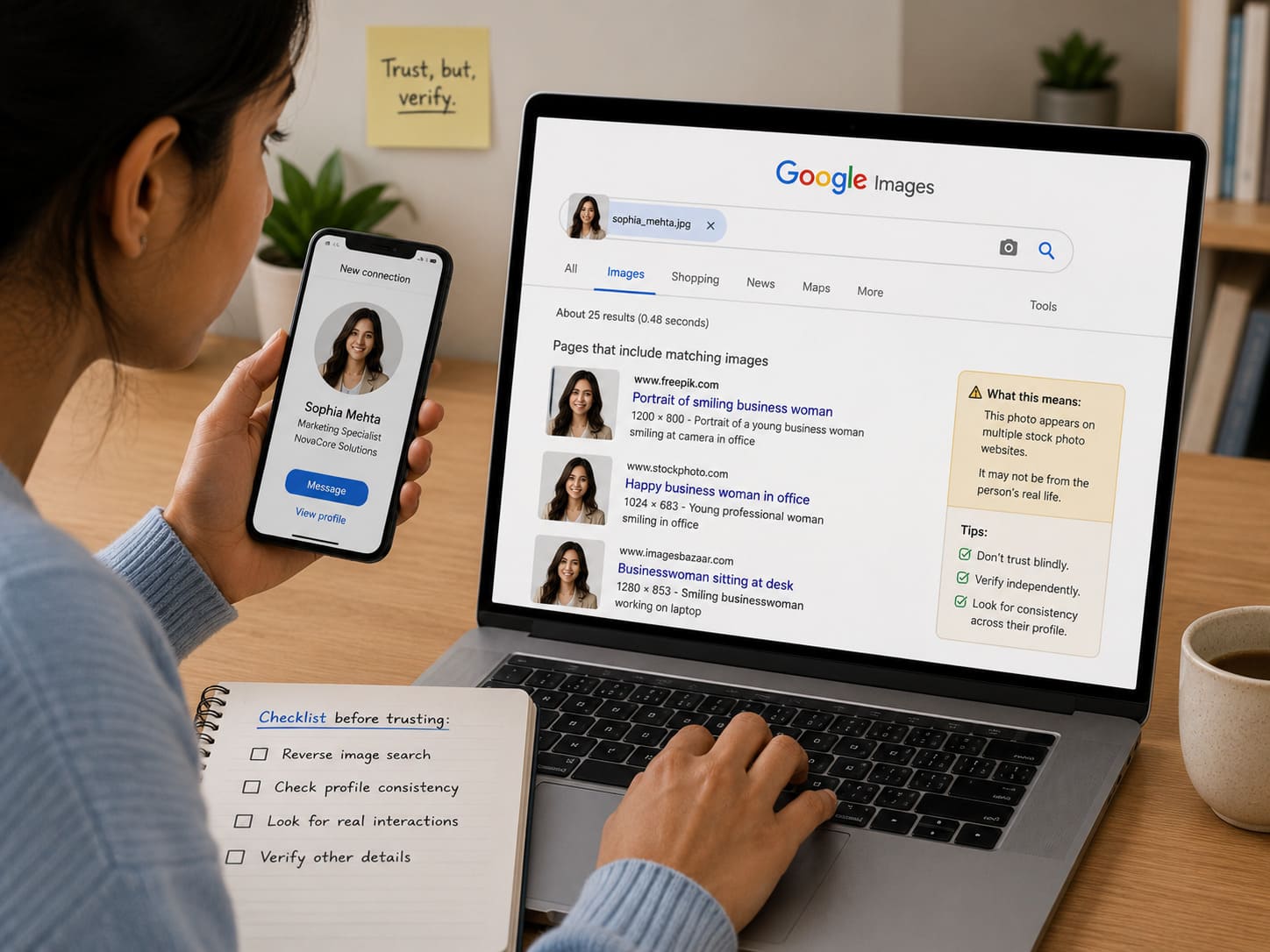
The profile photo, job history and mutual connections are frequently stolen or fabricated entirely. Fake profiles like these can look more polished than genuine ones, since every detail was chosen specifically to look credible.
Once connected, the conversation stays harmless for a while: career advice, small talk, shared interests.
The ask, when it finally comes, might be a link to a fake job portal or a request for sensitive details “for verification.” By that point, the connection already feels earned rather than recent.
Impersonating a real colleague works particularly well inside workplaces, since a message that appears to come from someone already inside the organisation rarely gets the same scrutiny an outsider’s message would receive from busy staff.
The same pattern shows up in romance scams, where weeks of affectionate messages precede any mention of money. Our guide to how romance scammers build fake love before taking everything covers that version in depth.

How Does Social Proof Get Faked to Build Trust?
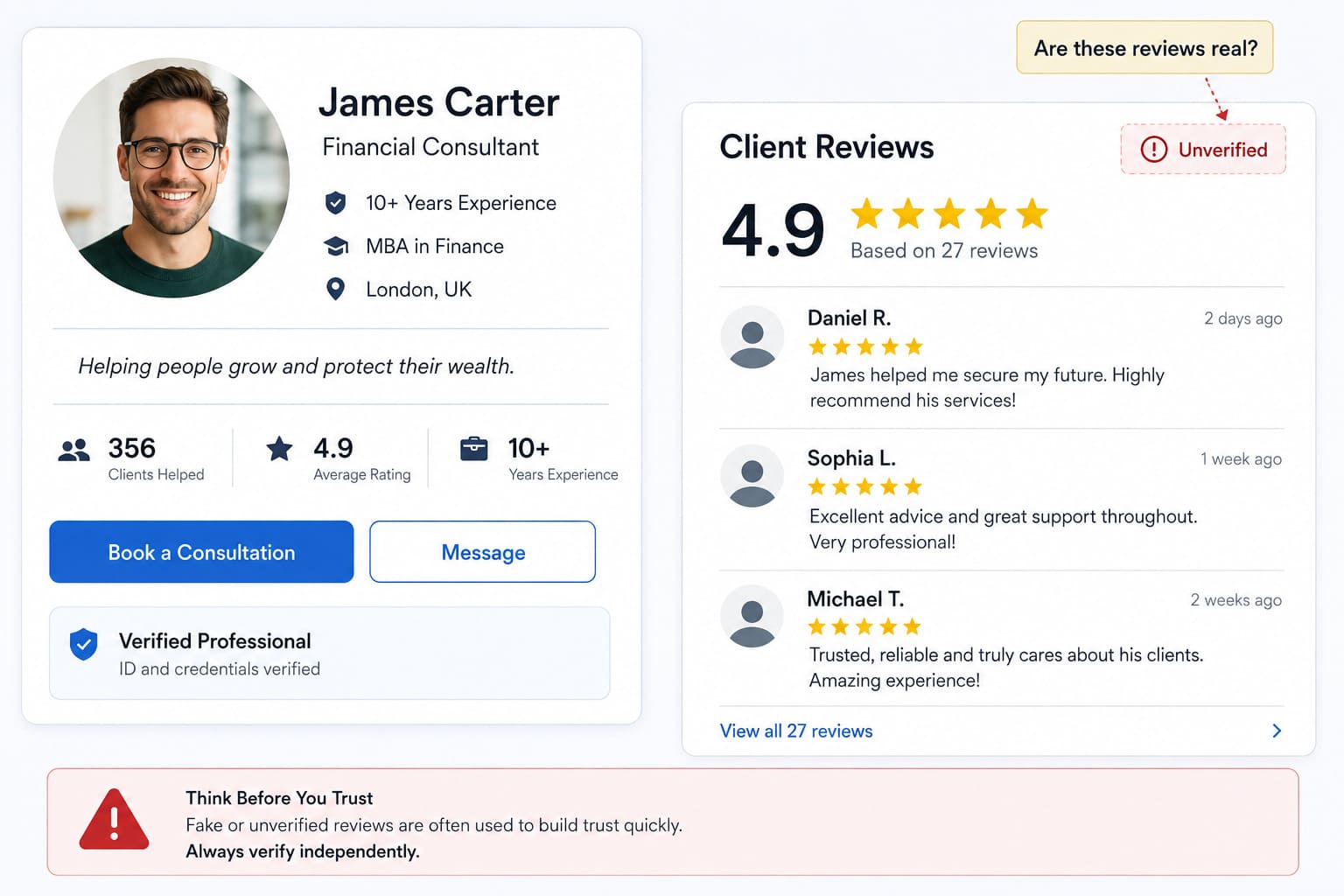
Reviews, testimonials and follower counts all serve the same purpose. They tell you other people have already trusted this person or platform, so you can too.
Fake reviews, bought followers and manufactured endorsements copy that signal without any of it being real. Our guide to how fake social proof works online breaks down exactly how these are produced.
Peer pressure framing adds another layer. Lines like “everyone in this group has already invested” or “all my friends are using this platform” carry an implicit accusation.
Questioning the claim starts to feel like it would make you the outlier, not the person making it.
Pig butchering scams frequently combine both. A warm personal relationship runs alongside a fake trading platform showing manufactured reviews and testimonials from other “investors.”
The Global Anti-Scam Organisation has documented this exact combination across thousands of survivor accounts, describing how the emotional relationship and the fake platform reinforce each other. Our guide to pig butchering and dating scams covers this combination directly.
How Do You Separate Familiarity From Verified Trust?
Feeling comfortable with someone is not the same as knowing anything real about them.
Verified trust comes from evidence you gathered independently. That might be a video call on your own terms, a reverse image search of their photo, or a phone number you looked up yourself rather than one they gave you.
Before sending money or sharing sensitive information based on an online relationship, pause first. Ask what you actually know that came from outside the conversation itself.
If the honest answer is nothing, that gap is worth treating seriously, no matter how genuine the relationship feels.
If you have already lost money to someone you trusted online, report it through the National Cyber Crime Reporting Portal or the 1930 helpline as soon as possible. Acting quickly improves the chance of recovering funds through your bank or payment provider.
Frequently Asked Questions
How can I tell if an online profile is fake?
Reverse image search the profile photo, check how long the account has existed, and look at whether the connections and activity feel genuine rather than recently manufactured.
A profile that resists this kind of basic checking, or reacts badly to you simply asking questions, is worth treating with real, ongoing caution.
Is it wrong to trust someone I have only met online?
No, but it is worth knowing that trust and familiarity are not the same thing, especially early in any online relationship.
Verifying details independently does not mean you are being paranoid. It means you are applying the same caution most people would apply offline.
Why do fake reviews and follower counts still work even when people know some are fake?
Because social proof works on a general impression rather than a detailed audit. Most people glance at a star rating rather than reading every review individually.
Scammers rely on that glance, not on convincing a sceptical reader who checks every detail. A handful of fake five-star reviews can outweigh a genuine complaint buried further down the page.
What This Comes Down To
Trust building scams succeed by making a manufactured relationship feel indistinguishable from a real one.
The feeling of trust is genuine even when the person creating it is not, which is exactly why it works on careful, experienced people too, not just those who are new to being online.
One habit protects you: verify something about the other person through a channel they do not control, before you act on how familiar they feel, no matter how long the relationship has already lasted.
If this was useful, share it with someone who needs to know.


1 comment
Comments are closed.