

A disaster hits, flooding, an earthquake, a crisis unfolding somewhere. Within hours, donation appeals flood social media and messaging groups, and a fake charity scam is often already among them.
Most of the appeals are genuine, run by real organisations doing real work.
Some are not. A convincing one can be built and posted within the same news cycle as the disaster itself, using real photos borrowed from genuine coverage and a payment link that leads nowhere near an actual relief effort.
This post covers how these appeals exploit a crisis, the emotional pull that makes them so hard to question in the moment, and exactly how to verify a charity before your money leaves your account. It is part of our wider guide to the most common online scams.
How Do Fake Charities Exploit Disaster and Crisis News Cycles?
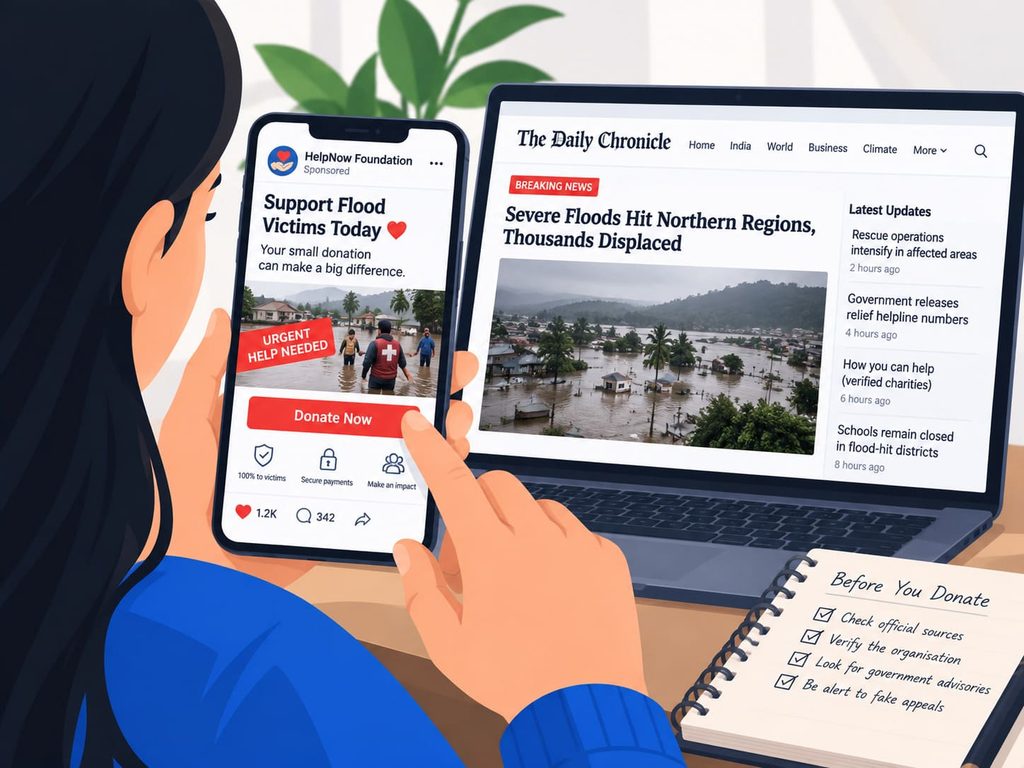
Speed is the whole strategy. A fake charity scam is often live and collecting donations before an established, verified organisation has even finished assessing the damage on the ground.
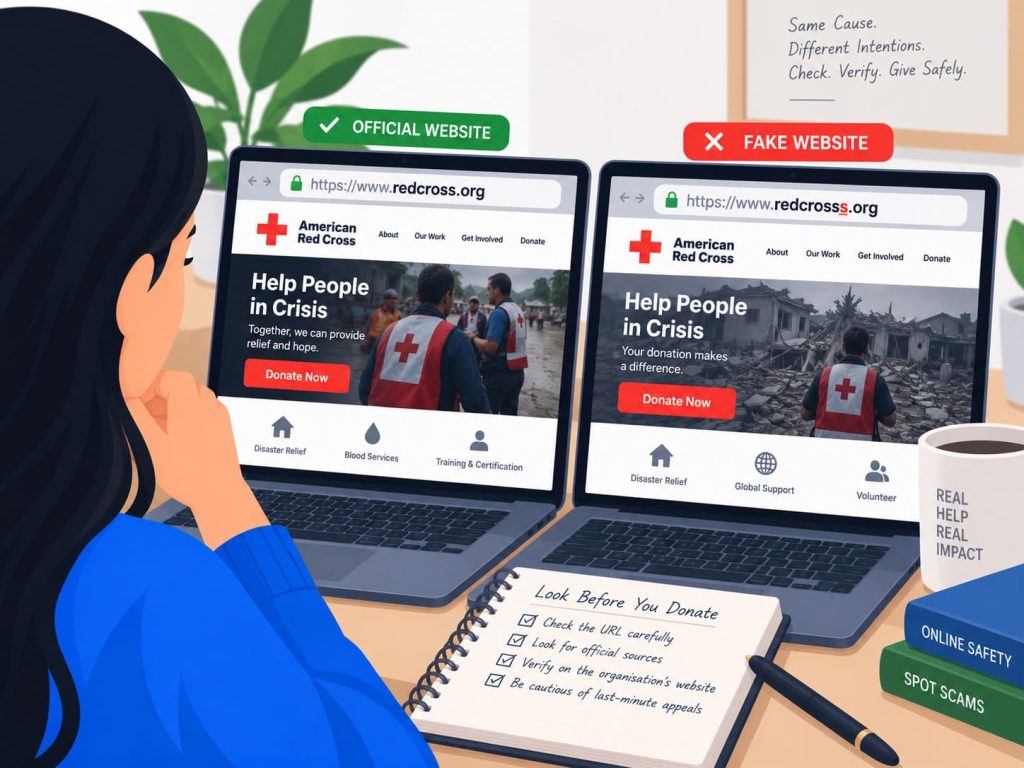
Domain names are registered that sound almost identical to real, well-known organisations, sometimes differing by a single letter or an extra word, close enough that a quick glance does not catch it.
Photos and videos are lifted directly from genuine news coverage of the disaster, giving the appeal a credibility it has done nothing to earn, since the images are real even though the organisation behind them is not.
Following major flooding events across Asia and Europe in 2025, the FTC and FBI issued joint alerts warning of fake charity websites that appeared within hours of disaster coverage, several using domain names nearly identical to established organisations and collecting donations that never reached victims. This is US-issued guidance, but the pattern of instant, copycat donation appeals shows up on Indian social media within hours of any major flood, cyclone, or accident too.
The volume of appeals during a crisis works in a fake charity scam’s favour too. When dozens of genuine and fraudulent appeals are circulating at once, most people do not have time to check each one individually, and the fake ones rely on exactly that fatigue to slip through unnoticed.
Crowdfunding platforms add another layer, since anyone can create a fundraiser claiming to support disaster victims with almost no verification required at the point of setup. A convincing title and a handful of shared photos are often enough to start collecting money immediately.
How Does Emotional Manipulation Work in Charity Appeals?
The urgency you feel watching disaster coverage is genuine, and a fake charity scam is built specifically to borrow that real feeling rather than create one of its own.
Appeals lean heavily on a single, specific image or story, a child, a destroyed home, a rescued animal, since one vivid detail moves people to act faster than a broader statistic ever could.
Reciprocity plays a role too. Some appeals thank you before you have given anything, or claim your name has already been added to a donor wall, using the same instinct covered in our guide to why scammers give before they ask to make declining feel awkward rather than sensible.
A countdown, “donations matched only for the next 24 hours,” adds manufactured urgency on top of a real crisis, echoing the same pressure covered in our guide to how fear is used to scam you, timed specifically to discourage the thirty seconds of checking that would expose it.
Guilt is used deliberately too, appeals that ask directly how you could scroll past suffering without giving something. That framing makes pausing to verify the organisation feel almost callous, even though the pause protects both your money and the genuine victims a real charity is trying to reach.

How Do You Verify a Charity Before Donating?
Search the organisation’s name directly rather than clicking through a shared link, and confirm the website matches what independent search results show for that charity.
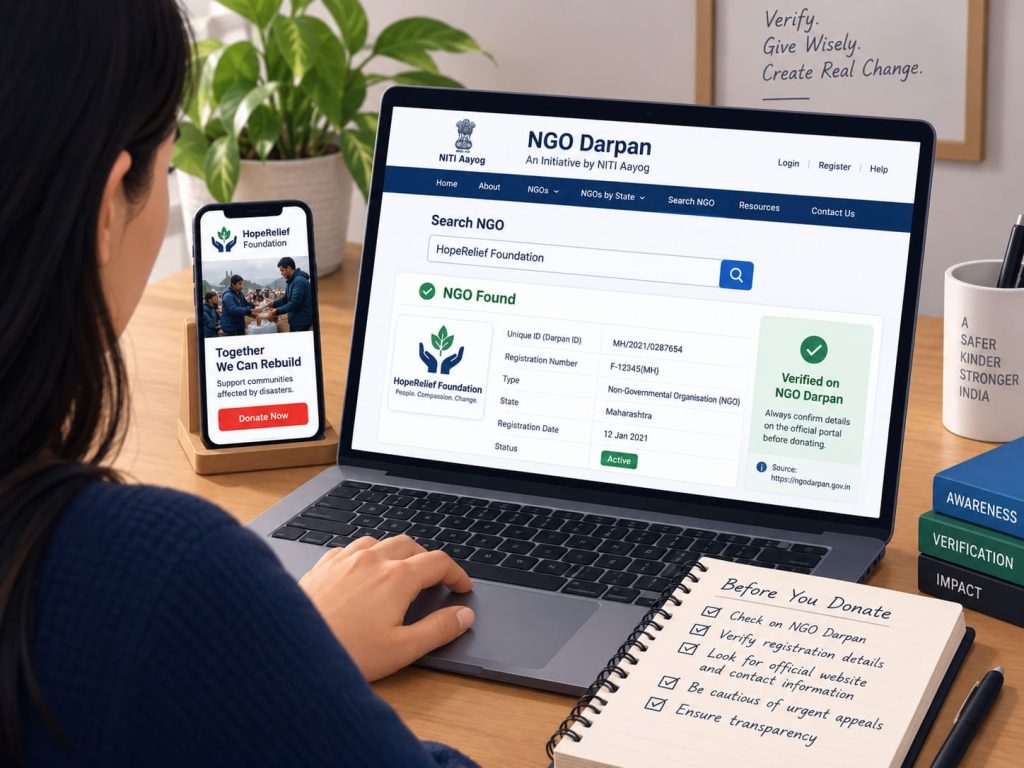
In India, check whether the organisation is registered on the government’s NGO Darpan portal, which lists verified NGOs and their registration details. A charity with no registration record there is not automatically fraudulent, but it is a reason to verify further before donating any significant amount.
The same trust-building signals covered in our guide to how scammers build trust before they strike apply here too: a professional-looking website and confident tone prove nothing about legitimacy on their own.
Ask for a proper donation receipt with the organisation’s registration number if you plan to claim a tax deduction, since a fake or missing receipt is one of the clearest signs a “donation” never reached a real, accountable organisation at all. For charities operating internationally, tools like Charity Navigator rate the financial transparency of thousands of organisations, though this is a US-based resource rather than an Indian one.
Small, one-time individual fundraisers, someone raising money for their own family’s medical bills after a personal tragedy, are harder to verify through a registry, since they are not registered charities at all. For those, verifying the person directly through mutual contacts matters more than checking any database.
Where Do You Report Charity Fraud?
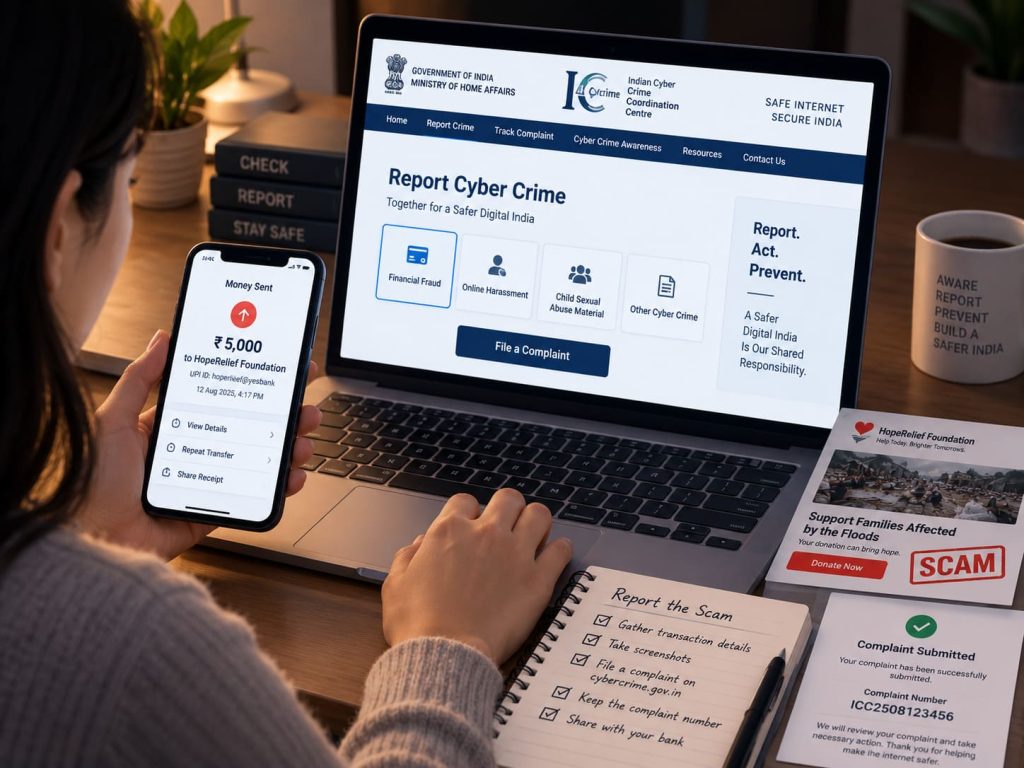
If you have already donated to an organisation you now believe is fake, contact your bank or UPI provider first, right away, to see whether the transaction can still be flagged.
Report it through India’s National Cyber Crime Reporting Portal or the 1930 helpline, including the appeal’s original link, payment details, and any screenshots you saved.
Report the fake domain or social media post to the platform it appeared on as well, so it can be taken down before reaching more people while the same crisis is still unfolding.
Genuine relief efforts continue well after the initial news cycle fades, so there is rarely any real cost to taking a few extra minutes to verify an organisation before giving, even during a genuine emergency. A well-run charity welcomes questions about where the money goes, and treats that transparency as routine rather than an inconvenience.
Frequently Asked Questions
How can I quickly check if a disaster relief appeal is a fake charity scam?
Search the organisation’s name independently rather than clicking a shared link, and check its registration on NGO Darpan in India. A legitimate charity’s details will match across multiple independent sources.
Is it safe to donate through a link shared in a WhatsApp or social media message?
Only if you have independently verified the organisation first. Go directly to the charity’s official website rather than trusting a link forwarded to you, even by someone you know.
What should I do if I already donated to a fake charity?
Contact your bank or UPI provider to check whether the transaction can be flagged, then report it through cybercrime.gov.in or the 1930 helpline with any screenshots or payment details you have.
What This Comes Down To
A fake charity scam works by borrowing a crisis that is genuinely real and attaching it to an organisation that is not.
The one habit that protects you: verify the organisation independently before you give, no matter how urgent the appeal feels. Real relief work is still there thirty seconds later.
If this was useful, share it with someone who needs to know.




1 comment
Comments are closed.