

Fear tactics in scams are not an accidental side effect of a convincing lie. The panic itself is the entire mechanism the caller is relying on.
Your phone rings. The caller says they are from the police, and that you are under investigation for a serious crime.
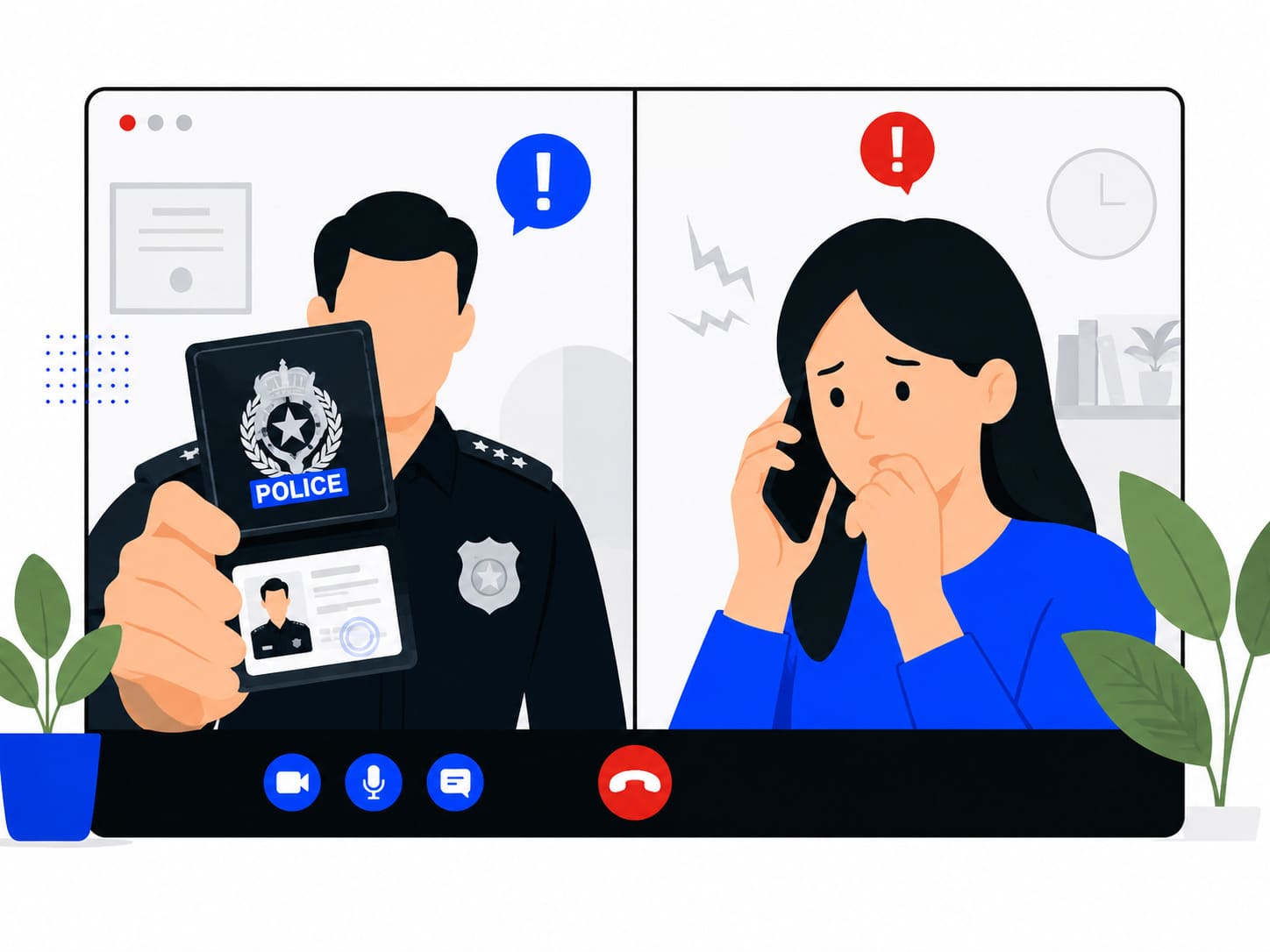
They tell you to stay on video call. They tell you not to hang up, not to tell anyone, and not to leave the room.
The more overwhelming a threat feels, the less likely you are to stop and question it. That is exactly why fear tactics in scams rarely bother being subtle.
This exact scenario, known as a digital arrest scam, caused losses of ₹22,495 crore across India in 2025, according to the Ministry of Home Affairs. One 86-year-old woman in Mumbai lost more than ₹20 crore over two months, convinced the whole time that she was under investigation for money laundering.
This post explains how manufactured urgency and fear get engineered into a call. It covers why your brain reacts the way it does, and the one pause that breaks the pattern before any money moves.
It also connects to the wider pattern covered in our guide to how scammers manipulate people.
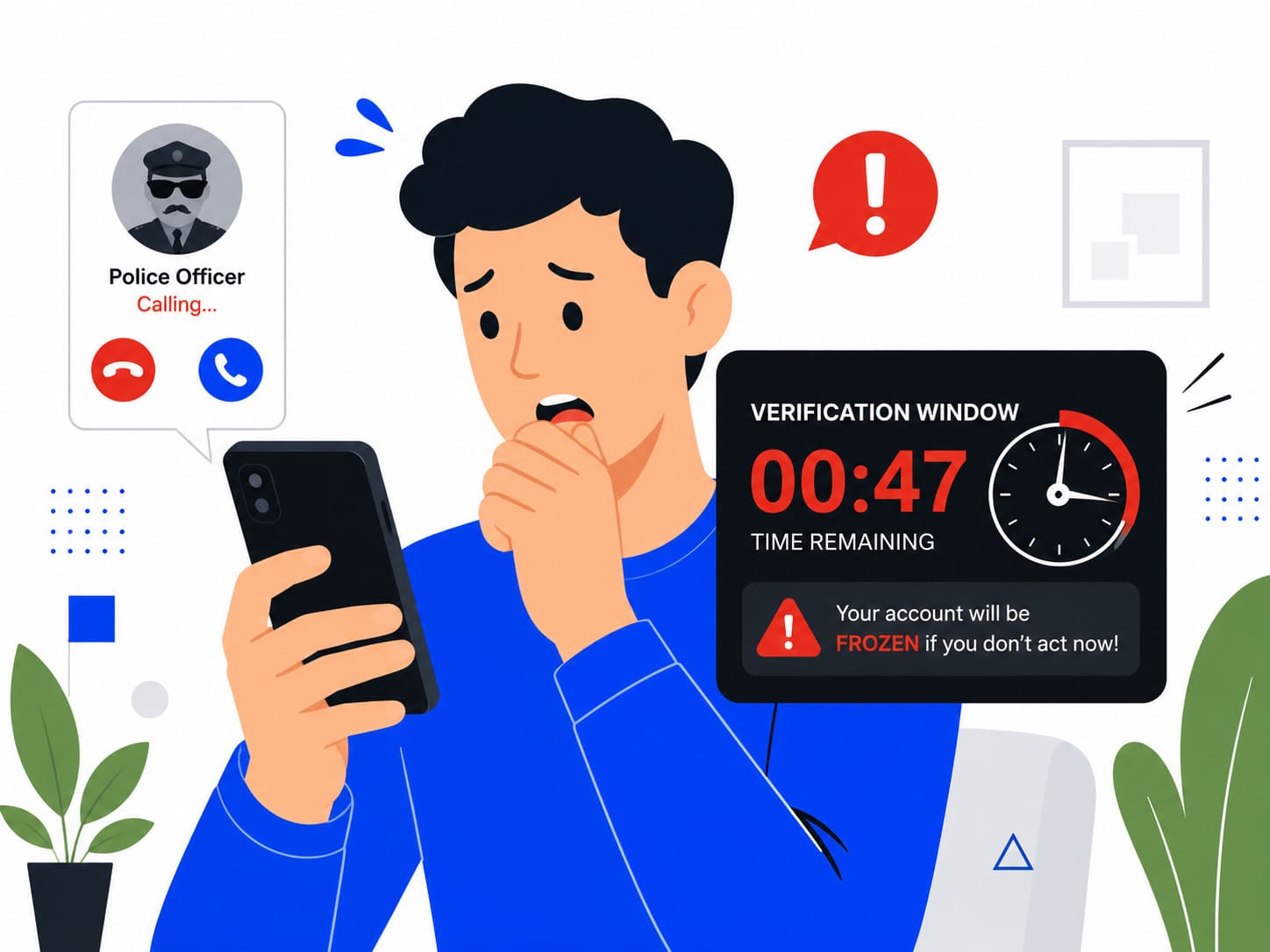
How Does Manufactured Urgency Collapse the Time You Have to Think?
Verification takes time. Scammers know this, so they remove the time before you notice it is gone.
A message might say your account will be frozen in ten minutes, or that police officers are already on their way. Either version leaves no room for a phone call to check whether it is true.
That collapsed window is the actual target of the attack. Everything else, the story, the voice, the official language, exists only to keep that window shut.
A fake virus warning that demands you call a number within minutes uses the exact same collapse. So does a message claiming your electricity connection will be cut off tonight unless a bill gets paid immediately through a link.
None of these threats are designed to survive a phone call to the real organisation. They are designed to prevent that call from ever happening.
Read our full guide on how fake countdown timers and manufactured urgency work in app design for the same mechanism used in shopping and subscription traps.
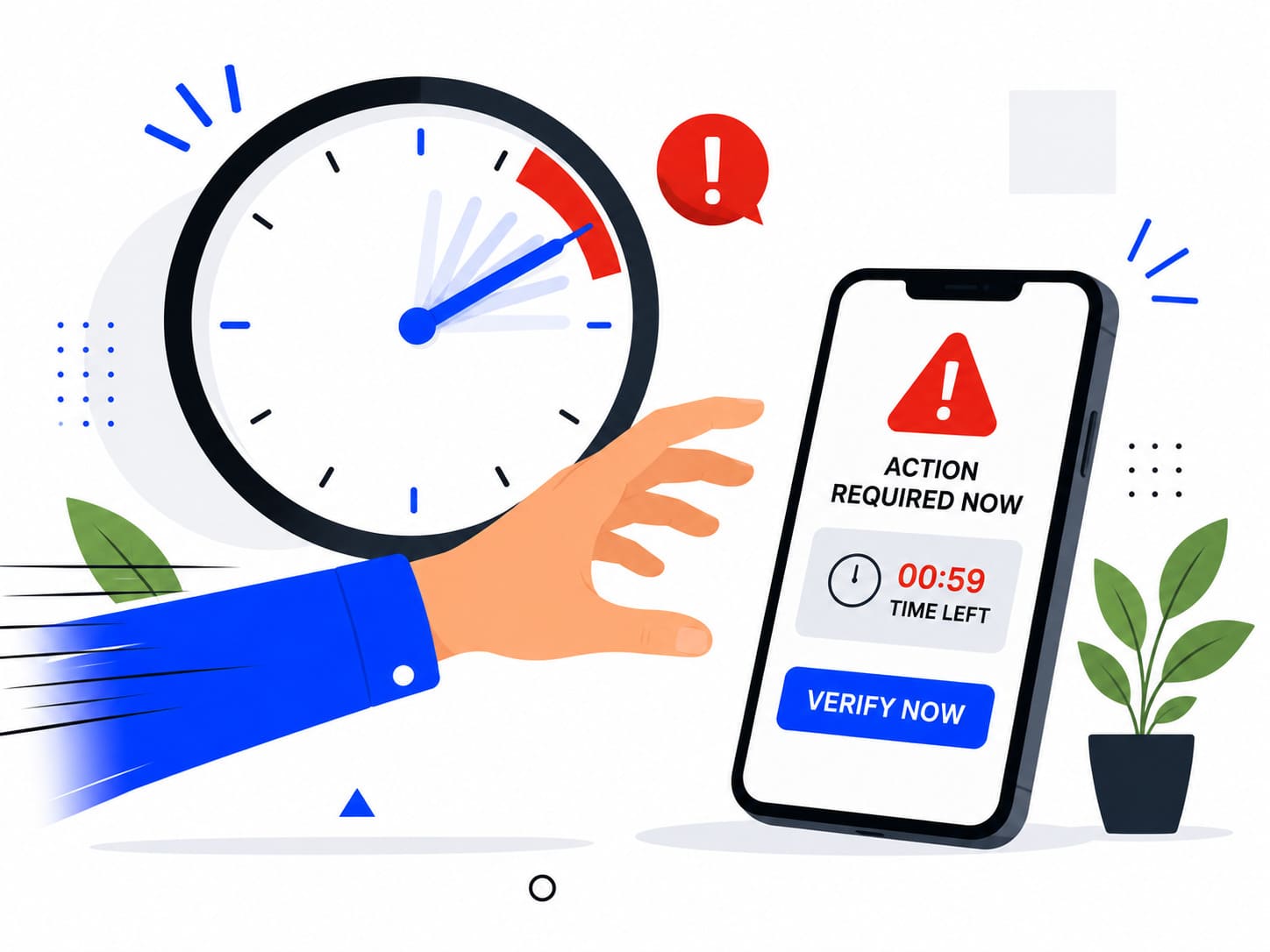
What Do Fear Tactics in Scams Actually Threaten You With?
Threats come in a small number of predictable shapes: account suspension, arrest, an unpaid fine, or a legal case already in motion.
Each one borrows the same idea. Something bad is about to happen to you specifically, and only immediate compliance stops it.
A message claiming your bank account will be frozen works because it targets something concrete you would genuinely miss. A message claiming a warrant already exists works because it adds a legal weight that feels too serious to risk ignoring.
FOMO works on a gentler version of the same fear, the fear of missing a limited offer or a one-time chance rather than the fear of arrest. Our guide to why social media makes you feel behind covers that version in more depth.
Digital arrest scams sit at the extreme end of this spectrum. Callers claim to represent the CBI or local police, then keep victims on video call for hours or sometimes days.
The point of that length is not more explanation. It is preventing the victim from checking the claim with anyone else.
Digital arrest scams alone accounted for 9 percent of all cybercrime losses reported across India in 2025.
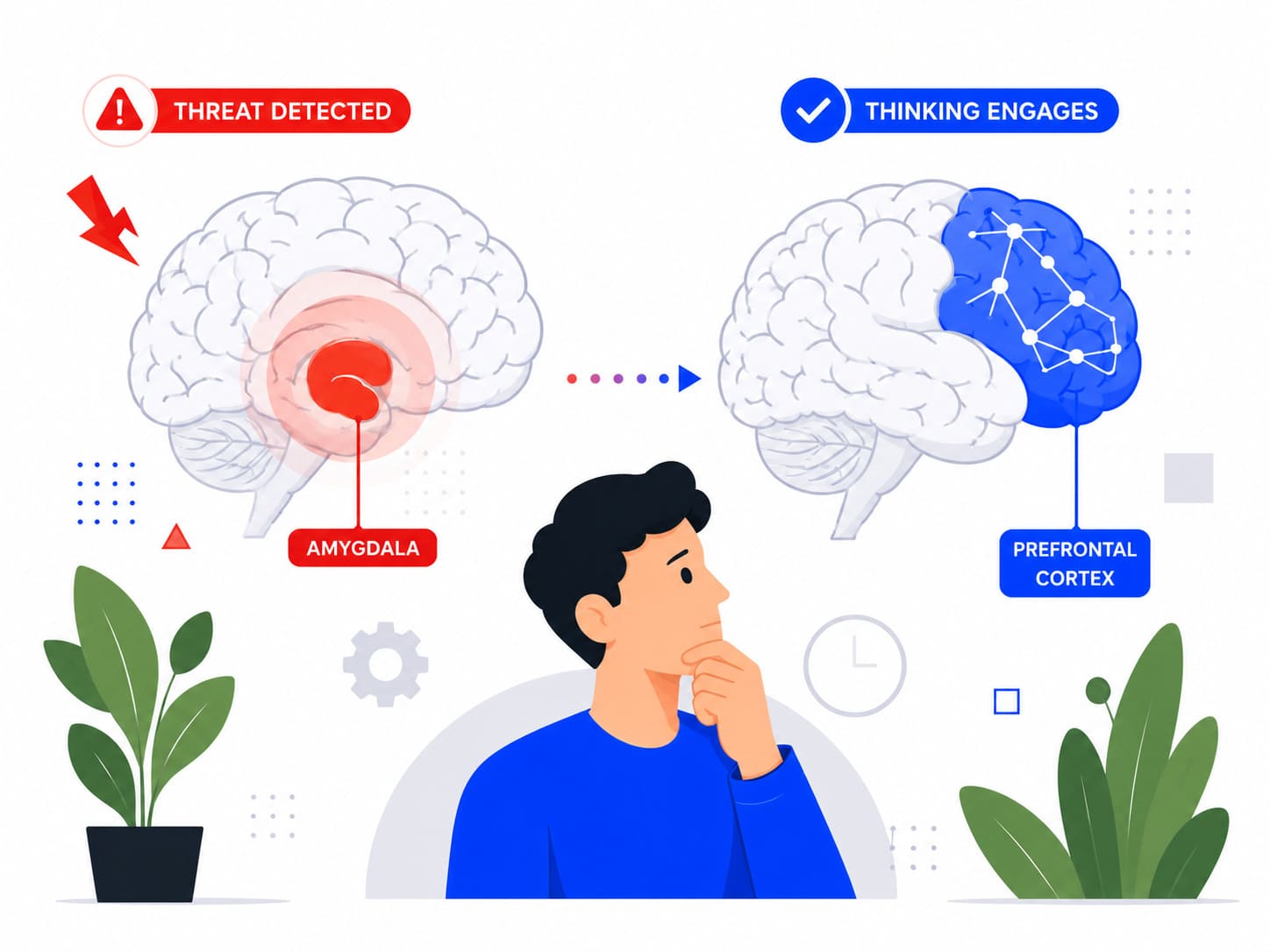
What Is the Amygdala Hijack, and Why Does It Make You Act Before You Think?
Fear activates a part of the brain called the amygdala before the slower, more reasoned parts of the brain get a chance to weigh in.
Researchers call this the amygdala hijack. It evolved to help you react to real physical danger, not to fake legal threats delivered over a phone call.
The response is the same one that once helped a person react to a genuine physical threat faster than conscious thought allowed. It floods the body with stress hormones and narrows attention onto the immediate danger.
Scammers do not need to understand the neuroscience to exploit it. They only need to know that fear tactics in scams work faster than reasoning does, and that a person mid-panic rarely stops to check a source.
That narrowed attention is also why victims of digital arrest scams often describe losing track of time entirely. Some stay on a call for hours without registering how long it has actually been.
Tech support scams rely on a milder version of the same hijack. A fake virus warning, paired with a phone number to call immediately, triggers the same rush past careful thinking that a fake arrest warrant does.
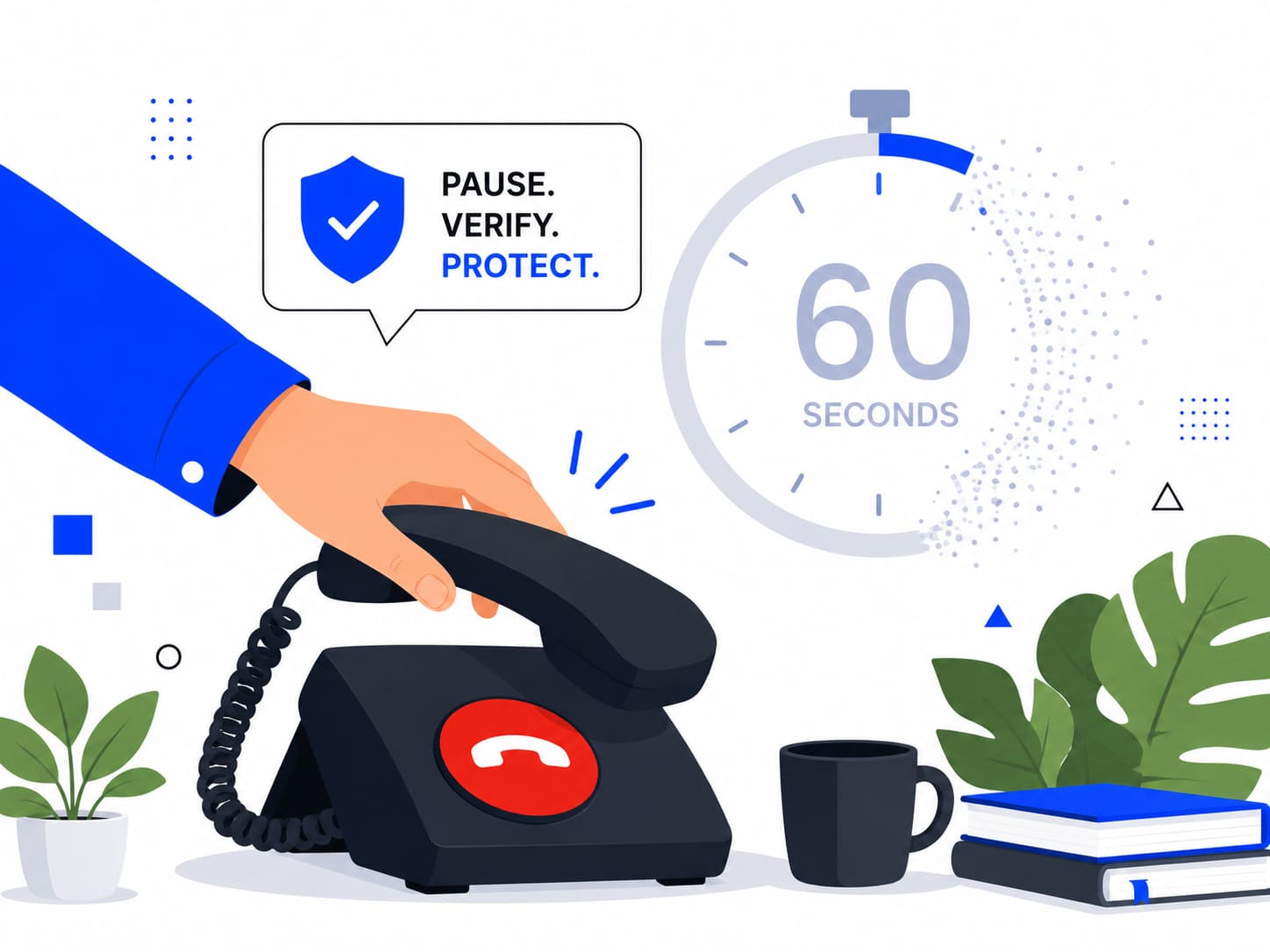
What Is the Pause-and-Verify Rule, and Why Does 60 Seconds Change Everything?
The single rule that undoes almost every fear-based scam is simple. Before acting on anything that demands immediate compliance, stop for sixty seconds.
Hang up. Do not use any number, link or app the caller has given you. Look up the organisation’s number independently, then call that instead.
If a caller objects to you verifying, or grows more aggressive when you say you need to check, treat that reaction itself as confirmation you are dealing with a scam.
Genuine police officers, bank staff and government departments do not object to a citizen confirming their identity through an official channel.
People under stress make worse decisions, and scammers deliberately target moments when you are busy, tired or already anxious. Our guide to why you are more likely to be scammed when tired or stressed goes further into this pattern.
If you believe you are already on a call like this, hang up immediately and report it through the National Cyber Crime Reporting Portal or the 1930 helpline. The FTC’s Scam Alerts page tracks similar fear-based tactics used internationally, and the UK’s NCSC Cyber Aware guidance covers the same pause-and-verify habit.
Frequently Asked Questions
Why do I panic during a scam call even though I logically know something feels off?
Because fear activates faster than reasoning does. The amygdala hijack means your body reacts before your slower, more careful thinking has a chance to catch up.
This is not a failure of intelligence. It happens to careful, experienced people too.
Is it normal to still feel shaken after realising a call was a scam?
Yes, and that reaction is a physical one, not just a mental one. The stress response does not switch off the instant you hang up.
Give yourself time, and talk to someone you trust about what happened.
Can a scam call really keep someone on video for hours or days?
Yes, and digital arrest scams are built around exactly that. The caller keeps escalating the story just enough to justify staying on the call, which prevents the victim from stepping away long enough to check it.
If you are ever told you cannot hang up or leave a call, that instruction alone is a sign the call is fraudulent.
What This Comes Down To
Fear tactics in scams work by removing your ability to check whether a threat is real before you respond to it.
That removal is the entire attack. Nothing about the story needs to be true for the fear to feel real.
One habit changes the outcome every time. Treat panic itself as the warning sign, then pause before you act on anything it is pushing you toward.
If this was useful, share it with someone who needs to know.


1 comment
Comments are closed.