
The same message that you would dismiss instantly on a calm Sunday morning can slip straight past your defences at the end of a long, exhausting day. The message did not change. You did. Decision fatigue and scams are connected more directly than most people assume.
Decision fatigue and scams are linked more directly than most people realise. Every decision you make throughout a day, what to eat, which email to answer first, whether to take a call, draws from the same limited mental resource, and that resource genuinely depletes with use.
Scammers do not need to outsmart you. They only need to reach you in the specific window when your usual scepticism is running on empty, and they have learned, through testing at scale, exactly when that window tends to open.
This post explains what decision fatigue actually is, why stress narrows your thinking in ways that specifically help scammers, and how to protect yourself during the hours when you are most exposed. This connects to the broader guide on how platforms exploit your brain.
What Is Decision Fatigue, and Why Does It Affect Scam Vulnerability?
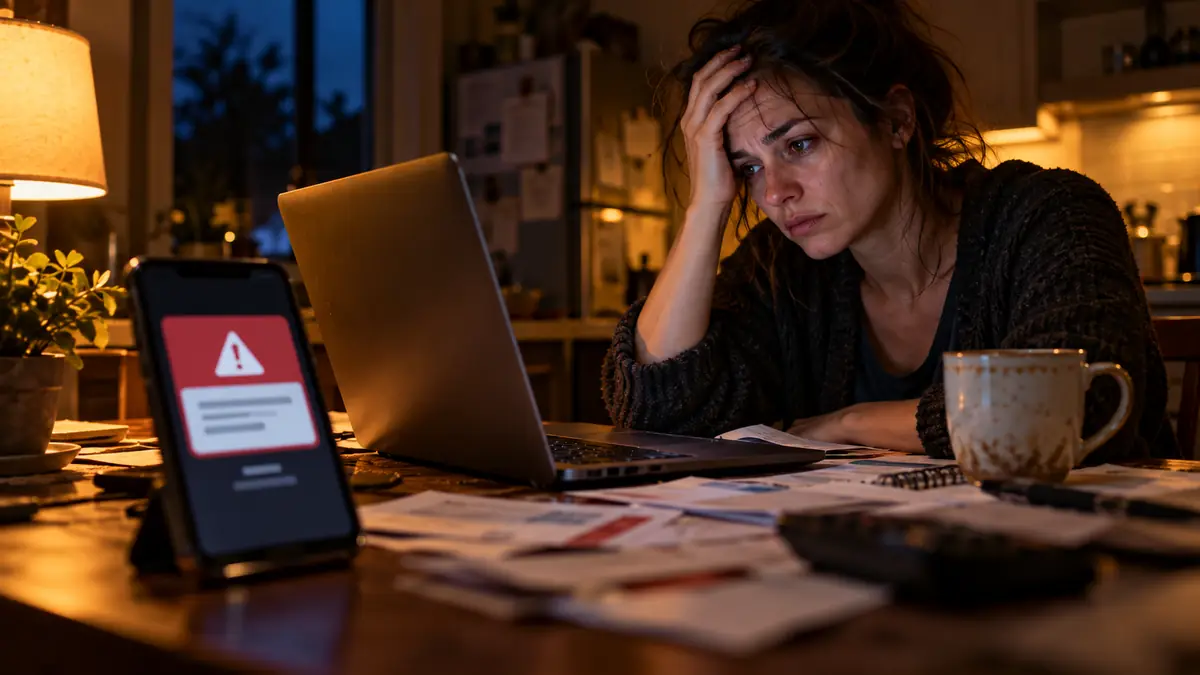
Decision fatigue describes the measurable decline in the quality of your decisions after a long sequence of choices, regardless of how important any single one of those choices was individually. The mental resource involved is finite, and it does not distinguish between deciding what to have for lunch and deciding whether a text message is legitimate.
By the evening, after a full day of work decisions, family logistics, and minor daily friction, your capacity for careful, sceptical evaluation is measurably lower than it was that morning, even though you feel like the same person making decisions the same way.
This is precisely why scam call centres, including those documented running digital arrest and courier fraud operations, frequently schedule call volume around commute hours and evenings specifically, periods when targets are more likely to be mentally depleted and less likely to pause and verify. AARP’s Fraud Watch Network specifically documents this timing pattern in its fraud alerts.
This is also why the same person can recognise a scam pattern instantly in a calm conversation the next day, yet miss the same pattern entirely while it was actually happening to them. The gap is not intelligence or awareness. It is simply the point in the day at which the decision was made.
How Does Acute Stress Specifically Narrow Your Thinking?
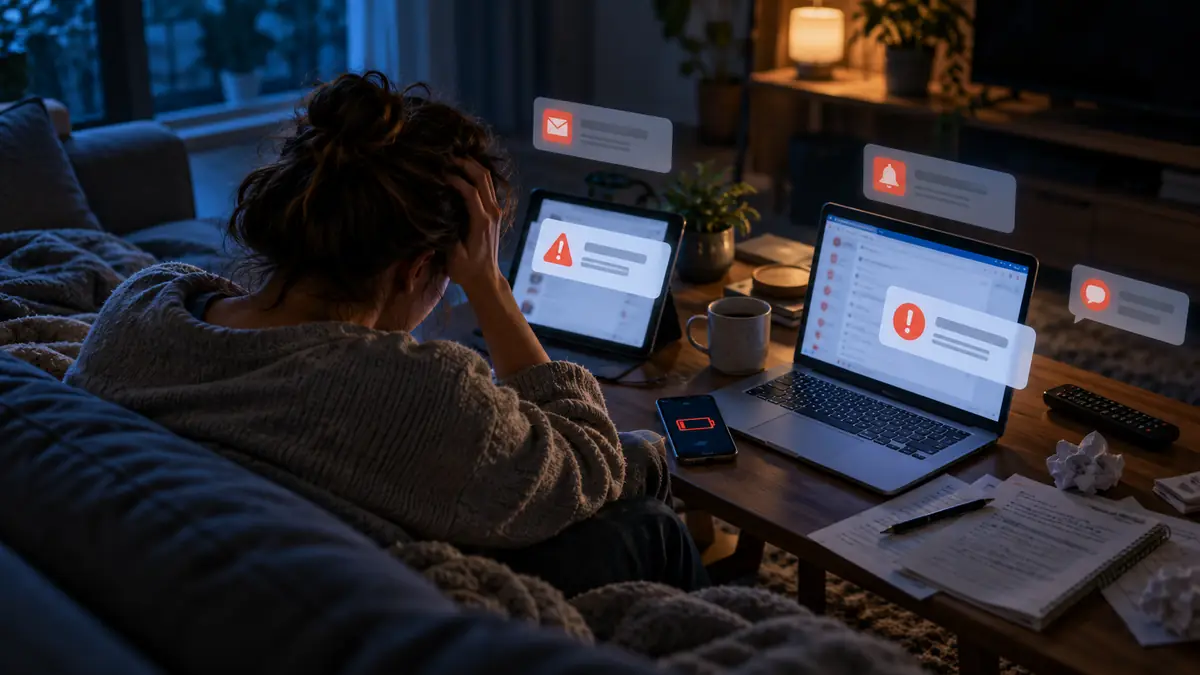
Stress triggers a physiological response that prioritises fast, instinctive reactions over slow, deliberate analysis, a response that served humans well against physical threats and serves scammers well against a fabricated financial or legal threat.
Under acute stress, your attention narrows toward whatever feels most urgent in front of you, the threat itself, and away from the wider context that would normally prompt a pause, like the caller’s number looking unfamiliar or the request being unusual for that organisation.
This connects directly to how fear and urgency are used to scam people, since manufactured urgency is specifically designed to trigger this same narrowing effect on demand, rather than waiting for it to occur naturally.
Physical stress compounds the mental version. Poor sleep, skipped meals, and prolonged financial or family pressure all measurably reduce the same cognitive resources that decision fatigue draws down, which is part of why difficult personal periods tend to coincide with higher scam vulnerability, not just coincidentally worse luck.
Grief and major life transitions carry a similar, often longer-lasting version of this same narrowing. Someone recently bereaved, newly unemployed, or going through a divorce is managing a sustained cognitive load that rarely lets up for weeks or months at a time, which is one reason scam recovery specialists frequently report clusters of new victims emerging shortly after a documented major life disruption rather than at random.
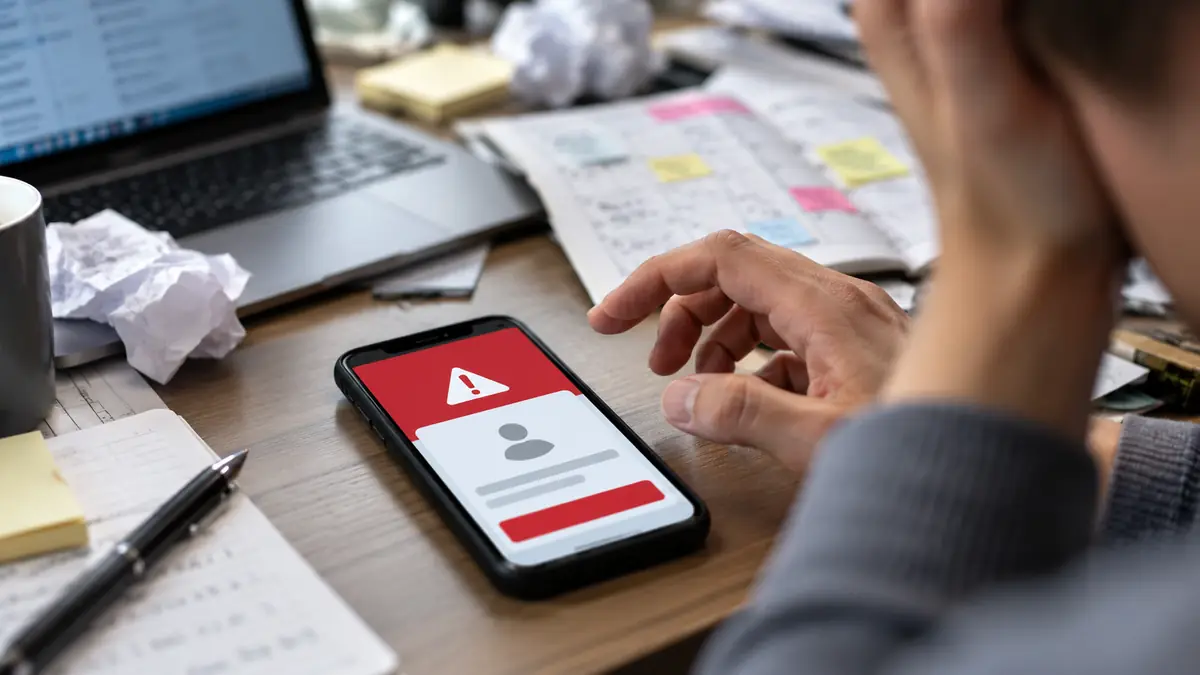
Why Do Scammers Deliberately Target Tired or Stressed Moments?
Documented scam operations, including organised digital arrest scam centres investigated by Indian cybercrime units, follow scripted calling schedules that specifically favour late afternoon and evening hours, aligning with when targets are most likely to already be mentally depleted from the day.
Scammers running romance and investment schemes over longer timeframes exploit the same principle differently, deliberately extending conversations late into the night, when a target’s judgment is already naturally weaker, before introducing a financial request.
This is not a coincidence born from convenient timing. It reflects the same tested, refined approach covered in the cognitive biases scammers deliberately trigger, applied specifically to the moments when your defences are structurally at their lowest.
Corporate targeting follows the same logic at a larger scale. Business email compromise attempts are frequently timed for late Friday afternoons, when staff are mentally winding down for the week and a request from an apparent senior executive is less likely to be checked as carefully as it would be on a fresh Monday morning.

How Do You Protect Yourself During Your Most Vulnerable Hours?
Build a simple, fixed rule for yourself in advance: no financial decisions, no sharing of personal information, and no urgent action taken over the phone after a certain point in your day, regardless of how convincing the request sounds in the moment.
If a call or message demanding urgent action arrives when you are already tired or stressed, tell the caller you will call back, using a number you look up independently rather than one they provide. A legitimate organisation will never object to this.
Recognise your own personal pattern of vulnerability, whether that is late evenings, immediately after a difficult meeting, or during a period of broader personal stress, and treat those windows as ones where extra caution is deliberately warranted, not optional.
Involve a second person deliberately during any period of known heightened stress, a family member or trusted friend who agrees in advance to be the person you check unusual financial requests with, since a fresh perspective is often what a depleted mind cannot reliably supply for itself in the moment.
For more on this, see the American Psychological Association, the FBI’s IC3, and the Reserve Bank of India.

Frequently Asked Questions
Does decision fatigue affect everyone the same way?
The underlying mechanism affects everyone, though individual thresholds vary. People managing high daily cognitive loads, caregivers, shift workers, and those under prolonged financial stress, tend to reach depleted states more often and more severely, which is part of why these groups are disproportionately targeted.
Can you actually recover mental sharpness within the same day?
Yes, to a meaningful degree. Short breaks, food, and even briefly stepping away from a stressful task measurably restore some decision-making capacity, which is one practical reason to delay any consequential response until you have done exactly that.
Decision fatigue and scams are connected precisely here: scammers do not need to outsmart you, only reach you during the hours when your natural scepticism is running on empty, and they have learned precisely when those hours tend to fall.
Set your own fixed rule today, since decision fatigue and scams both peak late: no urgent financial decisions after a specific point in your day, no exceptions, regardless of how convincing the call sounds.
If this was useful, share it with someone who needs to know.