
Romance scam manipulation usually starts small. The person on the other side of the screen knows your name, remembers your interests, and asks how your day was, every single day.
They feel real, because everything about how they talk to you was built to feel that way.
The photo, the job, the background story, none of it needs to be true for the manipulation to work. It only needs to be convincing.
FBI San Antonio reported that victims lost more than 28 million dollars to romance and confidence scams in 2025, nearly double the 15.8 million dollars lost in 2024.
Over 64,000 people in the US lost money to romance scams in a single year. The median individual loss was 2,000 dollars, according to FTC Consumer Sentinel and FBI IC3 data.
Pig butchering variants of the same scam, which combine romance with a fake investment, averaged losses above 38,000 dollars. The financial mechanics of that escalation are covered separately later in this guide.
This post explains how fake personas and catfishing identities are built, and what love bombing actually looks like. It also covers why isolation from friends and sceptics is part of the plan. Last, it shows how to recognise romance scam manipulation before it costs you anything. It builds on the wider pattern in our guide to how scammers manipulate people.
How Are Fake Personas and Catfishing Identities Actually Built?
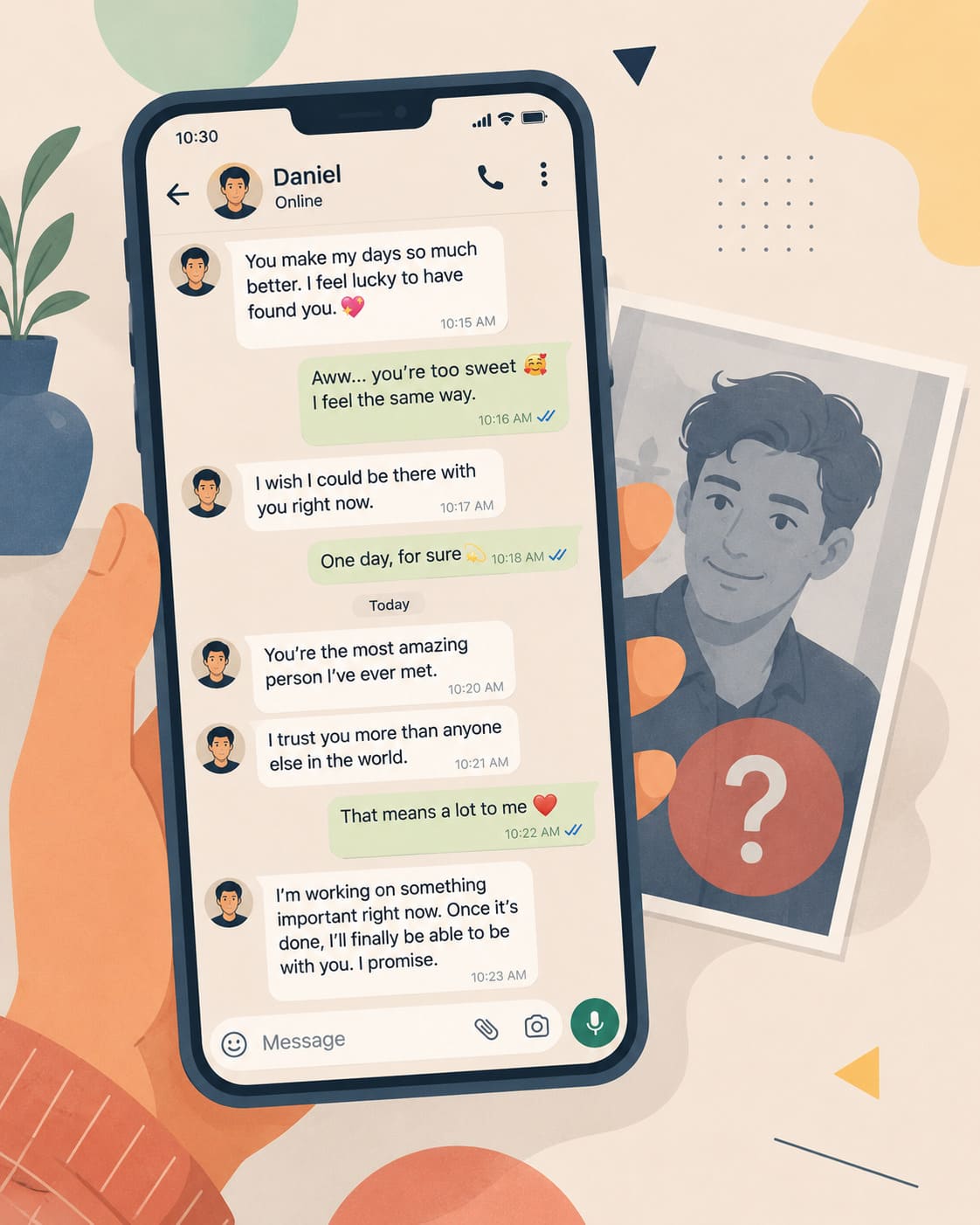
A convincing fake identity starts with a photo, usually stolen from someone else’s real social media profile.
The job title, the location, and the life story around that photo get built to sound successful without being checkable. “Oil rig engineer overseas” and “military doctor on deployment” are common choices, because both explain why a video call is never quite possible.
AI-generated identities have made this easier still. A synthetic photo that has never belonged to a real person cannot be exposed by a reverse image search the way a stolen one can.
Our guide to how scammers build trust before they strike covers the wider pattern of manufactured familiarity that makes any of this feel earned rather than performed.
None of this requires the scammer to be a skilled writer. Scripts get reused across hundreds of targets at once, adjusted only for the details each victim happens to share.
Many of these operations run out of large, organised scam centres rather than a single person acting alone. Workers there are often trafficking victims themselves, running dozens of fake profiles on a schedule. That is part of why the messages feel consistent and available at almost any hour.
What Is Love Bombing, and Why Does It Work So Well?
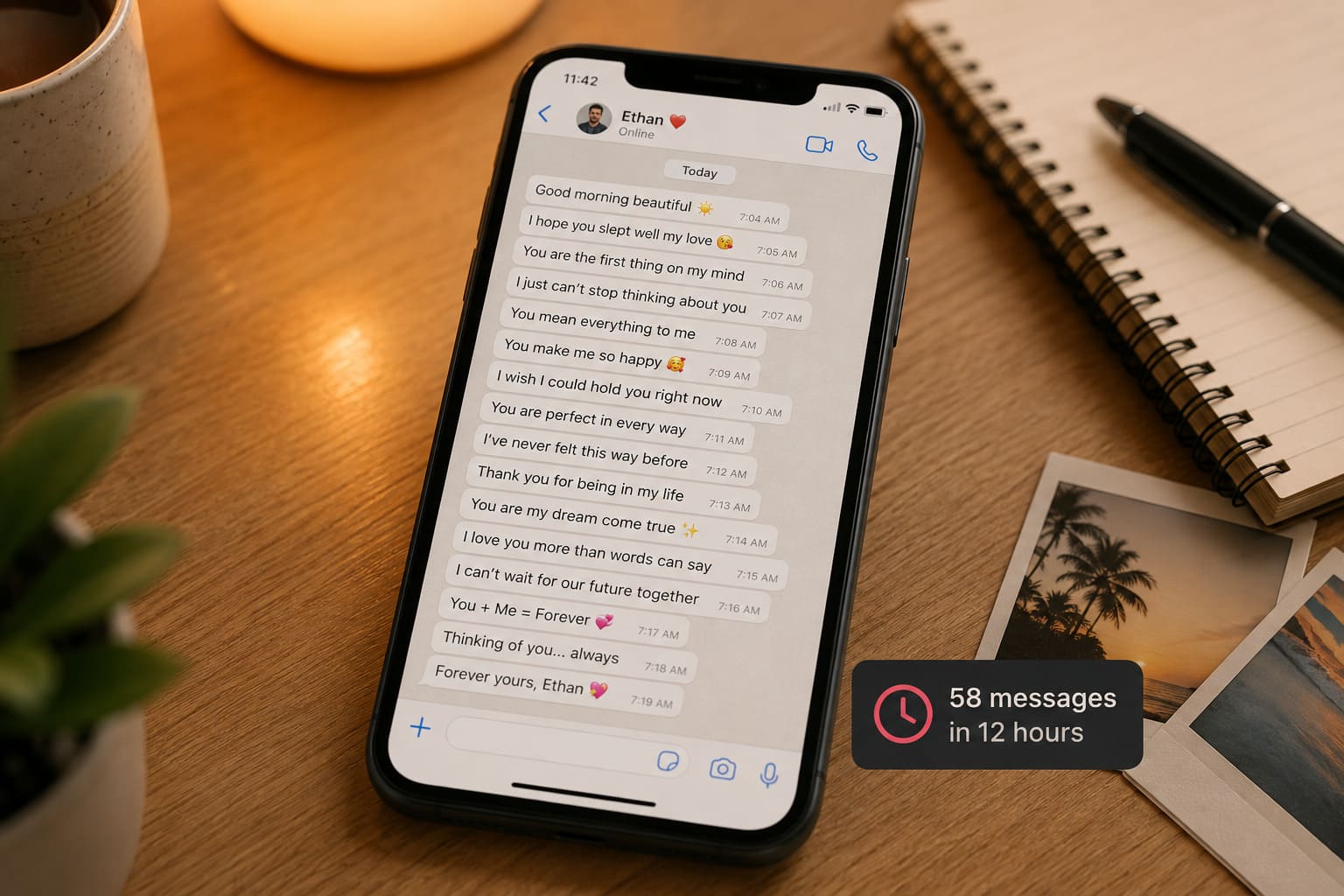
Love bombing is affection delivered at a pace and intensity that would feel unusual from someone you had actually met in person.
Messages arrive constantly. Compliments come fast and specific. Talk of a shared future starts within days, sometimes hours, long before any of it could reasonably be true.
This works because it answers a real need. Someone who is lonely, recently widowed, or newly divorced is not gullible for responding to consistent warmth. They are human.
Romance scam manipulation specifically targets that gap. Sympathy and loneliness are not weaknesses being exploited by accident. They are the exact entry point the approach was designed around.
The intensity itself is the tactic. It leaves no time to notice the relationship has no independent verification behind it. There is only a growing pile of messages that feel increasingly hard to walk away from.
Why Do Romance Scammers Try to Isolate You From Sceptics?
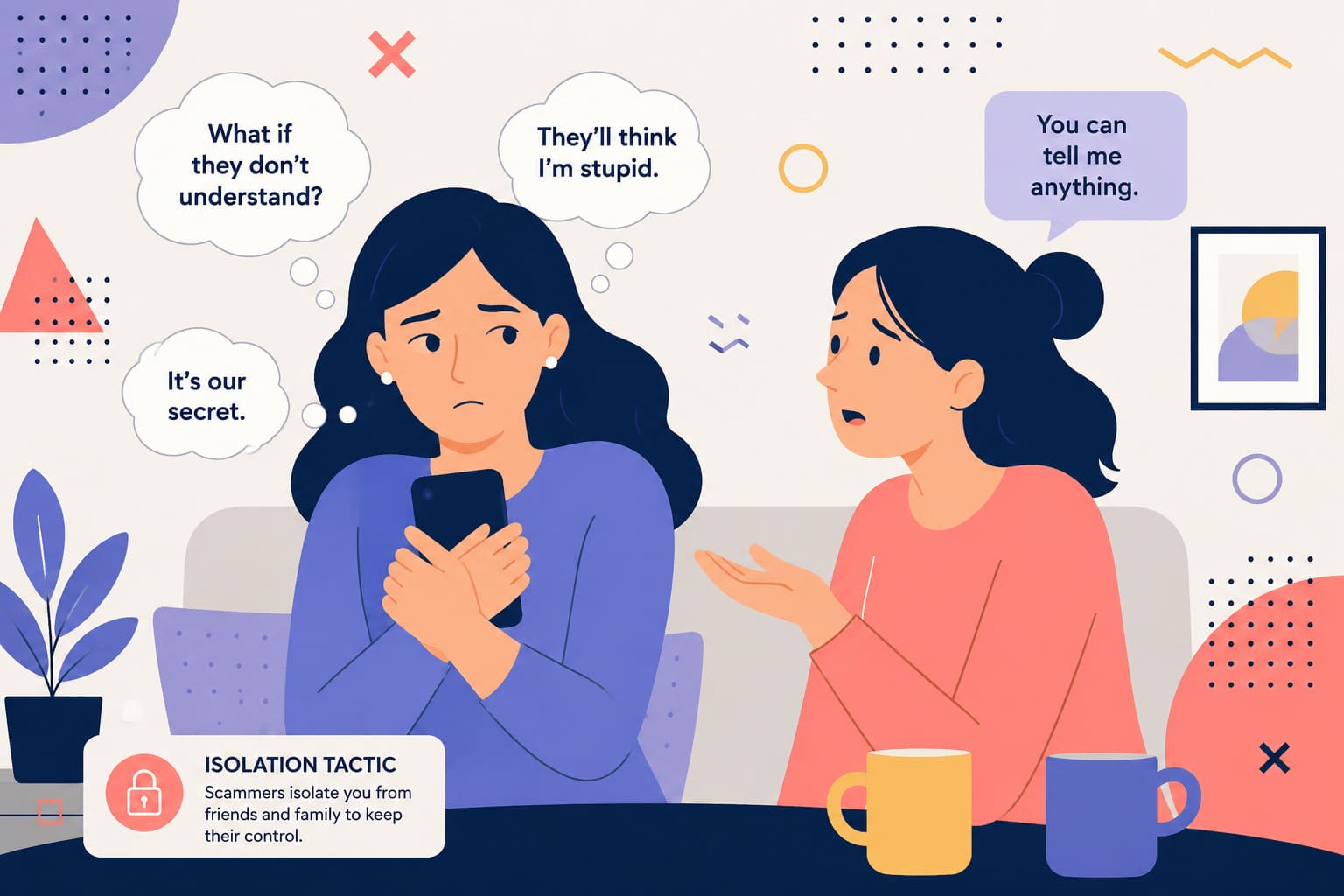
A friend who has never met this person will ask the questions the victim has stopped asking. Romance scammers know this, and they work to prevent it from happening.
Comments like “nobody understands what we have” or “your family is just jealous of our connection” reframe healthy scepticism as a threat to the relationship itself.
The isolation rarely looks dramatic. It shows up as a gentle discouragement from mentioning the relationship to people who might ask hard questions, framed as protecting something private and precious.
By the time a financial request appears, often introduced as a shared investment opportunity, nobody may be left in the picture. Nobody who could have said it sounds wrong.
The financial mechanics of that escalation, particularly in pig butchering schemes where the relationship exists to enable an investment, are covered later in this guide.
How Do You Recognise Romance Scam Manipulation Before It Costs You?
Romantic feelings are real even when the person creating them is not. That is not a failure of intelligence. It is the intended result of a carefully built operation.
A few patterns show up consistently. No video call ever quite happens, and the reason always shifts. Money or gift cards get requested for an emergency, a customs fee, or a “guaranteed” investment. Questions about verifying identity get met with guilt or deflection rather than a straight answer.
The financial version of romance scam manipulation, where the relationship exists mainly to fund a fake investment, follows a well-documented arc. Our guide to pig butchering and dating scams covers exactly how that escalation unfolds, from the first small request to the final one.
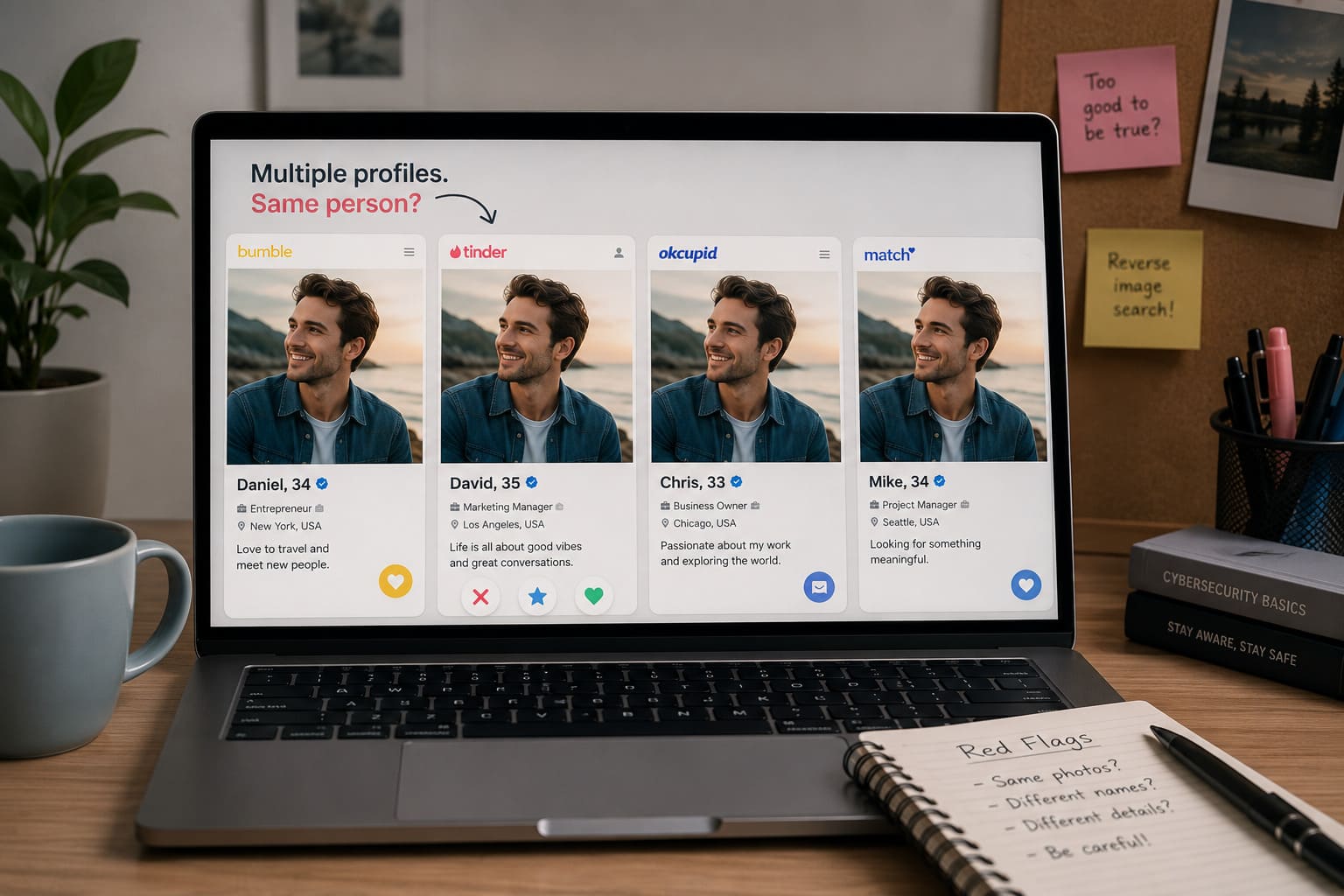
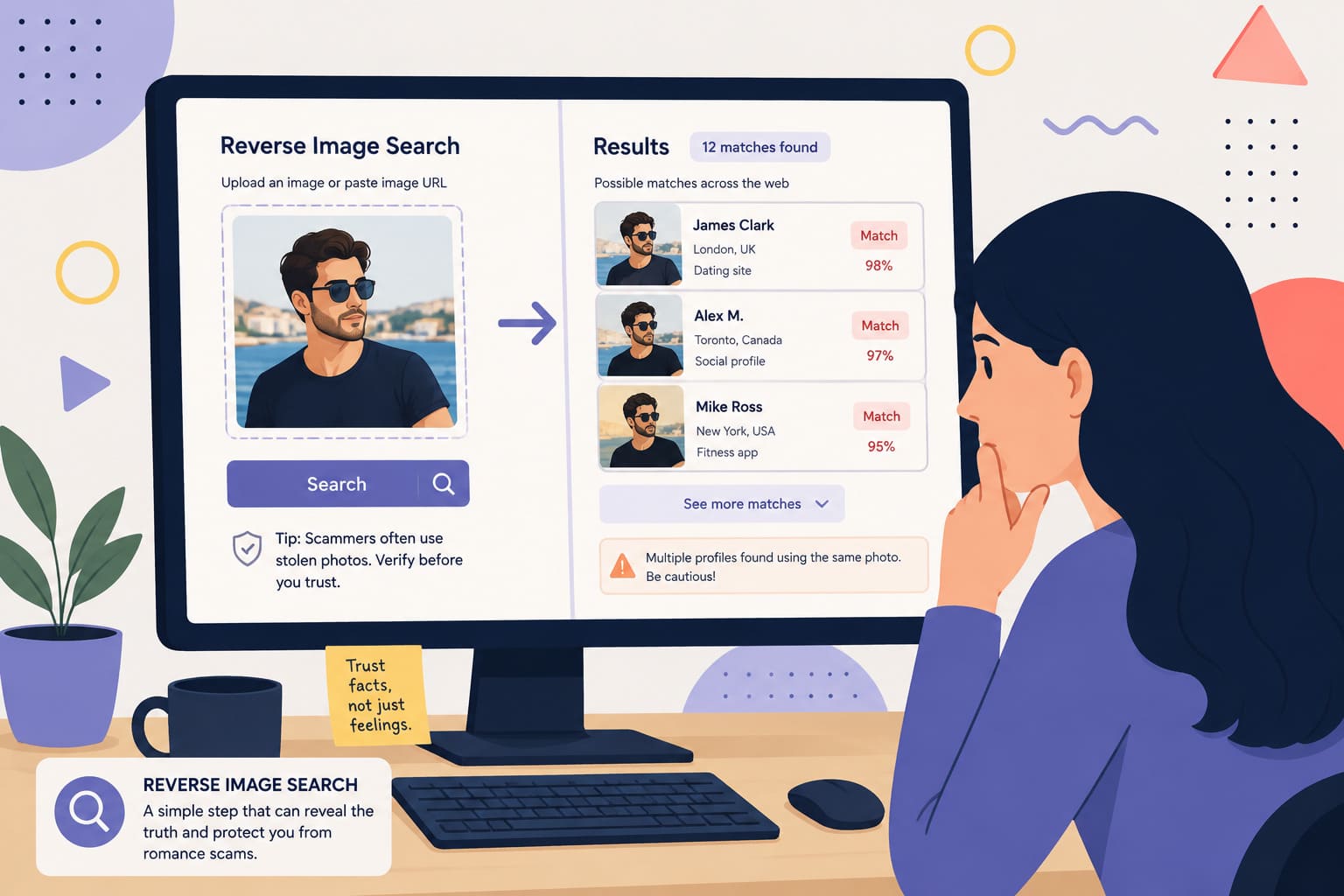
Before sending money to, or sharing intimate content with, someone you have only met online, reverse-image-search their profile photo. If the same picture shows up under different names on other profiles, that is your answer.
Dating platforms carry specific risks worth understanding on their own terms. Our guide to dating app safety and what platforms don’t tell you covers the platform side of this pattern in more depth.
If you believe you are in the middle of this pattern right now, stop sending money and talk to someone outside the relationship before making another decision.
The Global Anti-Scam Organisation has detailed, survivor-written guidance on recognising and exiting this exact pattern. The FBI’s Internet Crime Complaint Center tracks the same pattern across the US.
In India, report it through the National Cyber Crime Reporting Portal or the 1930 helpline.
Frequently Asked Questions
How can I tell if someone I met online is using a fake identity?
Reverse-image-search their profile photo, and ask for an unplanned video call rather than a scheduled one.
A consistent refusal to appear on camera, paired with a reason that always shifts, is one of the clearest signs available.
Is it my fault if I fell for a romance scam even though I consider myself careful?
No. Romance scam manipulation is built by people who run this operation on hundreds of targets at once, refining the script each time.
Falling for a convincing, well-tested performance is not a judgement failure on your part.
Why do these scams so often target people who are lonely or recently widowed?
Because a scammer offering consistent attention lands hardest on someone whose need for connection is genuinely unmet at that moment.
That is not a flaw in the person being targeted. It is a deliberate choice by whoever is running the operation, based on who is statistically most likely to respond.
What This Comes Down To
Romance scam manipulation works by making a constructed relationship feel indistinguishable from a real one, right up until money enters the picture.
The feelings involved were genuine. The person creating them, and the story behind them, usually was not.
One habit protects you: verify anyone you have only met online through a channel they do not control, before you act on how the relationship feels.
If this was useful, share it with someone who needs to know.