

A sunk cost trap scam works on a feeling almost everyone recognises. Have you ever sat through a bad film just because you had already paid for the ticket?
Or kept an investment that was clearly failing because you had already put in too much to walk away?
That impulse has a name. It is the sunk cost fallacy, and it is exactly what this kind of scam is built around.
Money, time or effort you have already spent is gone either way. Whether you continue has nothing to do with it, yet it feels like it has everything to do with it.
Scammers do not need to convince you a second time that they are trustworthy. Your own past decisions do that work for them. It builds on the wider pattern in our guide to how scammers manipulate people.
Rajni Goswami, a Napa, California resident, lost 300,000 dollars in a pig butchering scheme. She had matched with a scammer on a dating app after the end of a 32-year relationship. Over several months she was gradually persuaded to invest more, each new amount justified by what she had already put in. She later told ABC7 she kept going because she felt she had already committed too much to stop.
This post explains how a small first yes leads to a much bigger one, and why past investment drives future compliance. It also covers how this escalation plays out in investment and romance scams, and the one test that breaks a sunk cost trap scam before it costs you everything.
How Does a Small Yes Turn Into a Much Bigger One?
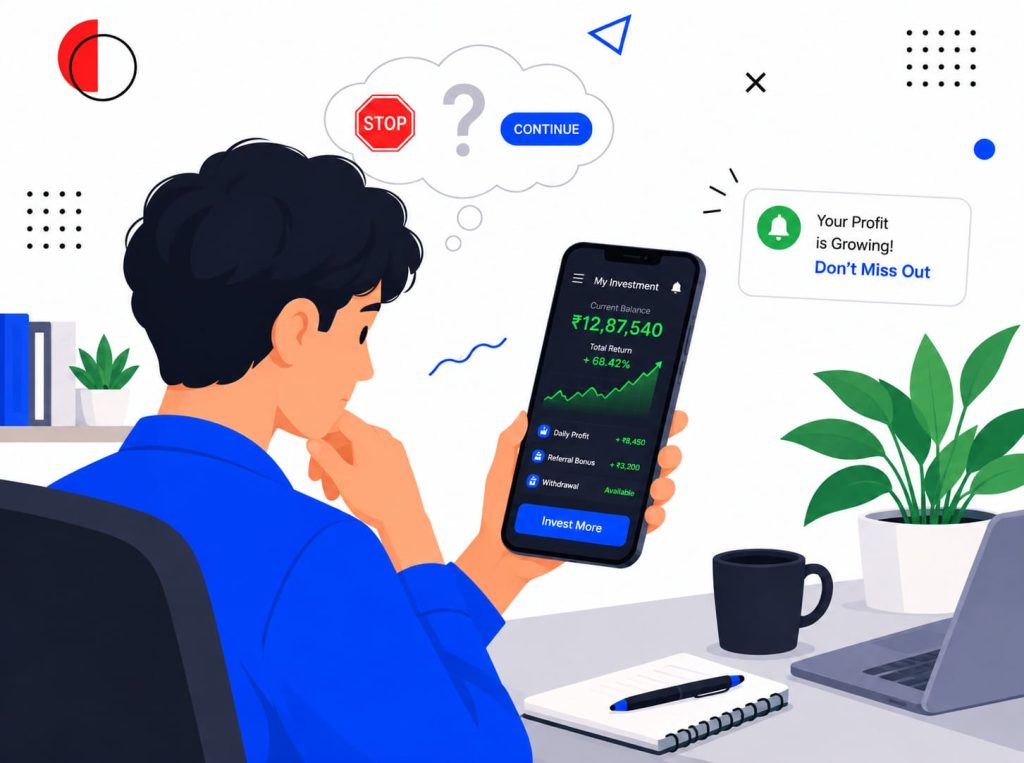
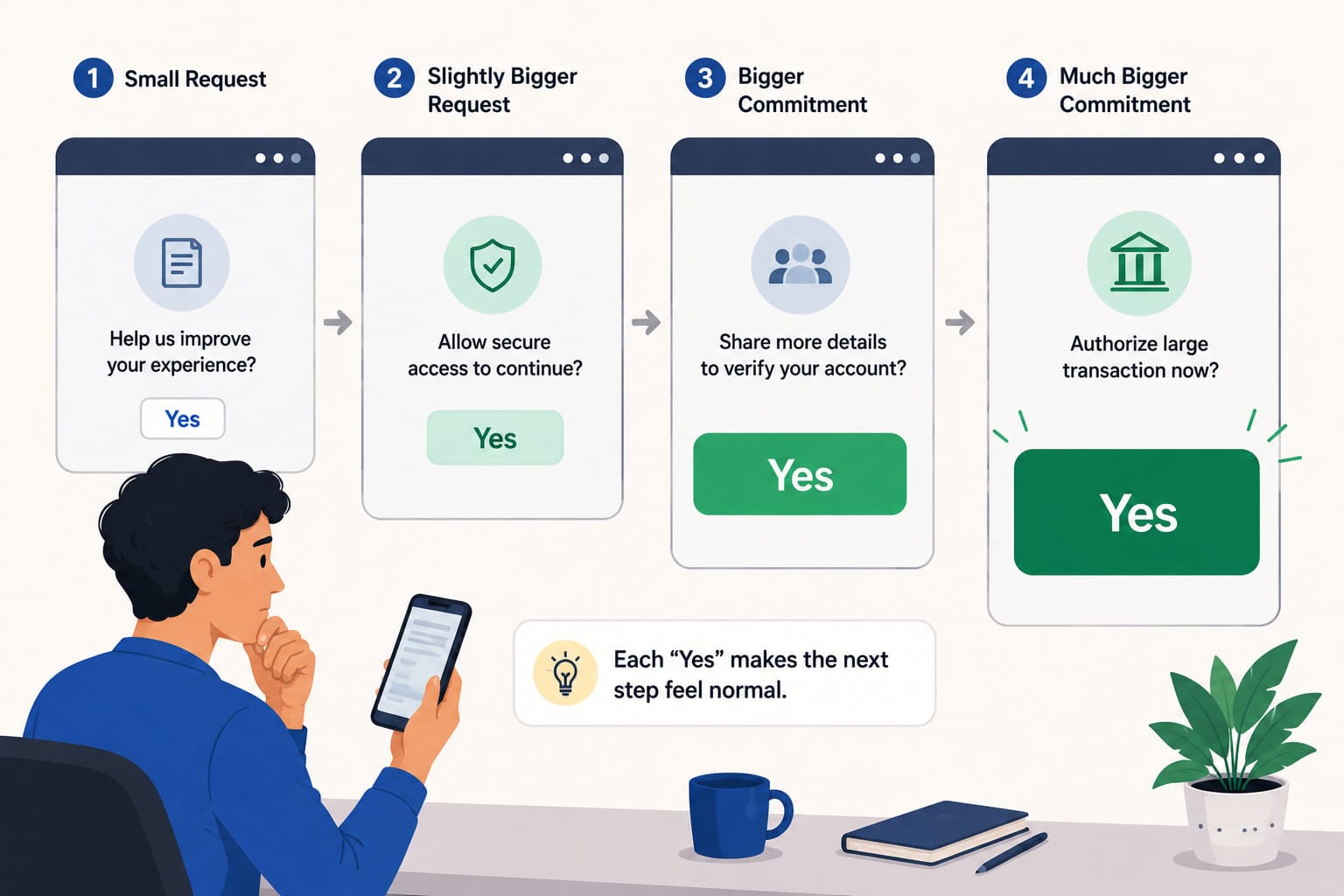
Scammers rarely open with a large request. The first ask is small, easy to agree to, and barely feels like a commitment at all.
This is called foot-in-the-door. Once you say yes to something small, saying yes to something slightly bigger next time feels consistent, almost automatic.
Each yes also becomes part of how you see yourself. Someone who has already invested time in a relationship, or money in an opportunity, starts to think of themselves as the kind of person who follows through. Not the kind of person who quits halfway.
Scammers lean on that identity directly. A message like “I know you’re serious about this, not like the others who gave up” turns consistency into an obligation you feel toward your own self-image.
Public commitment adds another layer. Telling a friend about the exciting new investment, or introducing an online partner to family over video call, locks the decision in socially. Reversing it now feels like admitting you were wrong in front of people who were watching.
Why Does a Sunk Cost Trap Scam Make You Want to Keep Going?
The sunk cost fallacy is not really about money. It is about identity, and about avoiding the discomfort of admitting a mistake.
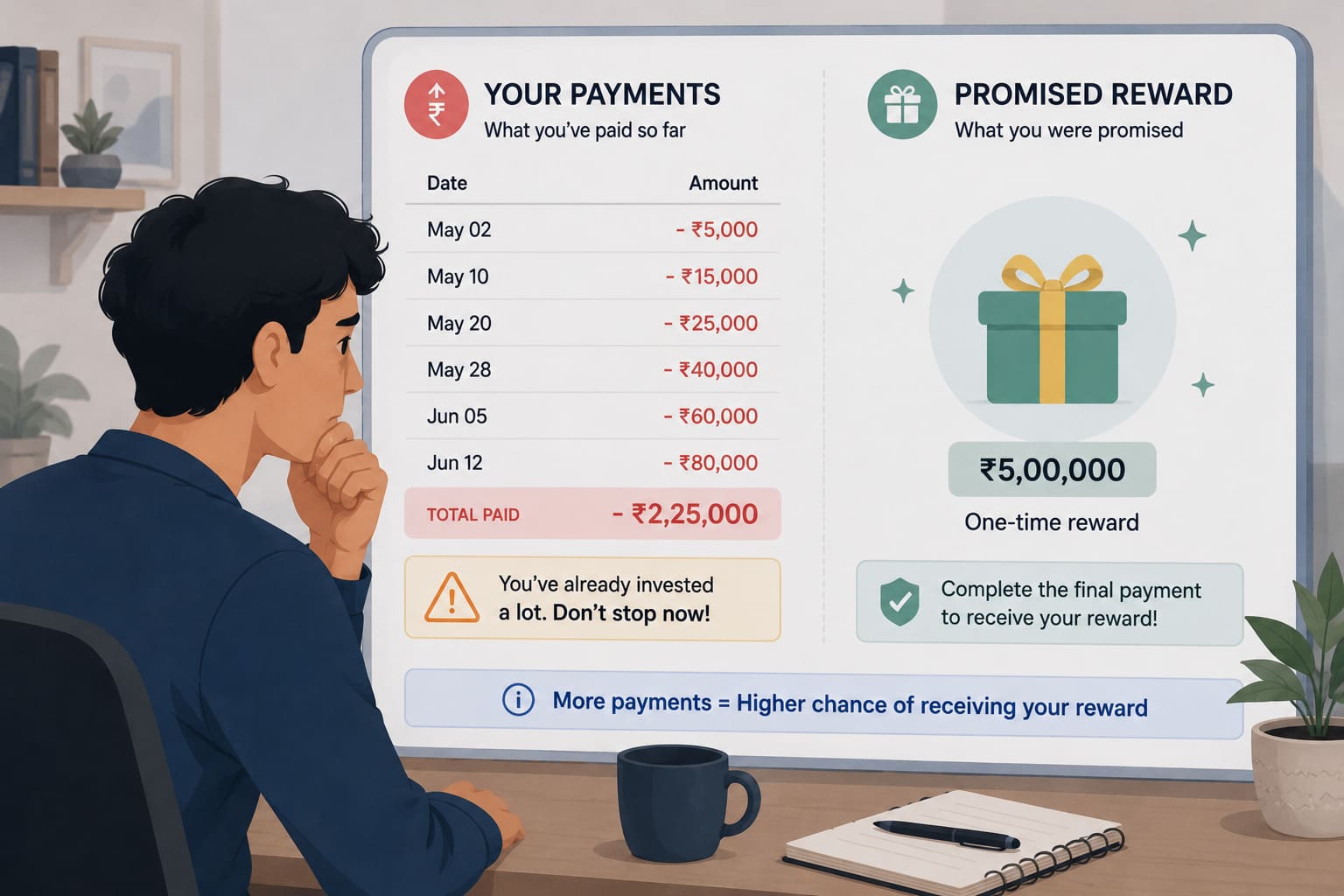
Stopping now would mean accepting that everything already spent bought nothing at all. Continuing, even with more money, feels like it protects that earlier investment somehow.
It does not. Money already lost stays lost whether you send more or not. This works precisely because that logic is obvious from the outside and almost invisible from the inside.
The scammer’s job at this stage is simple. They only need to keep the story alive long enough for your own past decisions to keep doing the persuading.
Each new request gets framed as the one that finally unlocks the return, the relationship, or the resolution. Stopping now feels like quitting one step before the finish line.
How Does This Escalation Play Out in Investment and Romance Scams?
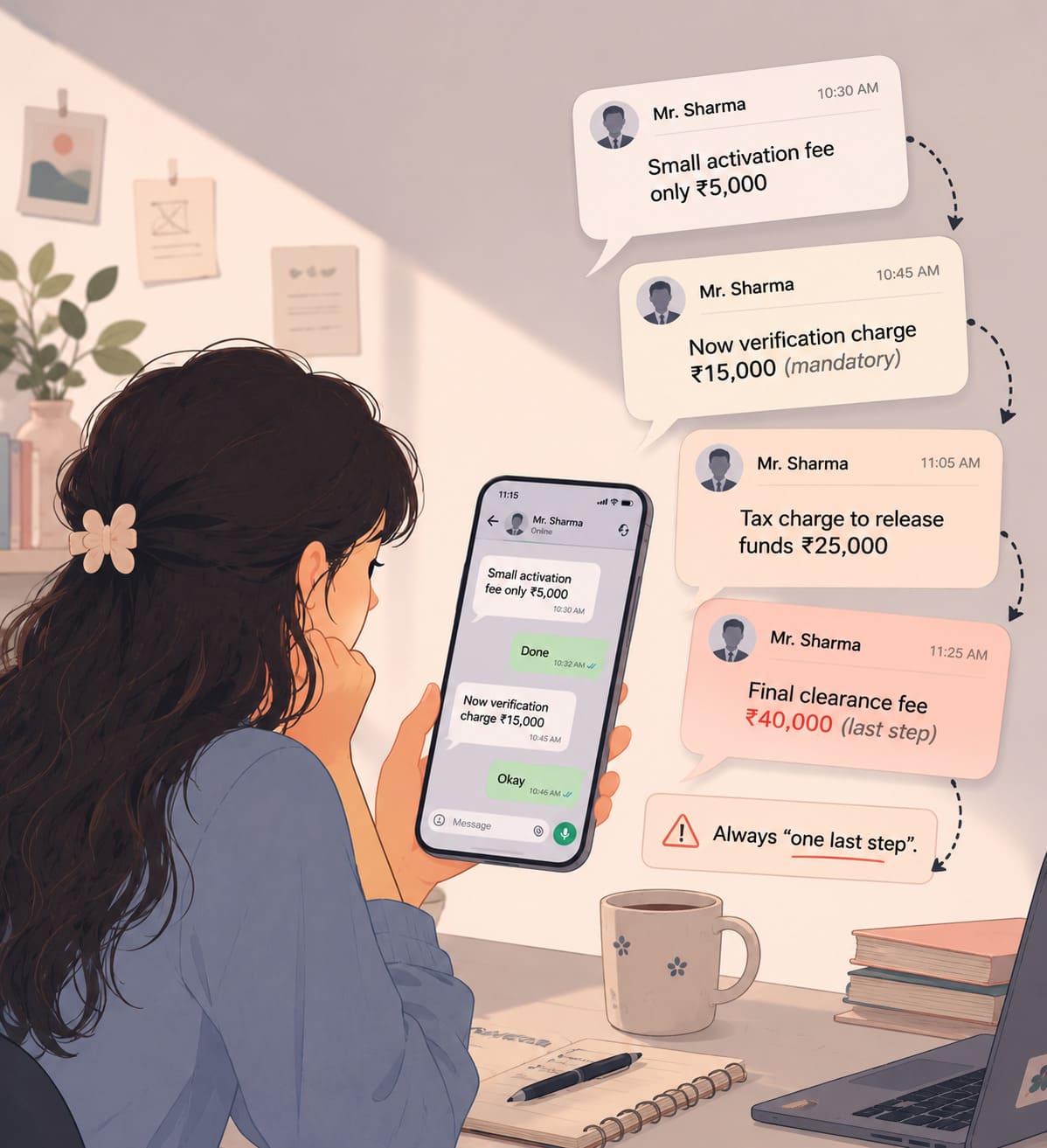
Pig butchering schemes follow this pattern almost exactly. Weeks of warmth and connection come first, then a small, successful-seeming investment, then a request to invest more.
Withdrawal requests get blocked with a “tax” or “fee” that must be paid first. That new payment gets justified by everything already invested, which pulls the victim one step deeper rather than one step out.
Romance scam victims in the US lost a combined 823 million dollars in 2024, according to FTC Consumer Sentinel data. Pig butchering losses get classified as investment fraud. Once those are included, the total rises to 5.8 billion dollars, per the FTC and FBI’s Internet Crime Complaint Center.
Our guide to pig butchering and dating scams covers the full arc of this operation.
Our guide to lottery, prize and investment scams covers the same escalation pattern outside a romantic context.
Reciprocity plays a supporting role too. A scammer who gave attention and warmth early on relies on the same instinct that makes any gift feel like it deserves a return. Our guide to the reciprocity trap explains that mechanism in more depth.
What Is the Fresh Eyes Test, and How Do You Use It?
The fresh eyes test asks one question. If you were hearing about this exact situation today, for the first time, with no money already involved, would you still say yes?
Not “should I keep going because of what I already put in.” Just: would this specific request, on its own, sound reasonable to a person with nothing invested yet?
Describing the situation out loud to someone outside it works the same way. A friend or family member who has no history with the story can spot what your own sunk cost cannot let you see.
If the honest answer to the fresh eyes test is no, that answer does not change because of what has already been spent. It only gets harder to hear the longer you wait.
If you believe you are caught in a sunk cost trap scam right now, stop sending money immediately and talk to someone you trust before making another payment. The Romance Scam Recovery community has detailed guidance on recognising and exiting exactly this pattern.
Report it through the National Cyber Crime Reporting Portal or the 1930 helpline in India. If the scam involved a US-based platform, the FBI’s Internet Crime Complaint Center is the equivalent route.

Frequently Asked Questions
Why do people keep sending money even after they suspect it is a scam?
Because stopping means accepting that the money already sent bought nothing, which feels worse in the moment than sending a little more.
That feeling is normal, but it does not change the math. Money already spent stays spent either way.
How is a sunk cost trap scam different from just being tricked once?
A one-time trick relies on a single convincing lie. A sunk cost trap scam relies on your own past decisions to keep justifying the next one, which is why it can continue for months.
Recognising that your prior investment is being used against you, rather than protected by continuing, is what breaks the cycle.
What This Comes Down To
A sunk cost trap scam does not need a new lie for every payment. It only needs your last one.
What you have already spent is spent, whether you send more or not, and no amount of continuing changes that fact.
One habit protects you. Before the next payment, apply the fresh eyes test, and let someone with no history in the story tell you honestly what they see.
If this was useful, share it with someone who needs to know.


2 comments
Comments are closed.