

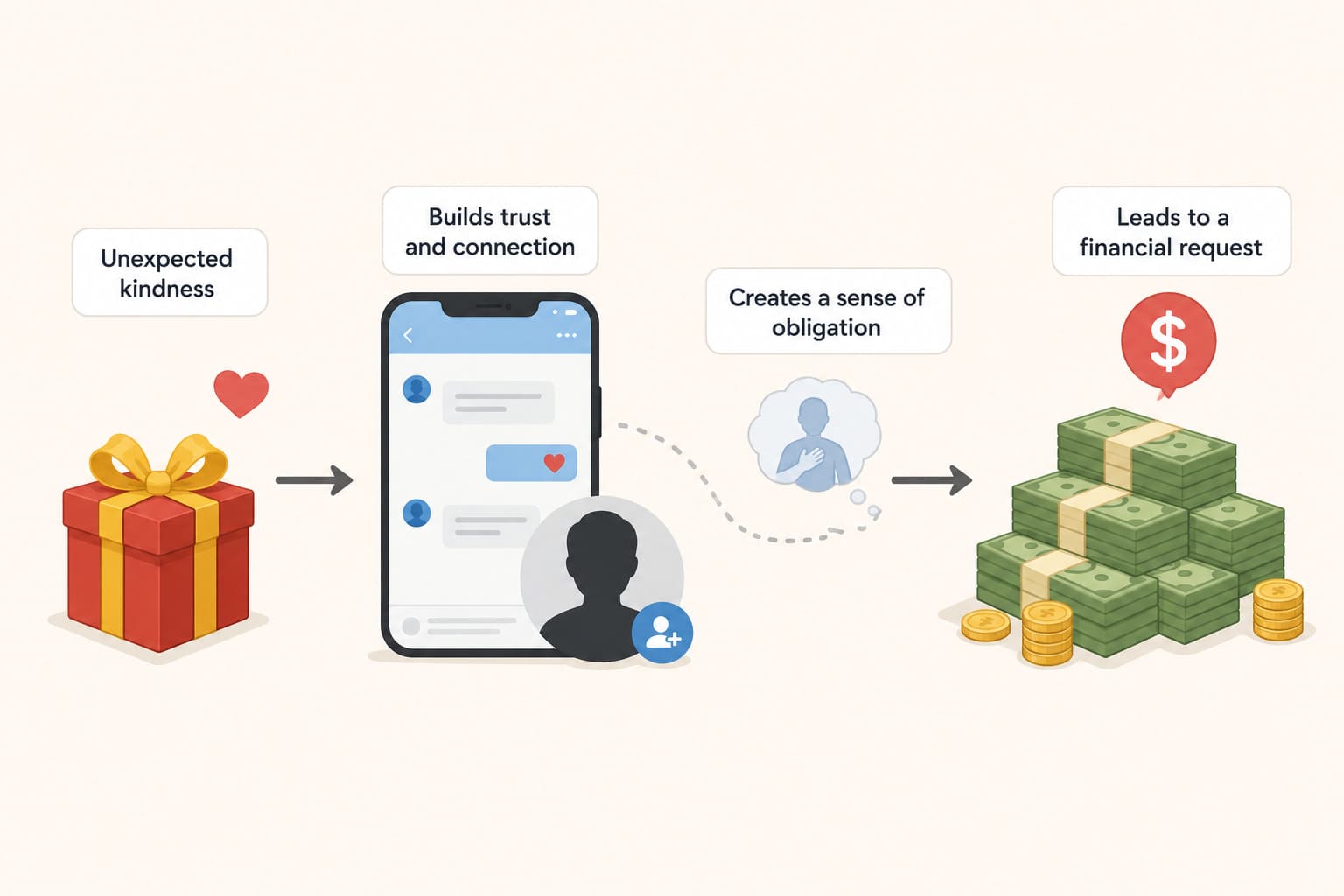
A reciprocity trap scam always starts the same way. Someone does something unexpectedly kind for you, and you feel a pull to return the favour.
That pull is not a personality flaw. It is one of the most universal responses people have, and scammers have built entire operations around it.
Pig butchering scams, which begin with the “gift” of friendship before requesting an investment, caused 8.6 billion dollars in US losses in 2025, according to the FBI’s Internet Crime Complaint Center.
The average victim of one of these schemes loses more than 38,000 dollars. Seniors over 60 alone lost a combined 3.5 billion dollars to investment fraud that year.
This post explains why unsolicited generosity creates real obligation, how scammers use that obligation deliberately, and the specific signs that generosity has become a setup. It connects to the wider pattern in our guide to how scammers manipulate people.
Why Does a Reciprocity Trap Scam Work on Careful People Too?
Reciprocity is a deeply wired social rule. When someone gives you something, you feel a genuine pull to give something back, even if you never asked for the original gift.
This rule exists because it helped human groups cooperate for thousands of years. It is not a weakness. It is one of the reasons societies function at all.
Researchers studying persuasion have found that even a tiny, unrequested gift measurably increases how likely someone is to agree to a later request, regardless of the size of the gift itself.
A reciprocity trap scam borrows that same rule and points it in a single direction. The scammer gives first, deliberately, knowing the obligation it creates will do most of the persuading later.
This is different from ordinary kindness, since ordinary kindness does not usually arrive with a plan attached. The difference is invisible in the moment, which is exactly the point.
Empathy works the same way. A scammer who appears to need help, or who shares a story designed to earn sympathy, is often using your own helping instinct as the entry point.
People who see themselves as kind and generous are not more naive than anyone else. They are simply more likely to respond to an appeal built specifically around kindness.

What Does “Give First, Ask Later” Actually Look Like?
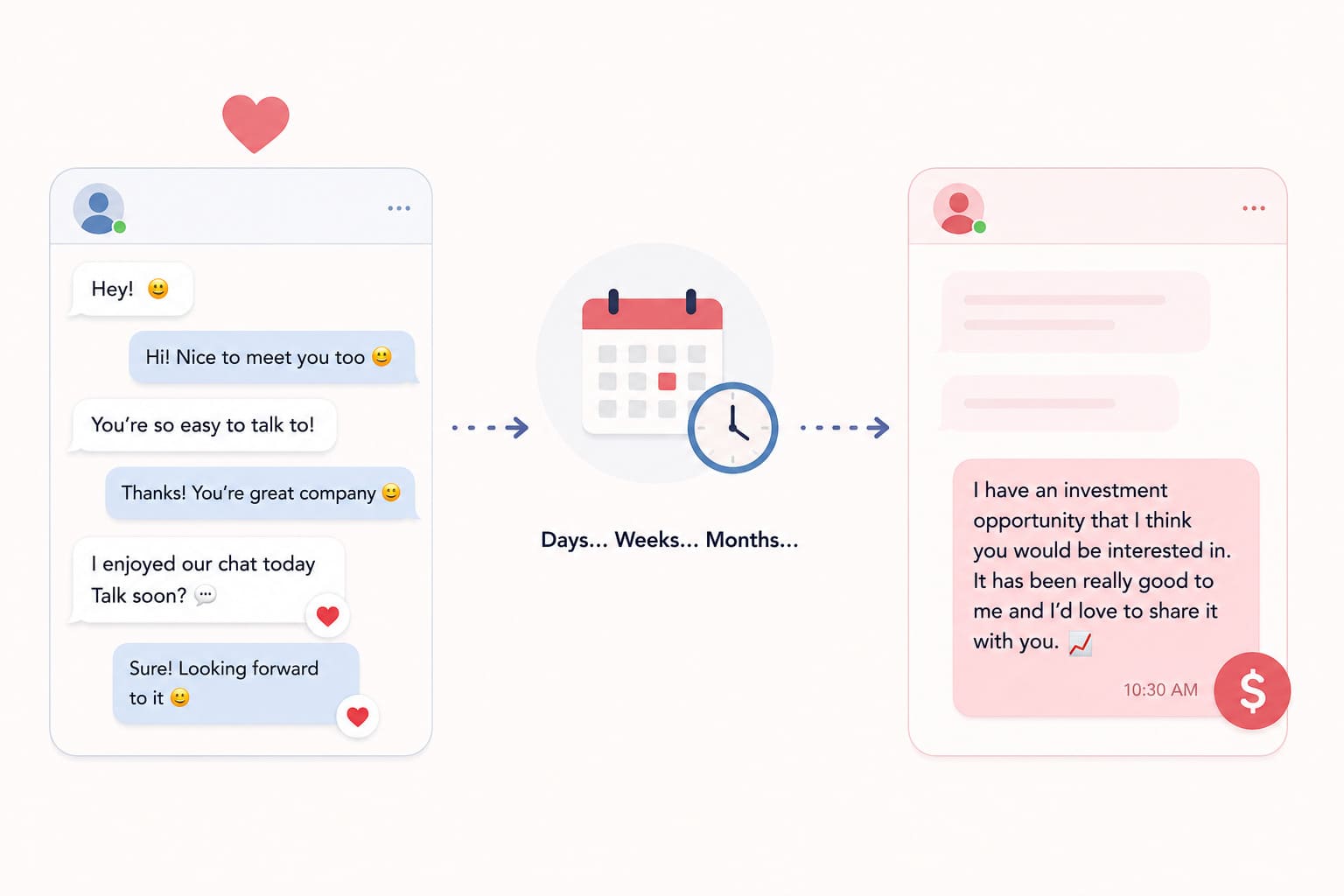
In pig butchering scams, the “gift” is usually attention and warmth. Weeks of friendly conversation, shared jokes, and small kindnesses come before any mention of money.
By the time an investment opportunity gets introduced, it does not feel like a pitch from a stranger. It feels like a favour returned to someone who has already given so much.
This same structure sits underneath most romance scams. Our guide to how romance scammers build fake love before taking everything covers how affection itself becomes the initial gift.
Workplace versions of this exist too. A new contact offers free advice, a useful contact, or unexpected praise, then later asks for a favour that involves access, information or a bypassed process.
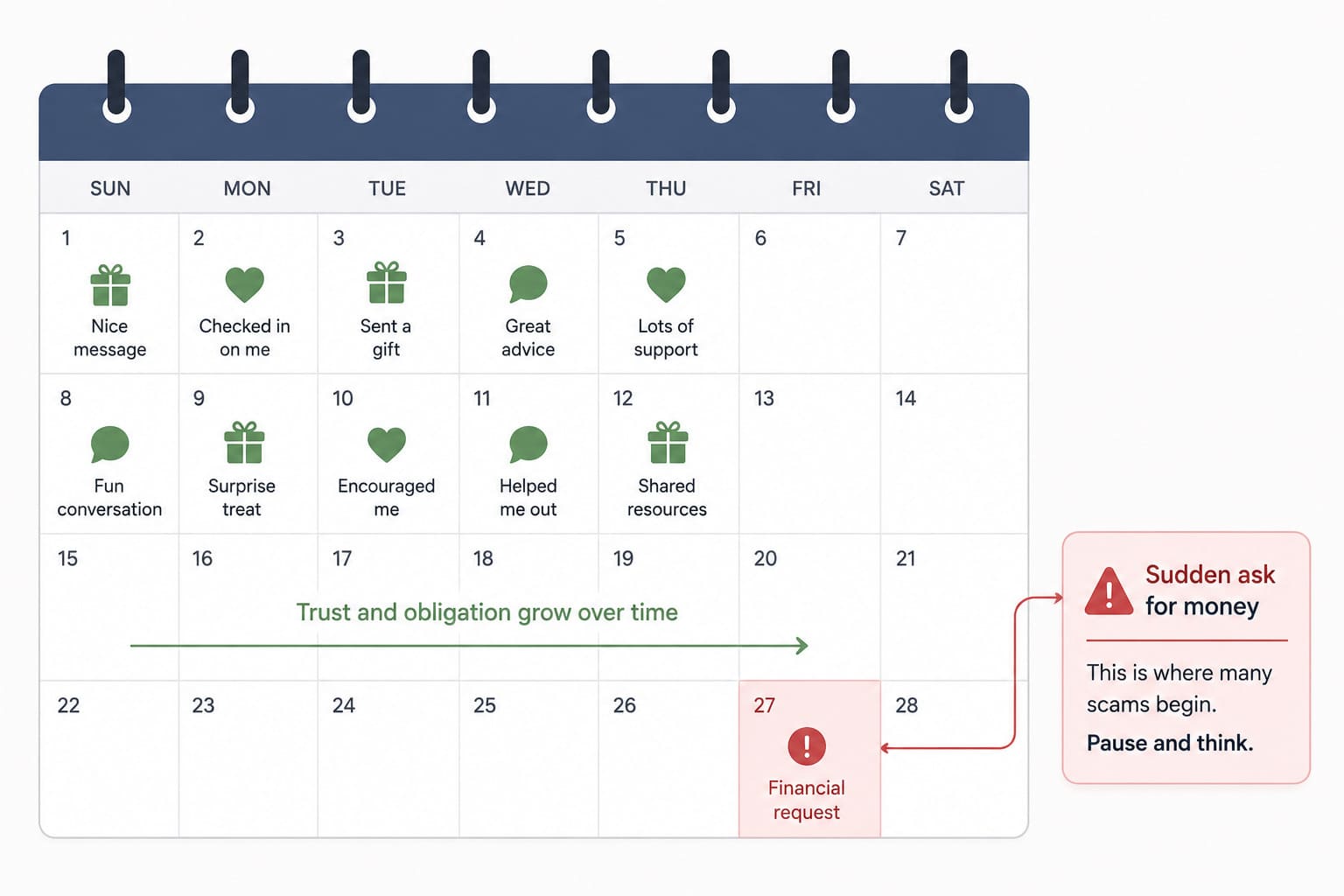
The request rarely arrives immediately. It usually waits until the relationship has had enough time to feel established, which can take anywhere from a few days to several months depending on the target.
Duty adds extra weight inside a workplace, since declining a request from someone who has already been generous can feel like it would damage a relationship you now depend on.
That feeling gets stronger the more senior or well-connected the person appears to be, since the perceived cost of saying no rises alongside their apparent status.
The Global Anti-Scam Organisation has documented this exact playbook across thousands of survivor accounts, describing how the early kindness is never accidental.
How Do Concession Tactics Push You Further Than You Planned?
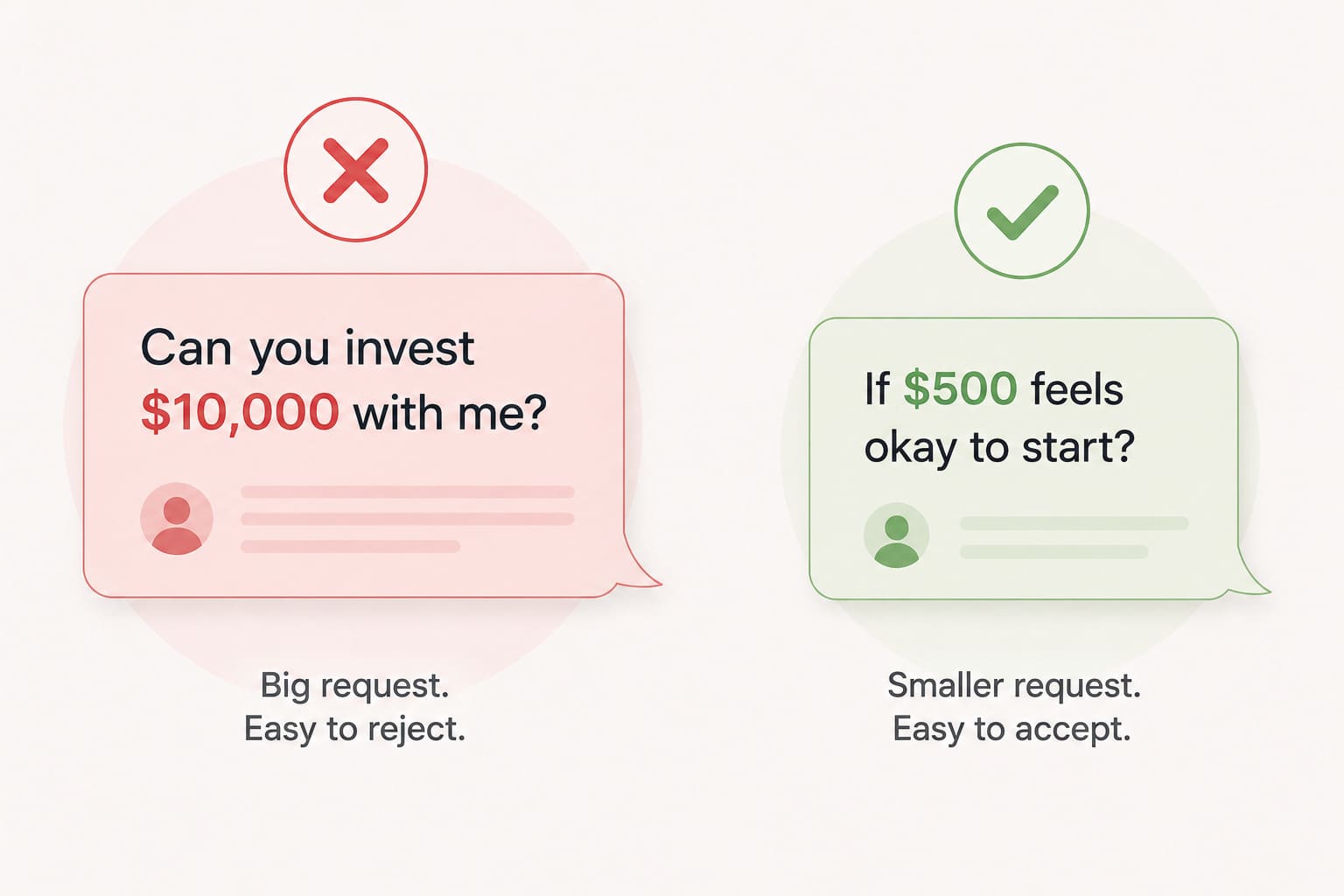
A scammer will sometimes open with a large, unreasonable request, then follow it with a smaller one that feels reasonable by comparison.
The second request was the real goal all along. It only feels small because of what came immediately before it.
This is sometimes called the door-in-the-face technique, and it stacks well with reciprocity. Refusing the first request can itself create a small sense of guilt, which the second, more modest request then resolves.
A scammer might first ask for a large sum “to unlock” a fake prize or investment return, then act as though they are doing you a favour by “allowing” a much smaller payment instead.
The smaller number only feels reasonable because of the number that came before it. On its own, without that comparison, the same request would raise far more suspicion.
Investment scams use a financial version of this constantly. Our guide to lottery, prize and investment scams covers how that escalation plays out from here.
How Do You Recognise When Generosity Has Become a Setup?
Genuine kindness rarely comes with a hidden schedule. A reciprocity trap scam almost always does.
Watch for generosity that arrives from someone you barely know, followed within days or weeks by a specific request involving money, access or sensitive information.
Ask yourself a simple question: would this person still be this generous if they knew you would never be able to help them with anything in return?
Also notice the timing. Genuine friendships and working relationships develop unevenly, with generosity flowing in both directions over time. A relationship where the giving only ever moves in one direction, right up until a request appears, is worth a second look.
If you have already sent money after this kind of build-up, report it through the National Cyber Crime Reporting Portal or the 1930 helpline, and check the FBI’s Internet Crime Complaint Center if the scam touched a US-based platform.
The sunk cost that follows an early gift often keeps people paying long after the warning signs appear. Our guide to the sunk cost trap explains why that escalation is so hard to walk away from.
Frequently Asked Questions
Why do I feel guilty saying no after someone has been kind to me online?
Because reciprocity is a genuine social instinct, not something you can simply switch off by deciding to.
Recognising that the kindness may have been calculated, rather than blaming yourself for feeling obligated, is the more useful response.
Is it rude to question why a stranger is being so generous?
No. Anyone with genuinely good intentions will understand a reasonable question about their motives.
A person who reacts with pressure or offence when asked is showing you something important about the relationship.
Does this only happen with money, or can it involve other things too?
It can involve information, access, favours, or introductions just as easily as money.
Workplace versions often target login details, internal documents, or approval for a request that would normally need more scrutiny.
What This Comes Down To
A reciprocity trap scam works by making a manufactured debt feel like a genuine one.
The obligation you feel is genuinely real, even when the kindness behind it was never freely given in the first place, without any strings quietly attached.
One habit protects you: when generosity arrives from someone you barely know, treat any request that follows it as a separate decision, judged entirely on its own.
If this was useful, share it with someone who needs to know.


2 comments
Comments are closed.