

Greed and scarcity scams start with something ordinary. Everyone wants a good deal, and everyone wants things to be a little better than they currently are.
That wanting is not a flaw. It is one of the most human things about a person, and it is exactly what these scams are built to use.
Greed and scarcity scams do not succeed by finding foolish people. They succeed by finding hope, and everyone has some.
Crypto investment scams drove 8.6 billion dollars in US losses in 2025, a 52 percent increase from the year before, according to the FBI’s Internet Crime Complaint Center. Investment fraud was the single costliest crime category the agency tracked that year, ahead of every other type of reported fraud.
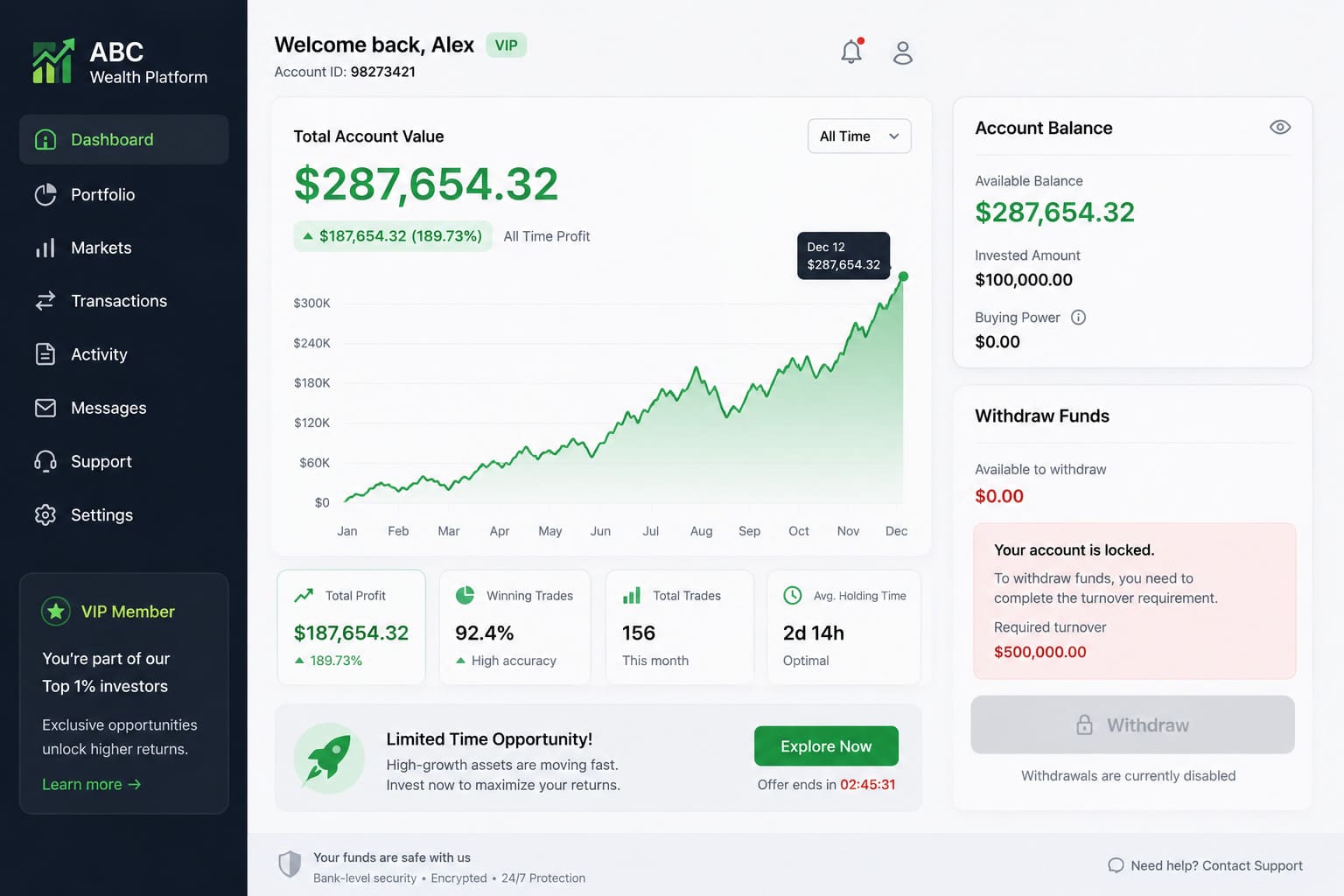
Victims were shown fake trading dashboards displaying large paper gains. When they tried to withdraw the money, they were told to pay fees or taxes first. The returns had never existed at all.
This post explains why reward-seeking overrides caution, and why too-good-to-be-true offers still get believed. It also explains how artificial scarcity adds extra pressure, and shows the questions that expose greed and scarcity scams. It connects to the wider pattern in our guide to how scammers manipulate people.
Why Does the Promise of a Reward Override Careful Thinking?
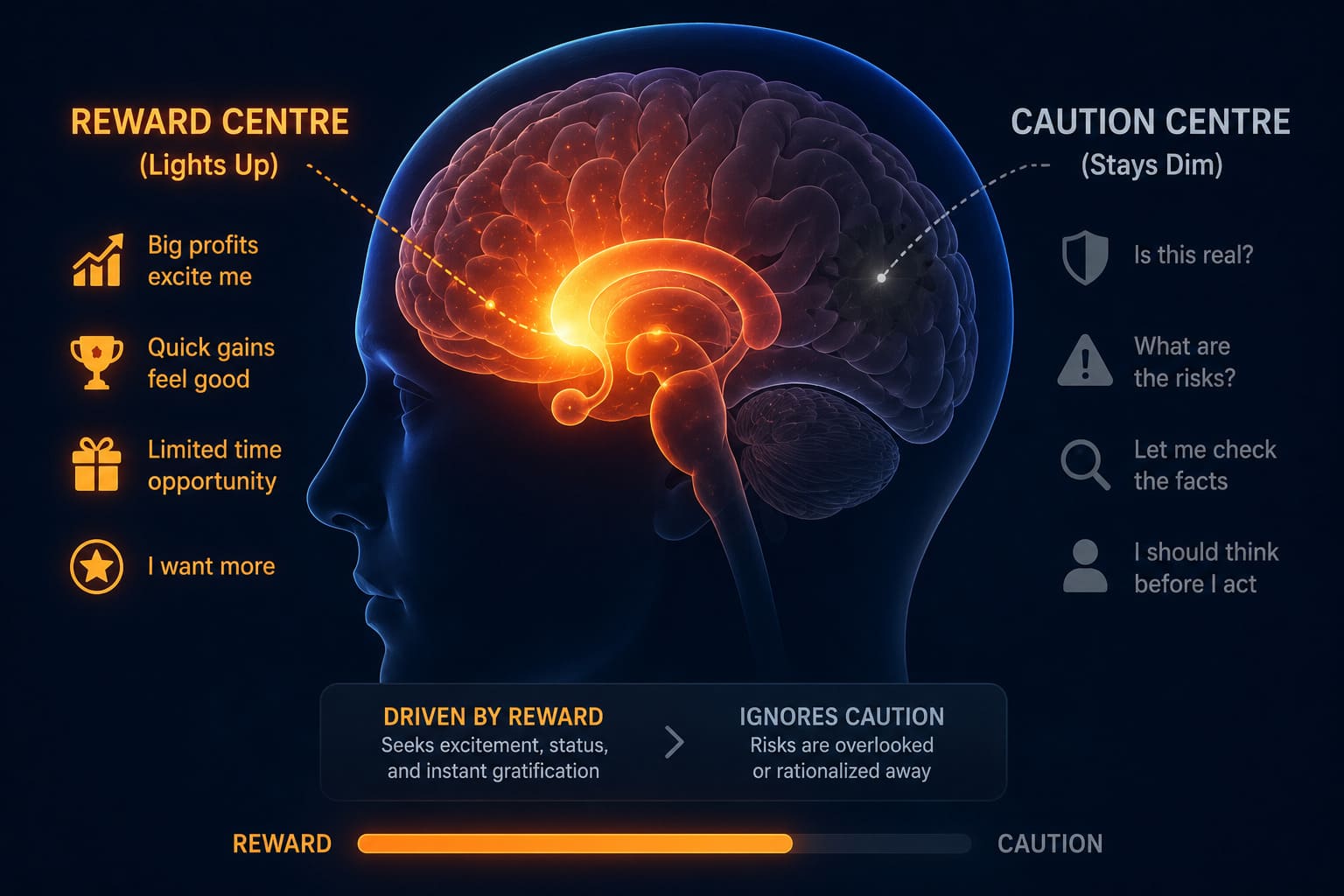
The brain responds strongly to the possibility of a reward, often before it has properly weighed the risk attached to it.
This response evolved for good reason. Noticing and pursuing opportunity was, for most of human history, a genuinely useful trait.
The reward centre of the brain reacts to the possibility of a gain almost the same way it reacts to an actual one. A screen showing rising numbers can trigger real excitement, long before any money has actually changed hands.
Greed and scarcity scams simply supply a reward signal that is stronger than the caution it should trigger. A large enough number quiets the part of you that would normally ask more questions.
This is not about intelligence. Careful, experienced people fall for convincing reward signals just as often as anyone else, sometimes more so, since confidence can make a person less likely to pause.
This is why warnings about these scams rarely work by telling people to be less hopeful. The more useful warning is narrower. Treat a strong reward signal as a cue to slow down, not as proof the opportunity is real.
Why Do “Too Good to Be True” Offers Still Feel Believable?
Wanting to believe something is not a flaw. It is a completely ordinary response to a compelling story.
A fake trading platform showing steady, impressive gains works precisely because it looks like the thing you already wanted to be true. The visuals do the persuading, not the substance behind them.
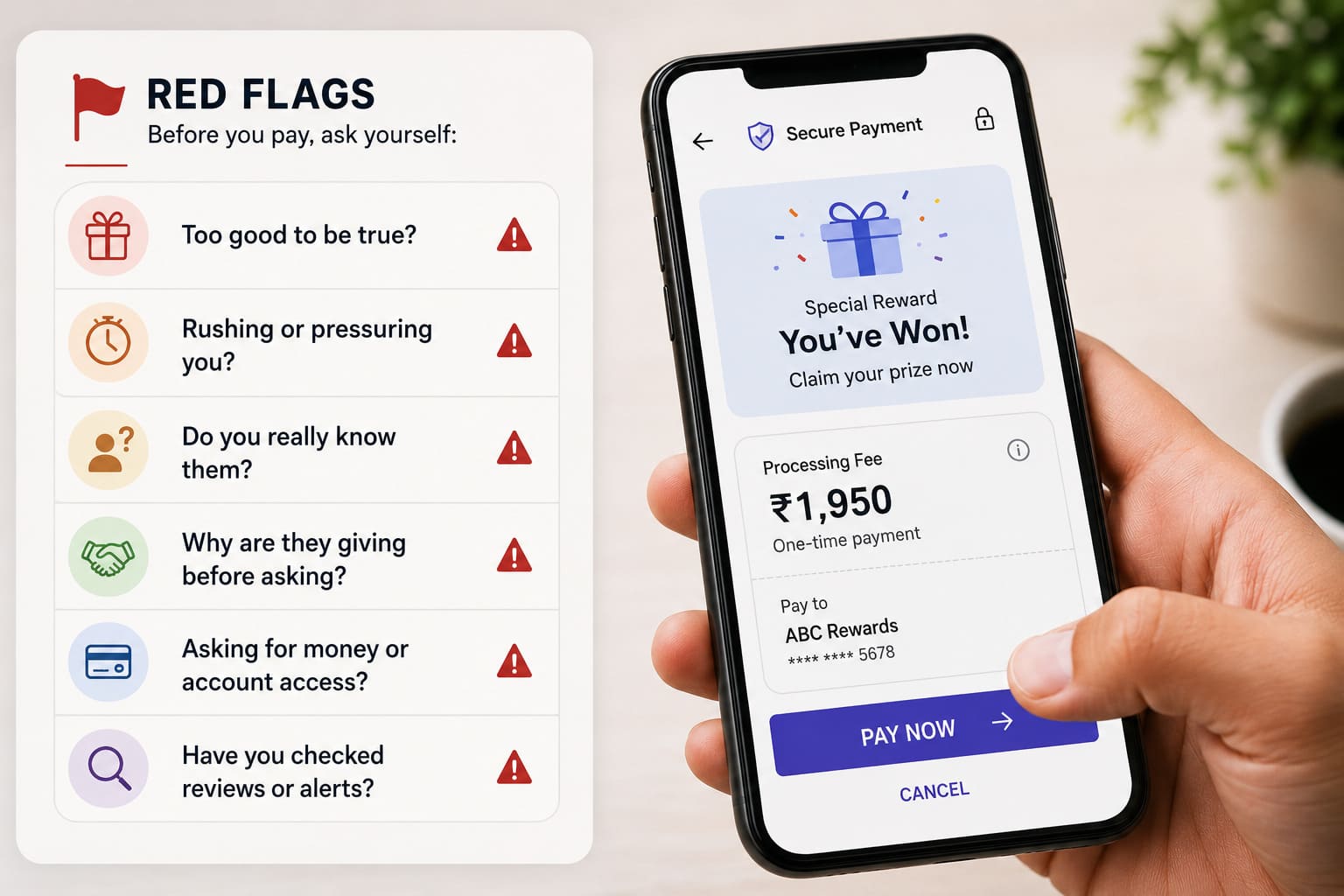
Lottery and prize scams use the same logic in a different shape, claiming you have already won something valuable and only need to pay a small fee to claim it. Our guide to lottery, prize and investment scams breaks down exactly how that version unfolds.
Investment platforms use the identical logic at a larger scale. A dashboard showing consistent, spectacular growth works on the same hope a lottery text message does, just dressed in more convincing packaging.
Genuine investments carry real, disclosed risk. An offer that shows only gains, with no downside ever mentioned, has usually skipped the part where honesty would normally appear.

How Does Artificial Scarcity Add Extra Pressure?
Scarcity makes an opportunity feel more valuable purely because it appears limited, whether or not that limitation is real.
A countdown timer, a claim that only a few investment slots remain, or a message saying the offer expires tonight all serve the same purpose. They shorten the time available to think it through.
Some versions swap limited time for limited access instead, claiming only a small number of investors are being “let in,” or that the opportunity is normally reserved for insiders. Limited stock works the same way on scam shopping sites. A product claims to be almost sold out, rushing a purchase before anyone checks whether the site is real.
This exact mechanic appears throughout online shopping and subscription design as well. Our guide to how fake countdown timers and scarcity tricks work covers the legitimate commerce version of the same pressure.
Combined with a strong reward signal, artificial scarcity removes two things at once: the time to think, and the sense that thinking carefully might cost you the opportunity entirely. This pairing is what makes the two pressures so effective together, since each one weakens the exact caution the other would otherwise trigger.

How Do You Spot Greed and Scarcity Scams Before You Act?
Before acting on any offer that excites you, ask a short set of questions. This is the checklist that exposes most greed and scarcity scams before any money moves.
Does the return promised sound consistent regardless of market conditions? Genuine investments fluctuate. Guaranteed, steady returns are one of the clearest warning signs available.
Is there pressure to act today, this hour, or before a countdown ends? Real opportunities rarely disappear the moment you take time to check them properly.
Is access framed as limited to a select few, or is stock described as almost gone? Both are among the easiest pressures to manufacture, and among the hardest to verify from where you are sitting.
Would this still sound reasonable if you described it out loud to someone you trust? Saying it aloud often exposes what a screen full of graphs can hide. This single habit is the one action that does the most work against scams like these.
Greed is also the engine behind most crypto scams and pig butchering schemes, where fake gains are used to justify ever-larger deposits. Our guide to crypto scams, rug pulls and fake wallets covers that pattern in full.
Genuine investment guidance in India is available through SEBI’s investor education portal, and the US Securities and Exchange Commission’s investor alerts track many of the same fraudulent schemes internationally.
If you have already sent money, report it through the National Cyber Crime Reporting Portal or the 1930 helpline as soon as possible.
Frequently Asked Questions
How do I know if an investment opportunity is legitimate?
Check whether it is registered with a real regulator, such as SEBI in India or the SEC in the US. Then search the company name alongside the word “scam” before committing any money.
A legitimate opportunity will still exist tomorrow. Pressure to act today is itself a warning sign worth taking seriously.
Why do scammers create urgency around offers that sound good?
Because urgency shortens the time you would otherwise spend checking the claim. The pressure exists specifically to stop you from verifying it.
A genuinely good opportunity rarely depends on you deciding within minutes.
Is all urgency and scarcity marketing a scam?
No. Genuine sales and limited releases exist, and not every countdown timer is fraudulent.
The difference is verifiability. A real business will still exist tomorrow to check its claims against, while a greed and scarcity scam usually disappears the moment you ask a question it cannot answer.
What This Comes Down To
Greed and scarcity scams work by offering exactly what you were already hoping for, then rushing you before you can check whether it is real.
Wanting a better outcome is not a weakness. It is simply something every scammer has learned to recognise and exploit.
The excitement itself is normal. What matters is what you do with it in the next sixty seconds.
One habit protects you: treat excitement itself as a cue to slow down, then verify the opportunity through a source the offer did not provide.
If this was useful, share it with someone who needs to know.



1 comment
Comments are closed.