
Shame based scams do not need a victim to be careless. They only need a victim who will stay quiet afterwards.
That is the entire design behind sextortion: a threat to share an intimate image or video unless payment arrives, timed so that embarrassment stops the victim from telling anyone who could help.
Sextortion is now one of the fastest-growing categories of cybercrime. NCMEC received an average of 137 financial sextortion reports every single day in 2025, a 37 percent rise on the year before, with most victims being teenage boys between 14 and 17.
In November 2025, a West Virginia teenager died after being targeted this way, and the same month the US Department of Justice indicted five people linked to the “764” network for running sextortion and exploitation operations, including one serving member of the Navy.
This post explains how guilt and shame get used as pressure, why silence is the actual goal of the attack, and what breaks the cycle. It builds on the wider pattern in our guide to how scammers manipulate people.
How Do Shame Based Scams Use Guilt Against You?
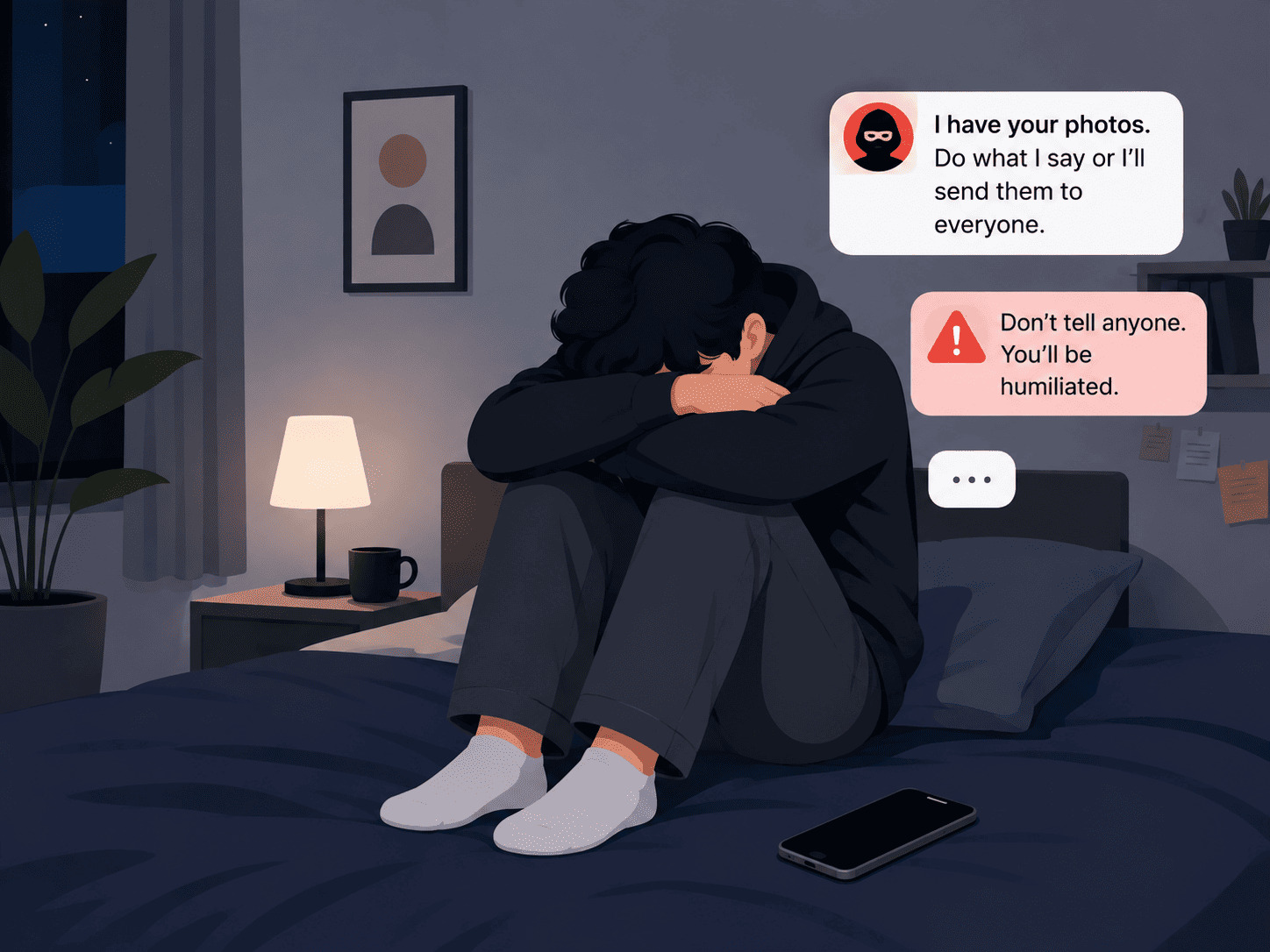
Guilt and shame work differently from fear. Fear makes you want to act immediately. Shame makes you want to disappear.
A scammer only needs one uncomfortable detail, a photo, a mistake, a moment of poor judgement, to build an entire threat around it.
The specific detail barely matters. What matters is convincing the target that telling anyone else would be worse than paying quietly.
Digital arrest scams use a version of this too. Callers claiming to be police threaten public humiliation alongside the fear of arrest, adding shame as a second lever on top of the first. Our guide to digital arrest scams and how to shut them down covers that combination in more depth.
Guilt appears in gentler forms too, sometimes tied to family expectations or a fear of letting relatives down. Those pressures are real, but they are also exactly what a scammer is counting on you to feel.
In many Indian households, the fear of bringing shame onto a family carries extra weight, and scammers exploit that cultural pressure specifically. It compounds the same mechanism rather than replacing it, which is why the response that works is always the same one: separate the manufactured shame from the real situation.
How Does Sextortion Actually Work, and How Fast Does It Escalate?
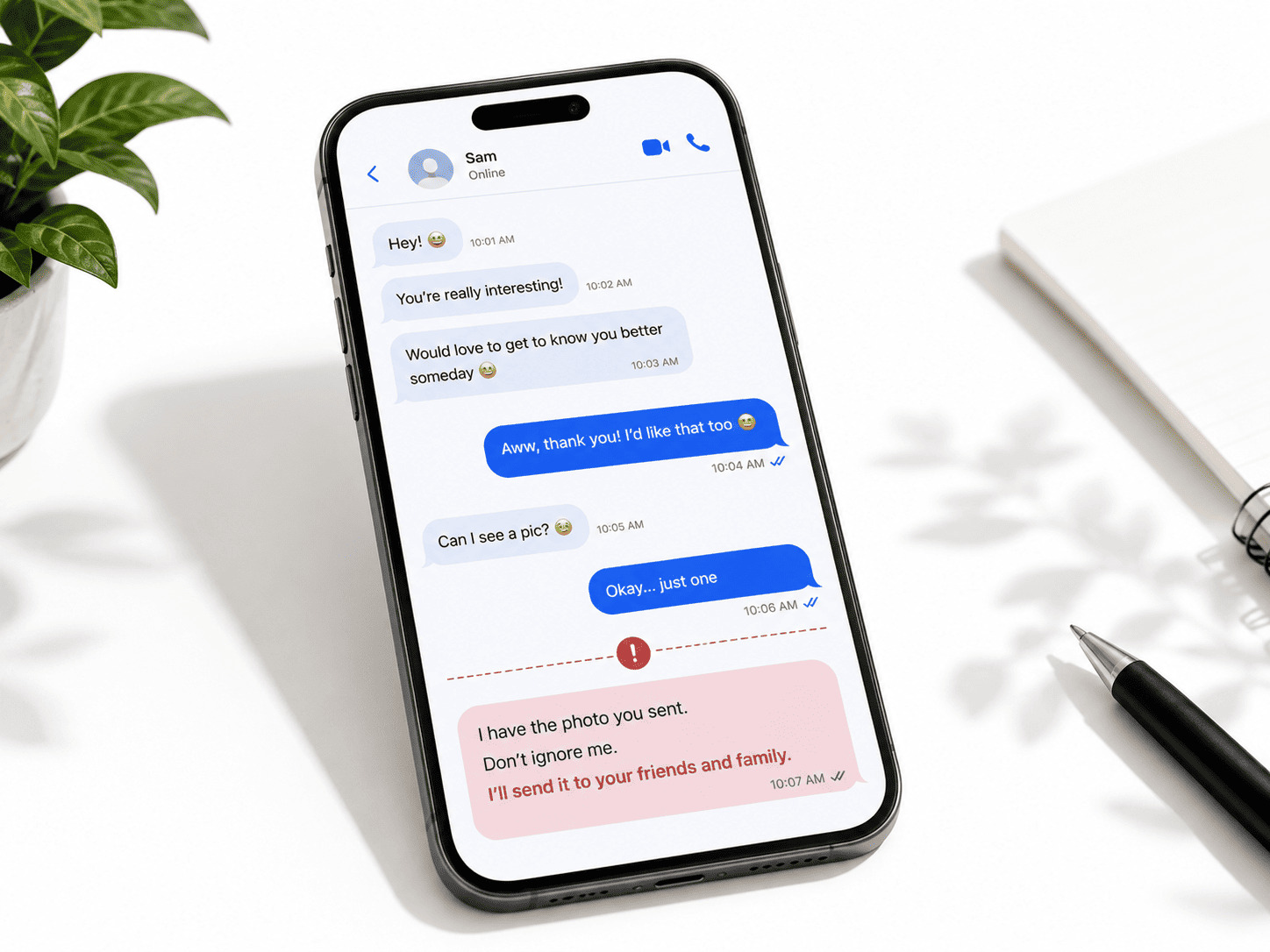
Sextortion usually starts with a friendly conversation, sometimes on a dating app, sometimes on social media, sometimes through a message that appears to be from a stranger with a shared interest.
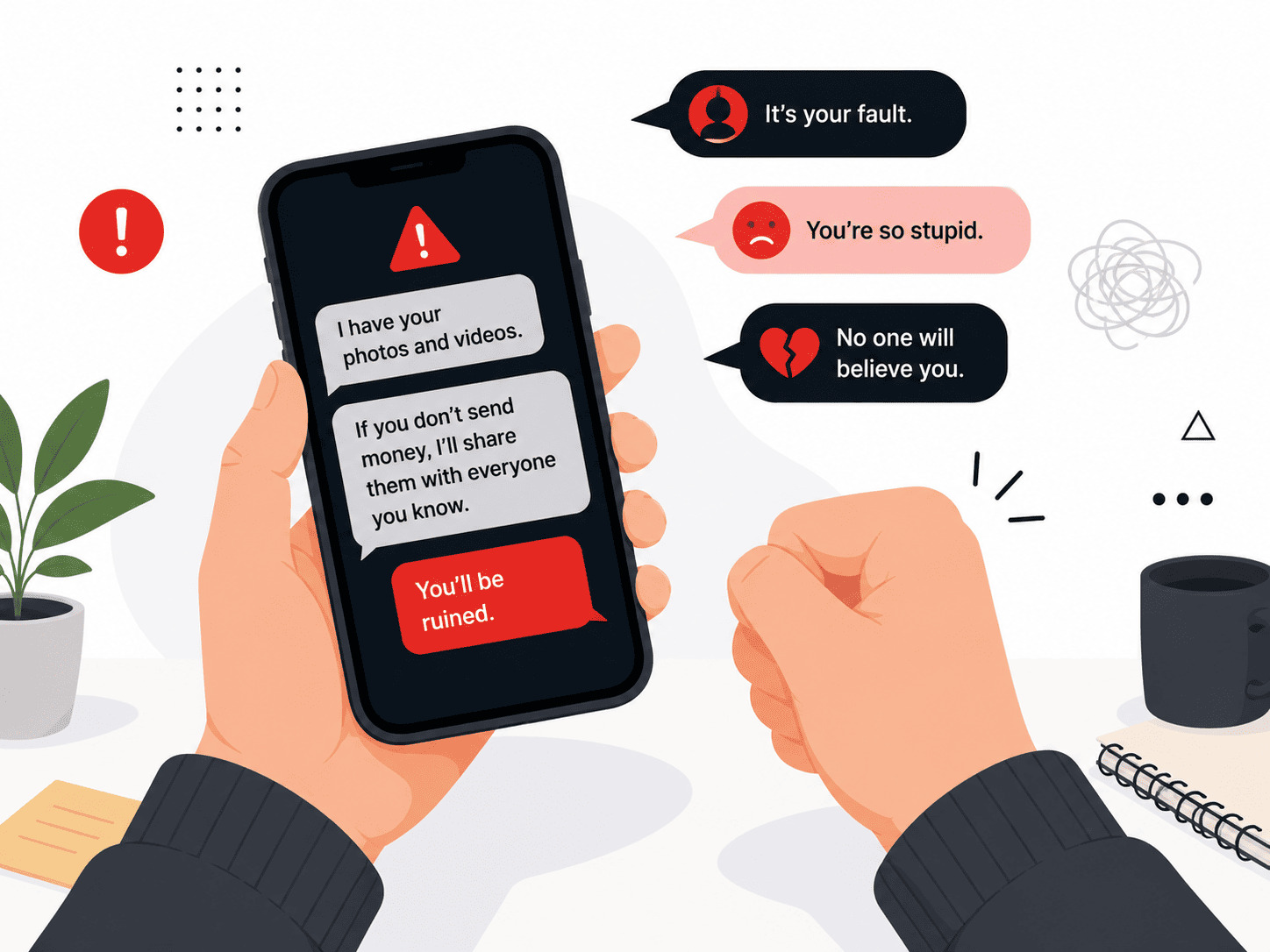
The conversation moves toward an intimate photo or video, often within minutes rather than days. As soon as the image exists, the tone changes completely.
A demand for payment follows almost immediately, along with a screenshot of the victim’s contact list or social media followers as proof the threat is real.
That screenshot is designed to make the threat feel specific and unavoidable. In reality, contact lists are often scraped automatically, and the scammer may never intend to contact anyone on it regardless of what happens next.
The speed is deliberate. A victim who is still deciding how they feel has less time to consider reporting it before the pressure builds further.
Teenage boys are the most commonly reported group, but sextortion also targets working professionals, students preparing for exams, and people going through a difficult time in their personal life. The scammer’s script barely changes between targets, only the details used to personalise it.
Read more in our full guide to sextortion and non-consensual image sharing, including your rights and the options available.
Why Do Victims Stay Silent Instead of Asking for Help?
Silence feels like the safest option in the moment. Telling a parent, a partner or the police can feel like making the situation permanent and real.
That instinct is exactly what the scammer is relying on. Every payment made in silence confirms that the strategy works, which is why the same victim is often targeted again.
Shame based scams depend entirely on this quiet compliance. A victim who reports the threat immediately removes almost all of the scammer’s power.
The shame was never the victim’s to carry in the first place. It belongs to whoever sent the threat.
Parents and partners often react with concern rather than judgement once they understand what actually happened. The imagined reaction is almost always harsher than the real one.

How Do You Break the Shame Cycle and Report It Safely?
Do not pay, and do not respond further. Payment rarely ends the threat, since it confirms to the scammer that more money is available.
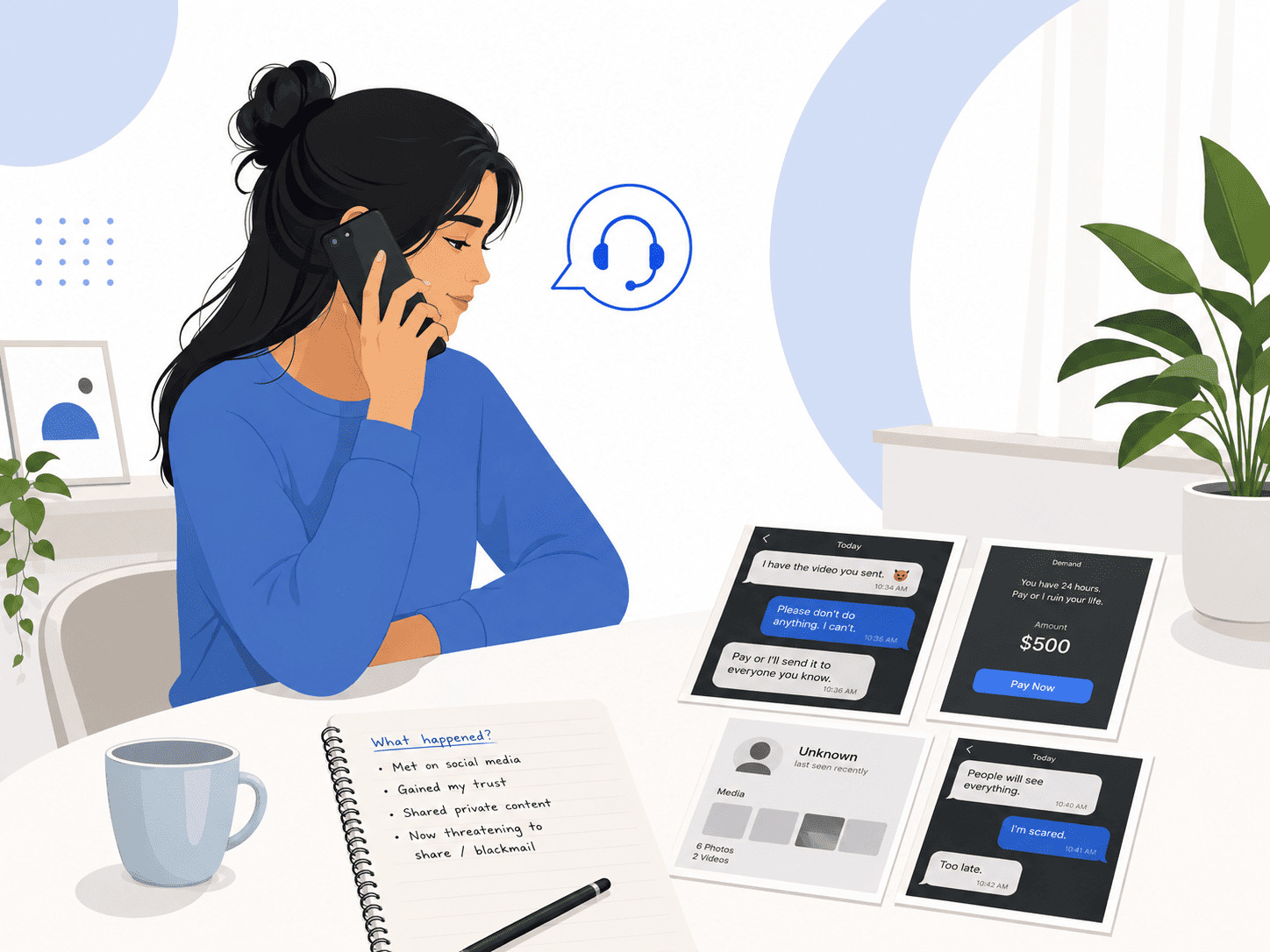
Stop all contact, and take screenshots of the messages before blocking the account. This evidence matters if you decide to report it later.
Tell someone you trust, even before you decide whether to involve the police. Carrying this alone is the exact outcome the scammer was hoping for.
If the images involve a minor, the NCMEC Take It Down service can help remove them from participating platforms without the victim ever having to share the image with anyone.
In India, sextortion can be reported through the National Cyber Crime Reporting Portal or the 1930 helpline. The FBI’s sextortion resource page covers the equivalent process for US-based cases.
Recovering from an experience like this takes more than the practical steps. Our guide to recovering your confidence after a digital attack covers the part that comes after the reporting is done.
None of these steps require you to explain yourself or justify what happened. A report only needs the facts: what was sent, what was demanded, and when it started.
Frequently Asked Questions
What should I do if someone threatens to share my photos unless I pay?
Do not send any money, and stop responding to the sender. Take screenshots of everything first, then block the account and report it to the platform and to the police.
Paying rarely stops the threat, since it signals to the scammer that further demands are worth making.
Will I get in trouble for reporting a sextortion threat involving my own images?
No. You are the victim of a crime, not the person responsible for it. Reporting agencies and platforms exist specifically to help victims, not to punish them.
Services like NCMEC’s Take It Down are also built so you never have to share the actual image with anyone to get help.
Does paying once mean the demands will stop?
Almost never. A payment confirms to the scammer that the target is willing to pay, which usually leads to a higher demand rather than a resolved one.
Stopping contact and reporting the threat is more effective than paying, even though it can feel riskier in the moment.
What This Comes Down To
Shame based scams work by convincing you that silence is safer than speaking up. It almost never is.
The embarrassment a scammer is counting on belongs entirely to them, not to the person they targeted.
One action changes everything: stop responding, save the evidence, and report it, even if reporting feels harder than paying quietly in the moment.
If this was useful, share it with someone who needs to know.