

Digital arrest scams open the same way almost every time. A call comes in, sometimes from a number that looks local, and the person on the other end says you are under investigation.
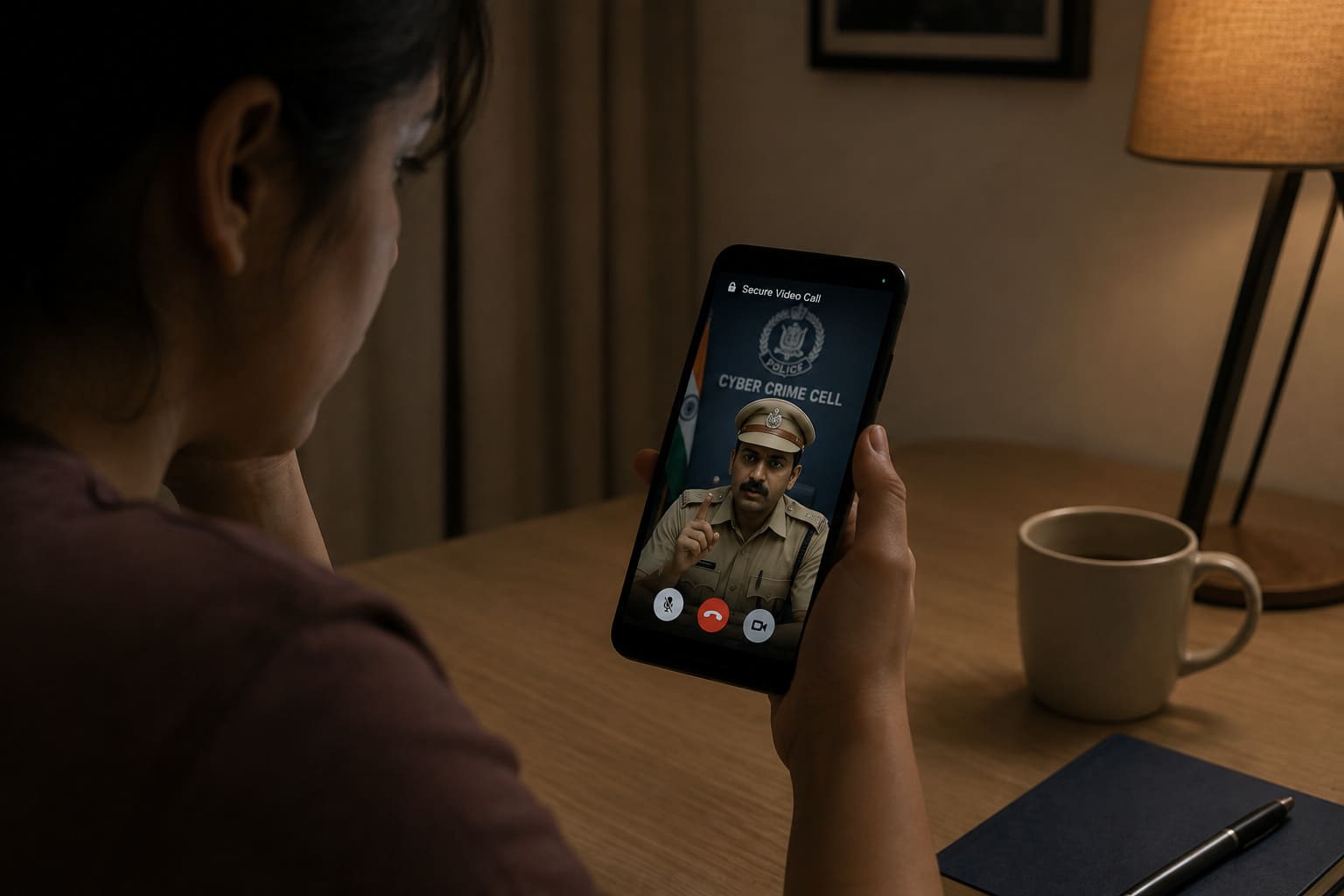
Within minutes, you are on a video call with someone in what looks like a police uniform, told to stay on the line or face immediate arrest.
None of it is real. But the fear it creates is real enough that ordinary, careful people have handed over their life savings before they ever thought to hang up and check.
Digital arrest scams caused ₹22,495 crore in cybercrime losses across India in 2025, according to Ministry of Home Affairs data presented to Parliament, with this tactic alone accounting for 9 percent of that total. This post explains exactly how the call is built, what makes it convincing, and precisely what to do the moment you get one. It is one of fourteen patterns covered in our guide to the most common online scams.
What Does a Digital Arrest Call Actually Look Like?
The call usually opens with a claim: your Aadhaar number, a courier parcel, or a bank account in your name has been linked to money laundering, drugs, or a criminal case.
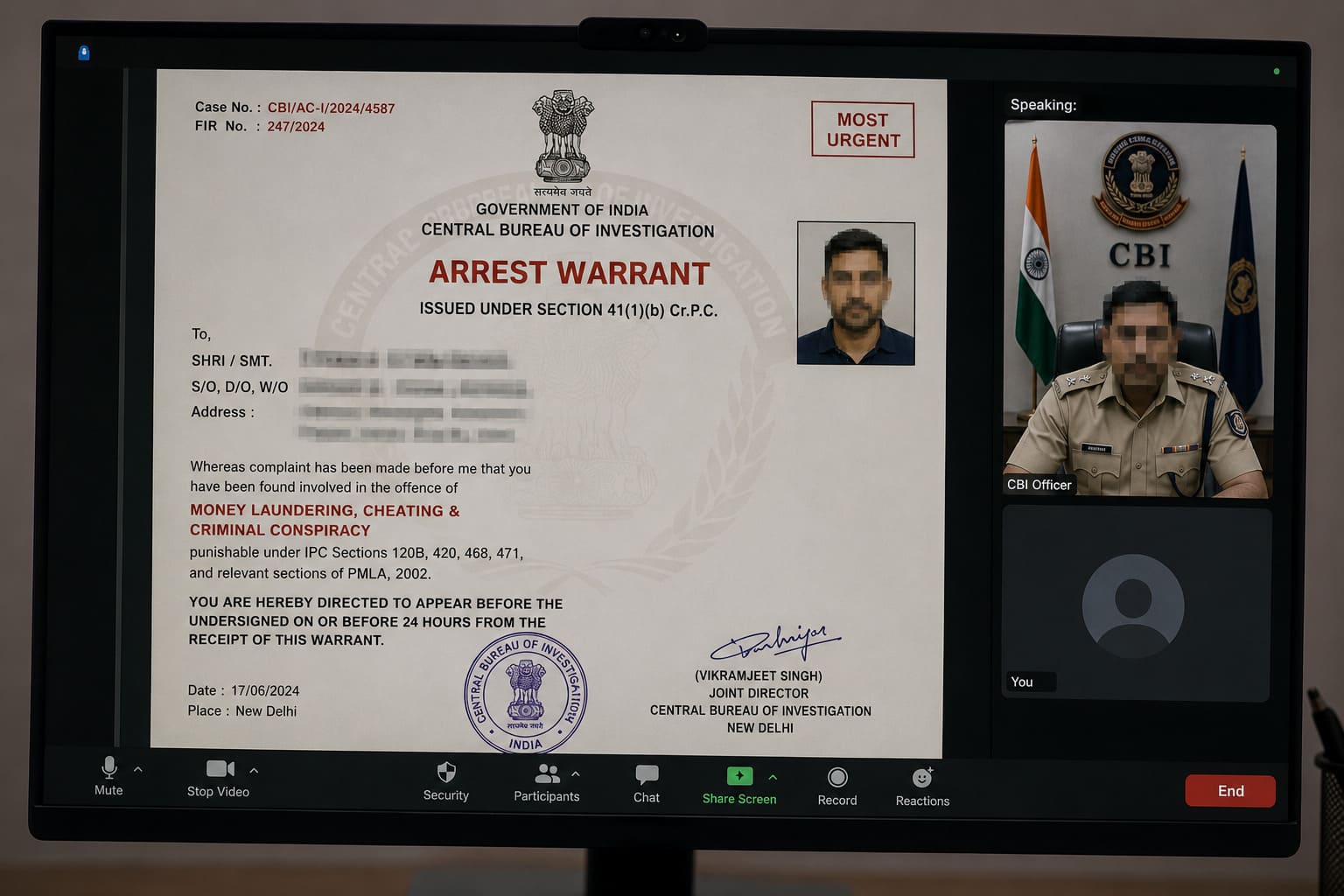
From there it takes several forms. Sometimes it is a fake police officer, drawing on the same authority bias that makes people obey strangers who sound official. Sometimes it is someone posing as an income tax official, threatening a fabricated tax evasion case. Sometimes a fake arrest warrant appears on screen, carrying genuine-looking government emblems copied from images freely available online.
The video call itself is staged carefully: a uniform, a badge held to the camera, a backdrop that resembles a police station or a CBI office.
Industrialist S.P. Oswal lost ₹7 crore within two days in exactly this way, after callers impersonating CBI officers kept him on a continuous video call until the money was gone. Government impersonation happens elsewhere too, most often as tax authority impersonation tracked by the FTC’s scam alerts in the US, though the sustained video call format is a variant that has grown especially fast in India, which is why digital arrest scams now show up specifically by name in Indian cybercrime data.
The details callers use are often uncomfortably accurate: your real name, your correct address, sometimes the last digits of an actual courier tracking number or bank account. None of this means the caller is genuine. It usually means your details were part of a data breach or a leaked KYC database, bought cheaply and used to make the very first sentence of the call sound credible enough that you keep listening.
How Does the Call Isolate You Long Enough to Pay?
The single most important thing to understand about digital arrest scams is that the isolation is the weapon, not the accusation.
You are told not to hang up, not to contact a lawyer, not to tell your family, because doing so would supposedly worsen the case against you. Some victims are kept on video call for hours. Documented cases in India have stretched across days.
An 86-year-old woman in Mumbai lost more than ₹20 crore over two months after being convinced she was under investigation for money laundering, held in a state of sustained fear far longer than a single call.
Every minute you stay on that call is a minute you are not calling anyone who could tell you to hang up. This reliance on fear collapsing your ability to think clearly is covered in depth in our guide to how fear is used to scam you.

What Are the Warning Signs That Expose a Fake Government Call?
A few signs show up in nearly every one of these digital arrest scams.
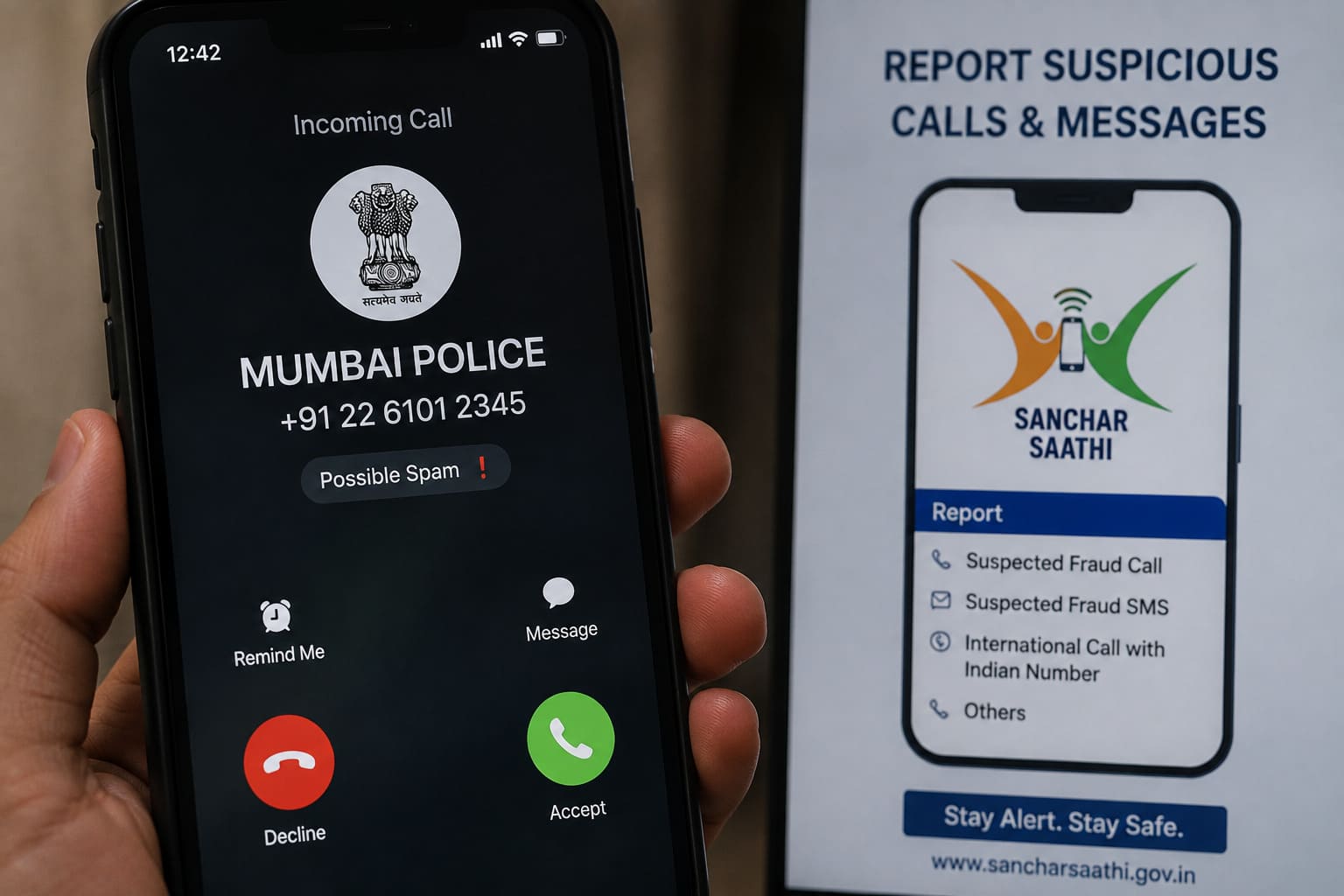
The caller ID may show a number that looks official, even a local landline, because caller ID can be spoofed easily and proves nothing about who is actually calling. You can verify or report a suspicious number through the Department of Telecommunications’ Sanchar Saathi platform, which lets you flag fraudulent calls directly.
The threat escalates the longer you stay on the call: a warning becomes a warrant, a warrant becomes a demand for an urgent “verification” transfer to an account that is never actually government-linked.
No Indian police force, court, or income tax office conducts an arrest, investigation, or identity verification over a video call, and none of them will ever ask you to transfer money to prove your innocence.
Escalation is a deliberate feature, not a sign the case is real. A caller who genuinely represented the police would not need to threaten you into staying on the line, because a real summons arrives on paper, through a process you can independently verify at a police station or court, not through a call that ends the moment you hang up.
What Should You Do During the Call, or If You Have Already Paid?
If you are on a call like this right now, hang up. You are allowed to hang up on someone claiming to be the police. A genuine investigation does not depend on you staying on a video call.
Call a family member or friend before doing anything else, and verify independently by looking up the relevant department’s number yourself rather than using anything the caller gave you.
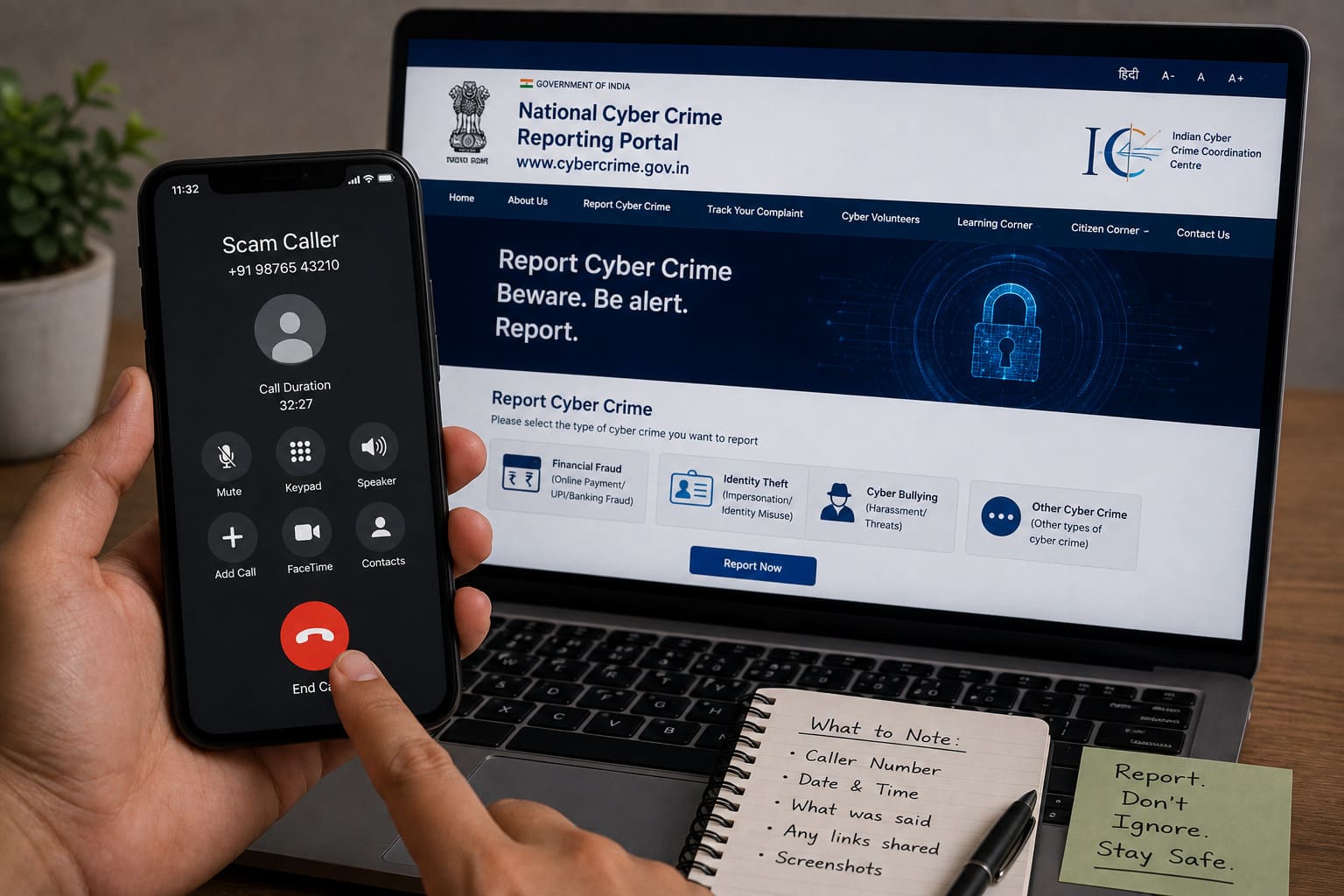
If you have already paid, report it immediately through India’s National Cyber Crime Reporting Portal or the 1930 helpline. Speed matters: banks and cyber cells can sometimes freeze a transfer within the first few hours, far less often after that window closes.
Keep the call recording or screenshots if you can, note the number and any UPI ID or account number you were asked to pay, and bring all of it when you file your report. These details are what actually let a cyber cell trace and act on digital arrest scams quickly.
For a fuller walk-through of what to do in the days after losing money to any scam, our guide on what to do after losing money to a scam is worth reading next.
Frequently Asked Questions
Is digital arrest a real legal process in India?
No. There is no such thing as a digital arrest under Indian law. No police force, court or government department can arrest, investigate or hold you “in custody” over a video call.
Any call claiming this is a scam, regardless of how official it looks.
What should I do if I am on a call like this right now?
Hang up immediately. Call a family member or trusted friend, then verify independently by looking up the relevant department’s number on its official website rather than trusting anything the caller gave you.
Can I get my money back after paying a digital arrest scam?
Sometimes, if you act fast. Report it within a few hours through the 1930 helpline or cybercrime.gov.in, since banks can occasionally freeze a transfer before it moves further.
Recovery becomes far less likely after that window closes.
What This Comes Down To
A digital arrest scam is built entirely out of manufactured fear: a fake uniform, a fake case number, and a call designed to feel too dangerous to hang up on.
None of that fear is based on anything real. The single action that ends it every time is simple: hang up, then verify independently through a number you looked up yourself, never one the caller gave you.
Share this with anyone in your family who might one day pick up a call like this, especially older relatives, who are the most frequently targeted.
If this was useful, share it with someone who needs to know.



2 comments
Comments are closed.