

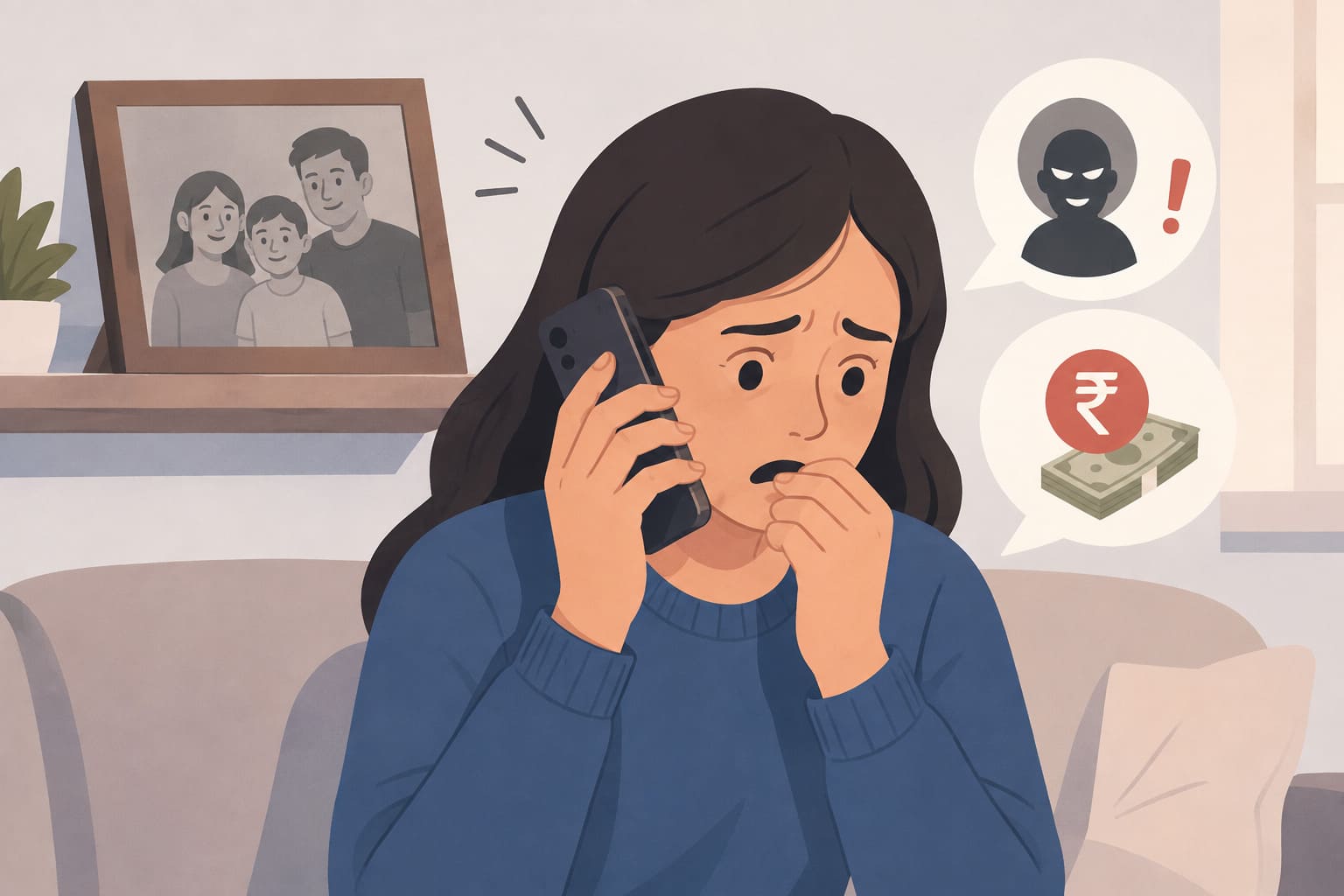
A family emergency scam usually starts with a phone ringing late at night, or in the middle of a working afternoon. The voice sounds exactly like your son, your daughter, or your grandchild.
They are crying, talking fast, saying they have been in an accident, been arrested, or are in some kind of trouble that needs money sent right now.
Every instinct you have says drop everything and help. That instinct is exactly what this scam is built to use against you.
This post covers how these calls are constructed, why panic makes them so hard to question in the moment, and the one habit that exposes almost every version of this scam before you send anything. It is part of our wider guide to the most common online scams.
How Are These Fake Family Emergency Calls Built?
The classic version is the fake grandchild call: a young-sounding voice claims to be a grandchild who has been in a car accident or arrested, and needs bail money or medical fees paid immediately, often through a stranger on the line posing as a lawyer or police officer.
Newer variants claim a kidnapping or an abduction is in progress, sometimes with a second voice in the background made to sound distressed, pressuring the family to stay on the phone rather than hang up and check.
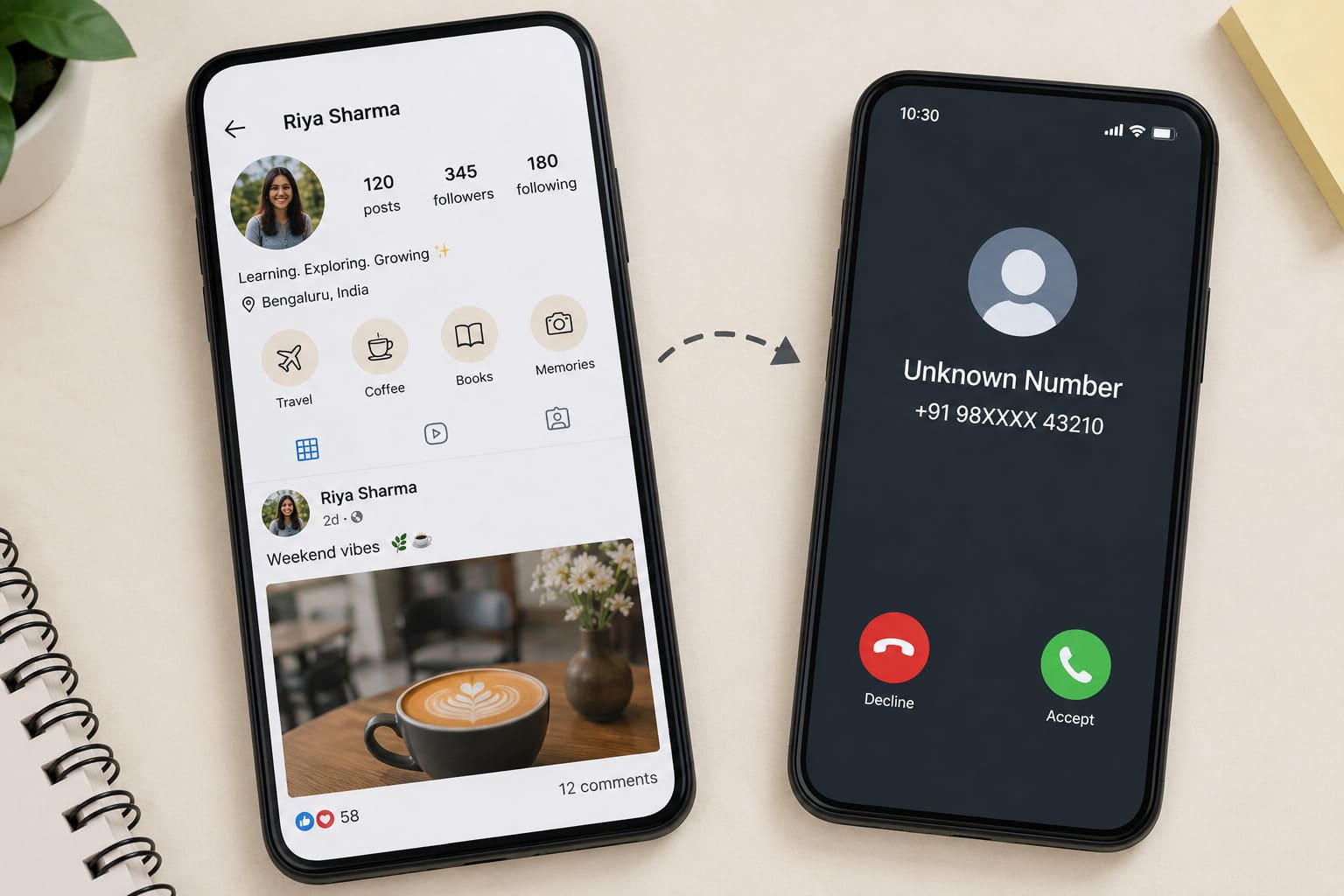
The details that make the call convincing, a name, a college, a recent trip, are usually pulled straight from what that person has already posted publicly online. None of it needs to be secret information. It only needs to be specific enough to sound real for the first thirty seconds.
A second person often joins the call partway through, posing as a lawyer, a doctor, or a police officer, adding a layer of official-sounding pressure on top of the emotional one. This is the same layering seen in other impersonation scams: one voice creates the fear, a second voice supplies the fake authority that tells you exactly how to resolve it.
Some versions skip the phone call entirely and arrive as a text or WhatsApp message: “I lost my phone, this is my new number, I need help urgently.” The lack of a voice at all removes even the small chance that something might sound off, which is precisely why this variant has become so common.
Why Does the Panic Stop You From Checking?
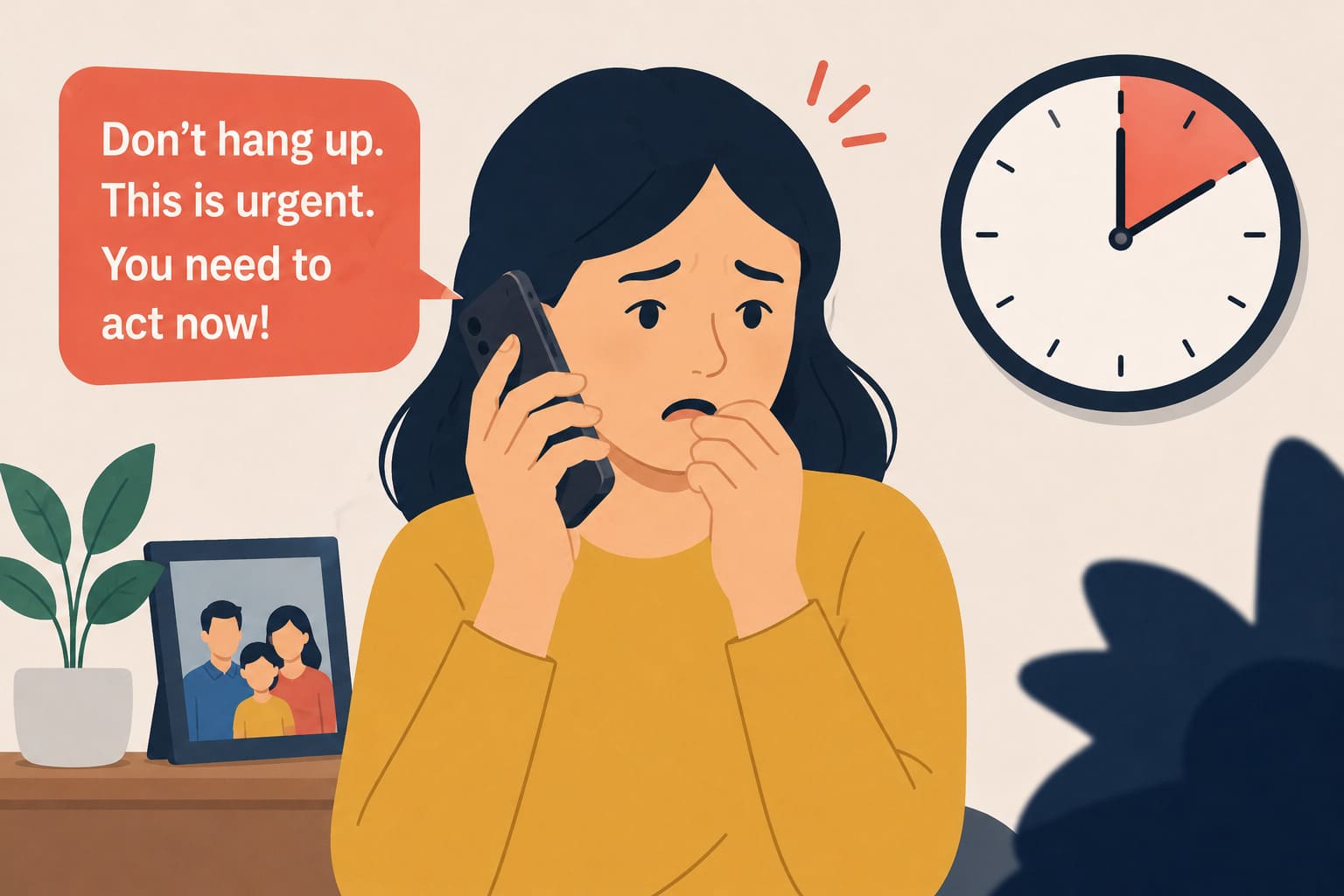
A family emergency scam is built entirely around emotional urgency, and urgency is what stops verification from happening.
You are told not to hang up, not to call anyone else, not to tell the rest of the family, because doing so would supposedly delay help or make the situation worse. That instruction is the isolation tactic doing its job.
The same mechanism appears across most scams that rely on fear and manufactured urgency: the more frightened you are, the less likely you are to pause and think clearly before acting.
Payment demands in these calls almost always involve wire transfers, gift cards, or a courier picking up cash, all of which are difficult or impossible to trace or reverse once the money has moved.
What makes this tactic so effective is how quickly it compresses the timeline. In a genuine family emergency, there is almost always a way to verify what is happening within a few minutes, a hospital, a police station, a mutual contact. Scammers know this, which is why the call is built specifically to make those minutes feel like they do not exist, borrowing the same manufactured sense of instant trust and familiarity that appears across many other scams on this list.
Why Has AI Voice Cloning Made This Harder to Spot?
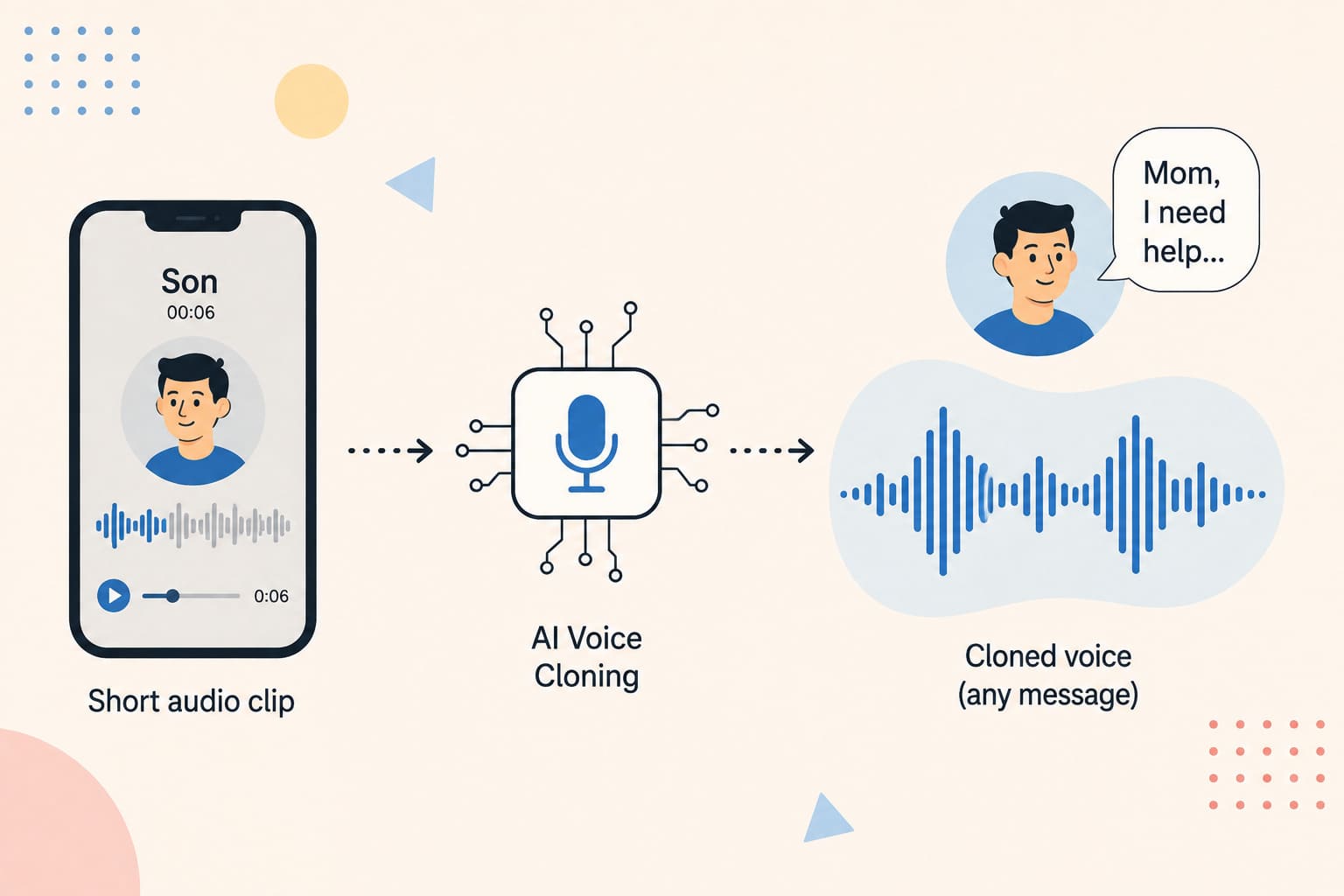
A short clip of someone’s voice, often taken from a public video or voice note, is now enough to generate a convincing fake of that voice saying almost anything, which is what makes the modern family emergency scam so much harder to catch by ear than it was even a few years ago.
In the United States, AI voice cloning used in exactly this kind of family emergency call caused an estimated 124 million dollars in losses in 2025, according to analysis by Surfshark and Resemble AI, with roughly one in four people surveyed reporting they had experienced or knew someone who had experienced a cloned voice scam. The FTC’s guide to voice cloning scams covers exactly this pattern with more examples.
The same technology is increasingly used through WhatsApp voice notes and calls in India, since a familiar voice note from a “relative” needing urgent help is far more convincing than a text message alone, and far cheaper for a scammer to produce than it was even two years ago.
A few seconds of audio, pulled from a video someone posted, a voice note forwarded in a family group, or even a public reel, is now enough source material. The tone, pacing, and accent can all be reproduced closely enough that recognising a fake by ear alone is no longer a reliable defence, even for people who know that relative’s voice extremely well.
What Is the One Verification Step That Stops This Every Time?
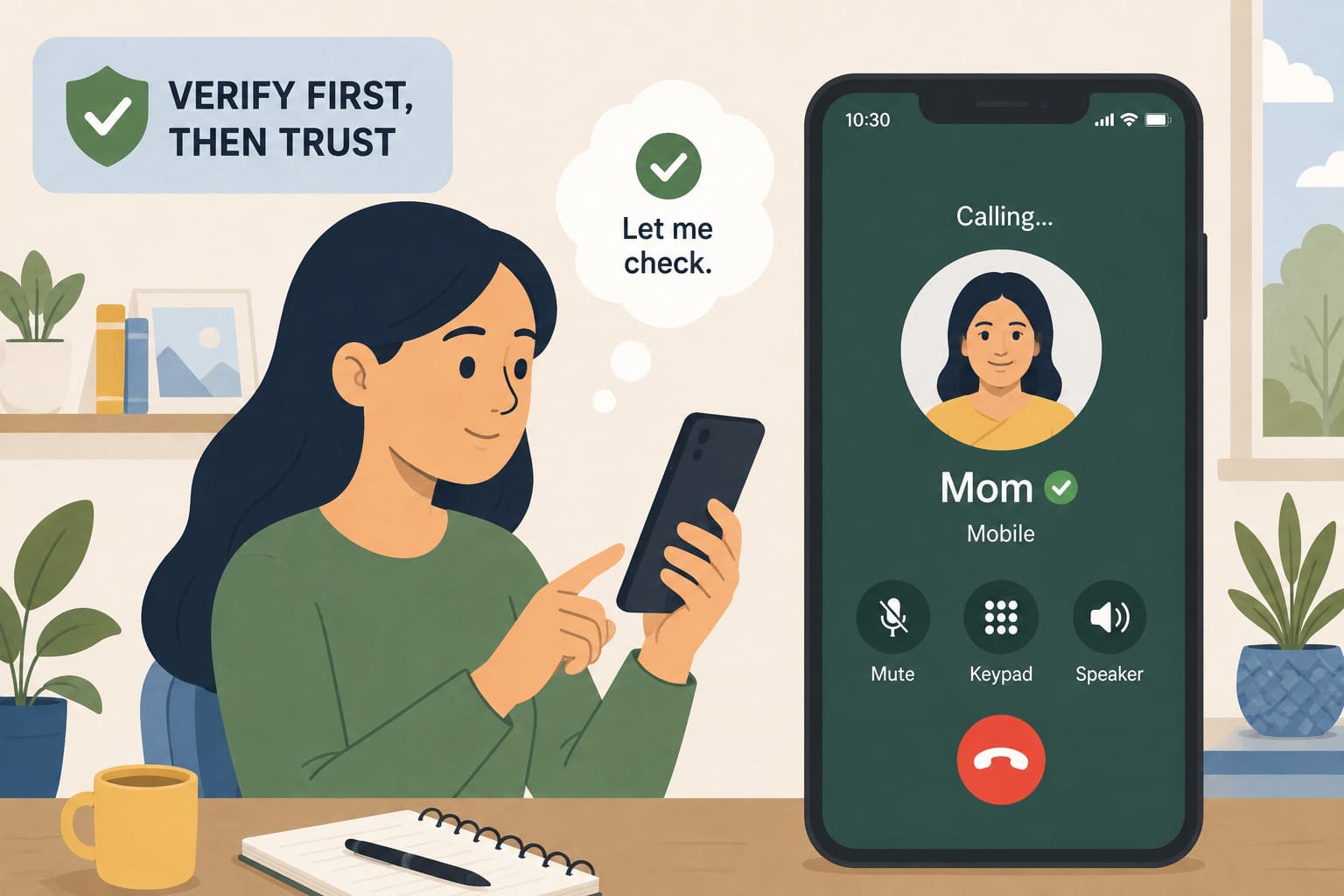
Hang up. Then call the family member directly, on the number already saved in your phone, not a new number the caller gave you.
If you cannot reach them immediately, call another family member or a friend who might know where they actually are before sending anything.
Agreeing on a family code word in advance, a word only real family members would know, gives everyone a fast way to confirm identity during a genuine emergency and immediately exposes a fake one.
If you have already sent money, report it through India’s National Cyber Crime Reporting Portal or the 1930 helpline as quickly as possible, and flag the calling number through the Department of Telecommunications’ Sanchar Saathi platform so it can be investigated and blocked.
Our guide on what to do after losing money to a scam covers the fuller recovery process, including how to talk to your bank about a wire transfer that may still be in transit, using the customer liability protections set out in the Reserve Bank of India’s guidance on unauthorised transactions.
Frequently Asked Questions
How can I tell if I am being targeted by a family emergency scam?
The strongest sign is pressure not to hang up or tell anyone else. A real emergency does not depend on you staying on one specific call.
Hang up and call the person back on their saved number before doing anything else.
What if the voice on the call sounds exactly like my relative?
Voice cloning technology can now copy a voice convincingly from a short public clip, so a familiar-sounding voice is no longer proof of identity on its own.
A family code word, agreed in advance, is a more reliable check than the voice itself.
What payment method should worry me most in a call like this?
Requests for wire transfers, gift cards, or cash picked up by a courier are the clearest warning sign, since none of these can be reversed once sent.
A genuine emergency almost never depends on payment through an untraceable method within minutes.
What This Comes Down To
A family emergency scam only works if it reaches you before you have a chance to check. That is the entire design.
The one habit that undoes it every time is simple: hang up, call your family member back on a number you already had, and treat any pressure to skip that step as the clearest sign something is wrong.
If this was useful, share it with someone who needs to know.




1 comment
Comments are closed.