

A recovery scam finds its victims at an oddly specific moment: right after they have already lost money to a different scam entirely.
Searching online for help, or posting about the loss in a forum or comment section, is often enough to attract someone offering to get the money back.
They ask for a fee first. Then they disappear, exactly like the scam that came before them.
This post covers the immediate secondary threat that follows financial fraud, how fake recovery companies actually operate, and which recovery routes are genuinely worth pursuing. It is part of our wider guide to the most common online scams.
What Is the Immediate Secondary Threat After Losing Money to Fraud?
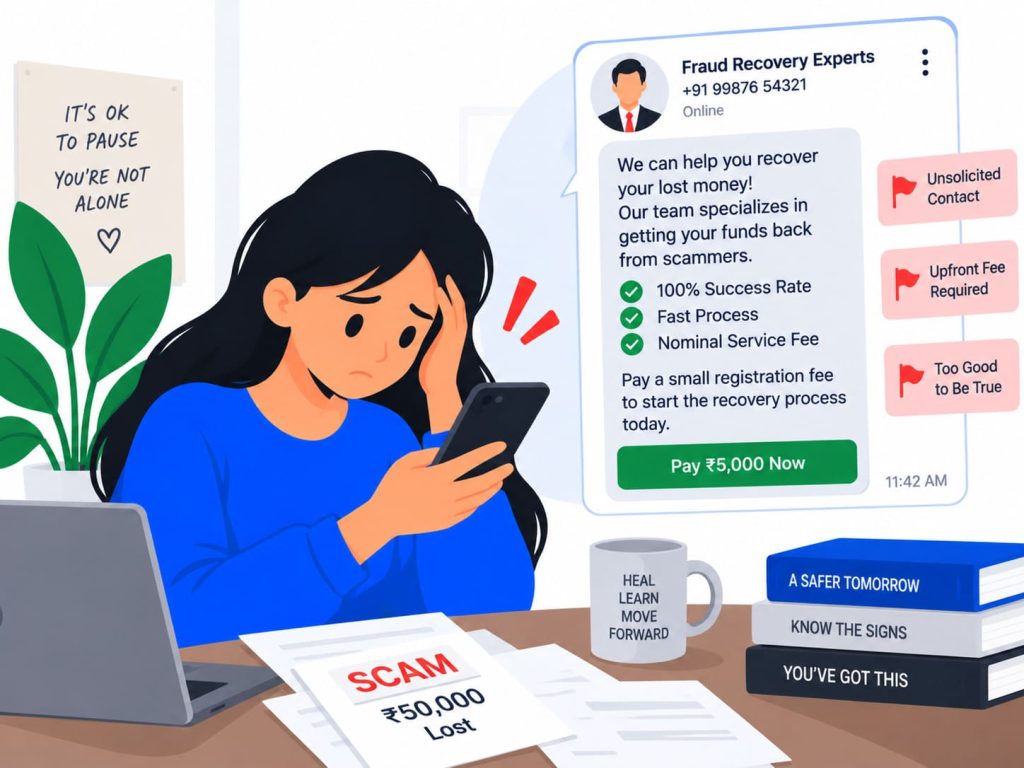
The moment someone realises they have been scammed is precisely the moment a recovery scam is most likely to appear, since a person searching desperately for a solution is easier to convince than one who has not yet lost anything.
Scammers monitor the same forums, comment sections, and social media groups where victims post about their losses looking for advice, then reach out directly, sometimes within hours of the original post.
31.5 percent of identity and fraud victims in 2025 were targeted a second time within the same year, according to the ITRC’s Consumer Impact Report. Being scammed once does not make a person more cautious automatically. It can, in the wrong hands, make them more findable.
In India, this frequently appears as a self-described “cyber lawyer” or “fund recovery expert” advertising on social media, offering to recover money lost to UPI fraud, investment scams, or digital arrest payments for a fee paid upfront, often within the same week the original loss was reported.
How Do Fake Recovery Companies Operate?
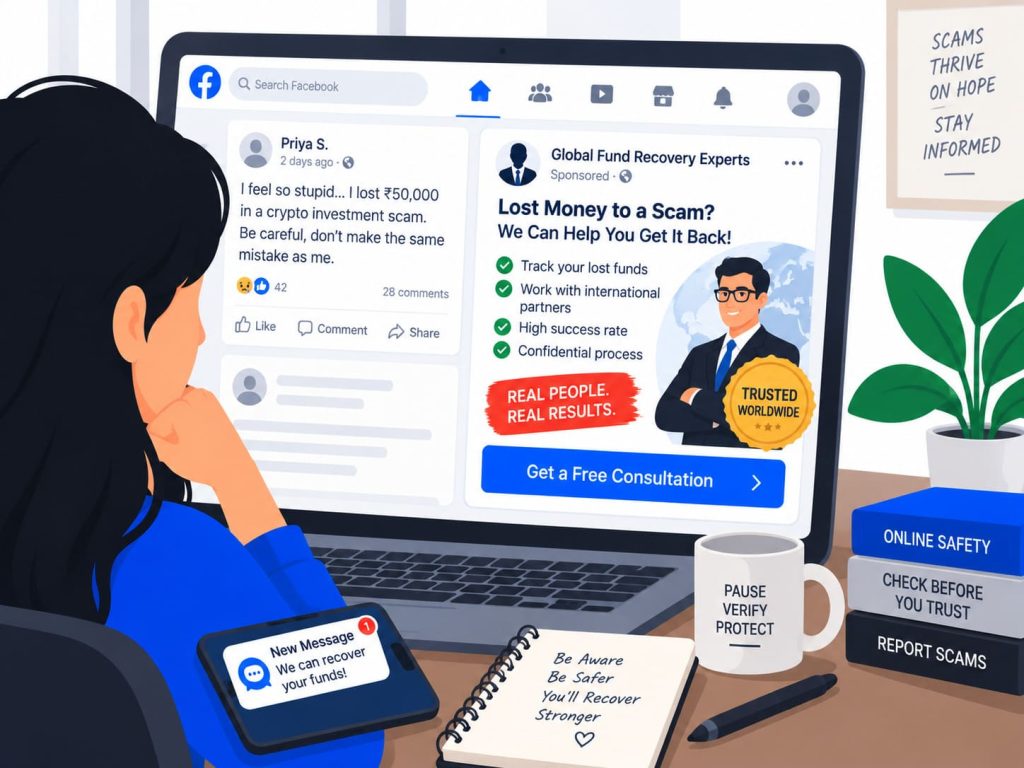
After the wave of pig butchering scam losses in 2024 and 2025, a secondary wave of recovery scammers emerged specifically, individuals posing as ethical hackers, lawyers, or crypto recovery specialists who promised to retrieve lost funds. They typically charged upfront fees between 500 and 5,000 dollars, then disappeared. The FBI specifically warned about this exact trend in its Internet Crime Complaint Center report for 2025.
The pitch usually includes confident, technical-sounding language, references to “blockchain tracing” or “insider banking contacts,” designed to sound like specialised expertise a victim could not access alone.
Fake reviews and testimonials often reinforce the pitch, other supposed victims describing how the same service recovered their money, posted by accounts that exist purely to make the operation look credible to the next searcher landing on the same page.
Some operations blend the two scams together entirely, the same person or group running both the original fraud and the “recovery” service that follows it, extracting money twice from the same target under two different names.
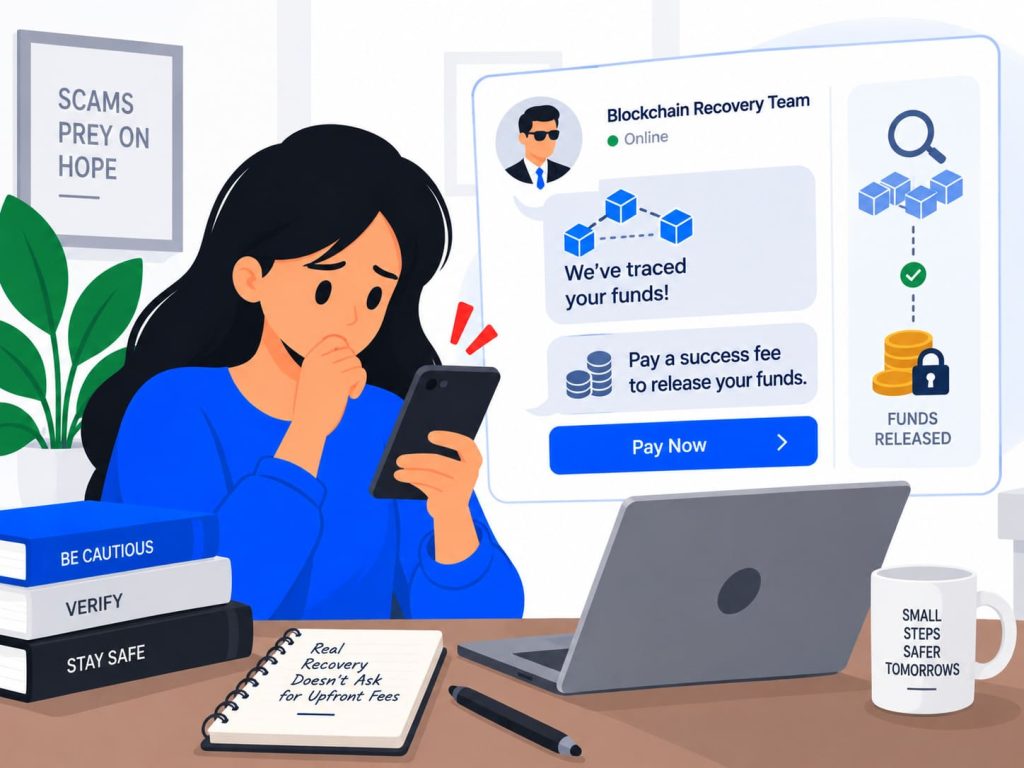
A “success fee” or “release charge” is often requested partway through, framed as the final step before the recovered funds are released, following the exact same escalating fee pattern covered in our guide to how investment and lottery scams work.
No legitimate recovery service, bank, or law enforcement agency ever asks a victim to pay a fee upfront to get their own stolen money back. That single rule exposes almost every version of this scam immediately.
Some fake recovery operations go further, requesting remote access to a device “to trace the transaction,” which is really just a second attempt at taking over an account under a different pretext. Anyone who has already lost money once is, unfortunately, an easier target for exactly this kind of follow-up request, since the fear of losing even more can override the caution a first-time victim might otherwise have.
What Are the Legitimate Recovery Options?
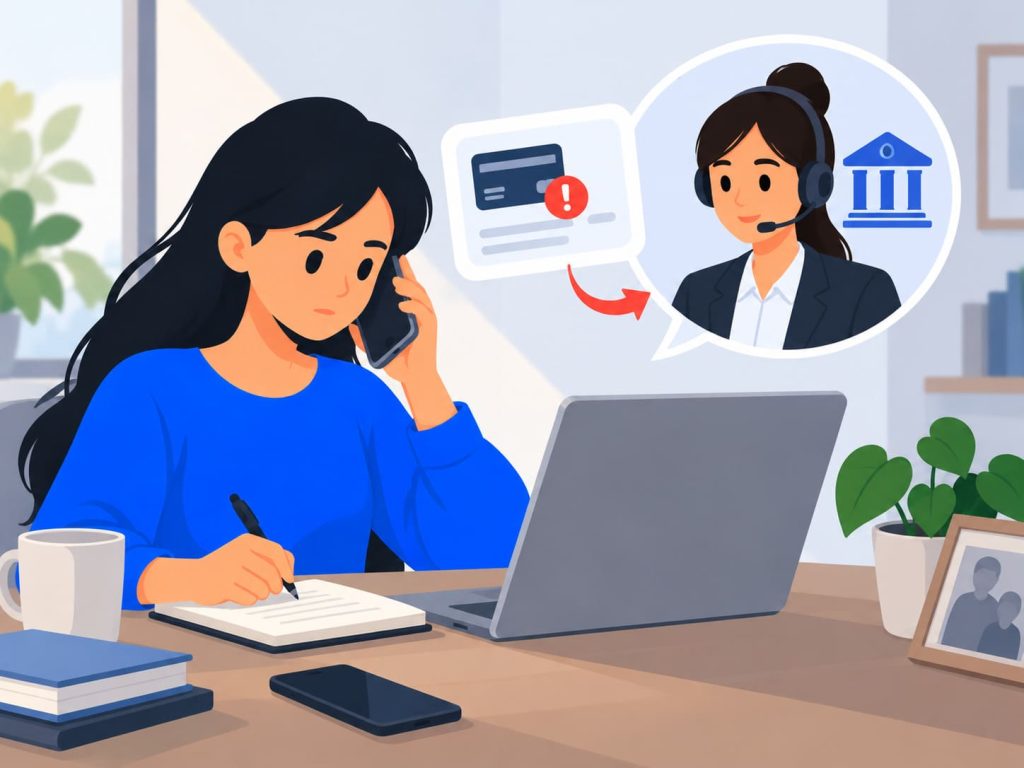
Contact your bank or UPI provider directly and immediately, since a transaction reported within the first few hours has a meaningfully better chance of being frozen before it moves further.
Report the original fraud through India’s National Cyber Crime Reporting Portal or the 1930 helpline, which is the only route with any actual authority to trace and potentially freeze a fraudulent transfer.
Chargebacks and card network disputes remain available for card-based payments, and are handled directly through your bank, never through a third party who contacted you first, uninvited. The Reserve Bank of India sets the rules banks follow for disputing unauthorised transactions, and none of those rules ever route through a private “recovery agent.”
If a scam involved a registered platform, exchange, or business rather than an anonymous individual, a formal written complaint to that organisation, kept separate from any cybercrime report, sometimes recovers funds through entirely legitimate channels the original fraud never touched.
Our guide on what to do after losing money to a scam covers the fuller first-24-hours process in detail, including exactly who to call and in what order.
How Do You Protect Yourself While Processing a Financial Loss?
The confusion and shame that follow losing money can make a confident-sounding stranger’s offer feel like relief rather than another risk, a pattern covered in more depth in our guide to how scammers exploit confusion and tech overwhelm.
Be cautious about posting details of a loss publicly, including the amount and platform involved, since that post is often exactly what attracts a recovery scammer in the first place.
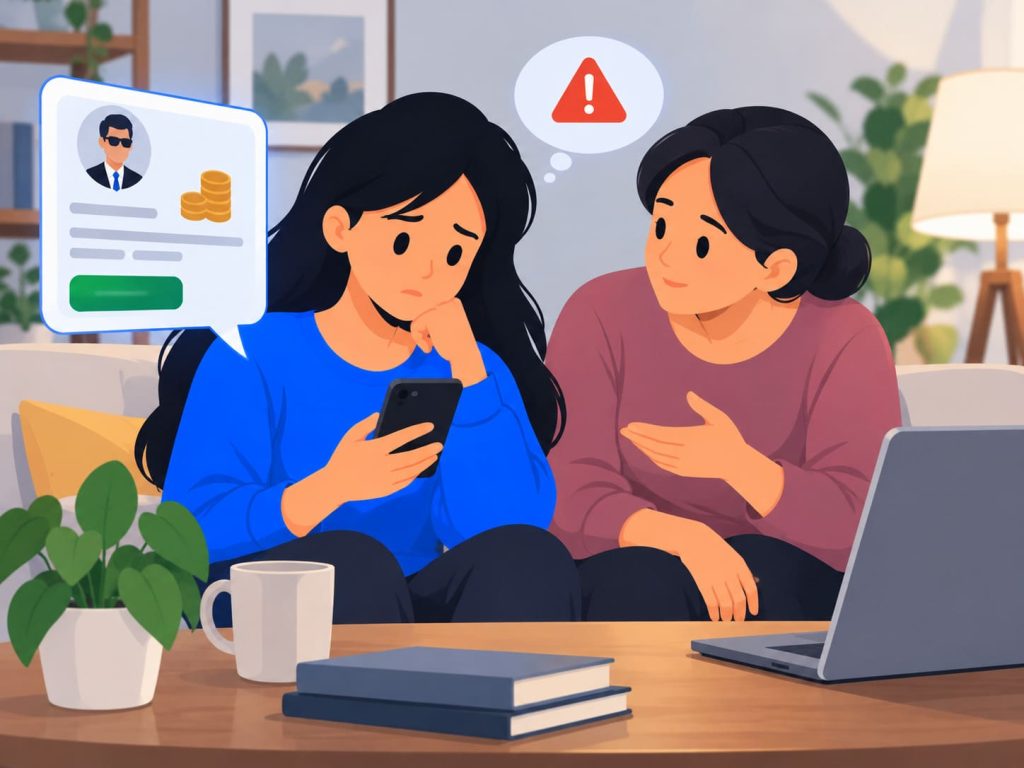
Talk to a trusted friend or family member before responding to any unsolicited recovery offer, and treat the pause itself as protective rather than a delay.
It is worth remembering, too, that most fraud reports do not result in full recovery, even through legitimate channels. That is a hard reality, not a reason to stop reporting, since a report still helps freeze future transfers, build a broader case, and warn other potential victims of the same operation.
Recovering emotionally from a financial loss takes real time, and that process deserves attention alongside the practical steps, a subject covered further in our guide on recovering your confidence and your safety after a digital attack.
Frequently Asked Questions
Is it ever legitimate for a recovery service to ask for a fee upfront?
No. No legitimate bank, law enforcement agency, or recovery service ever asks a victim to pay a fee before returning their own stolen money. Any such request is a recovery scam.
How do I know if a “cyber lawyer” offering to recover my money is genuine?
Be sceptical of anyone who contacted you first, especially after you posted about a loss publicly. Genuine legal or recovery help is sought out deliberately, not offered unprompted by a stranger online.
What should I do instead of paying a recovery service?
Contact your bank directly and report the original fraud through cybercrime.gov.in or the 1930 helpline. These are the only channels with any real authority to trace or freeze a fraudulent transfer.
What This Comes Down To
A recovery scam works by targeting the exact moment someone is most desperate to undo a loss, offering false hope dressed up as expertise.
The one habit that protects you: no legitimate recovery route ever asks for payment upfront, no matter how convincing the language or how urgent the offer sounds. Anyone who does is running the same scam twice, just with a different story.
If this was useful, share it with someone who needs to know.