

The cybercrime economy is not the work of a lone hacker in a dark room, the image most people still picture when they think about where a scam actually comes from.
It has suppliers, customers, employees, and a division of labour, much closer to an ordinary industry than to a single criminal acting alone.
Understanding that structure changes something important: being targeted was never about you personally. It was about being reachable, and reachable people are the raw material this entire industry runs on.
This post covers how cybercrime-as-a-service and dark web markets function, what scam compounds actually are, and how stolen data moves from a single breach into the scam that eventually reaches you. It is part of our wider guide to the most common online scams.
What Is Cybercrime-as-a-Service and How Do Dark Web Markets Work?
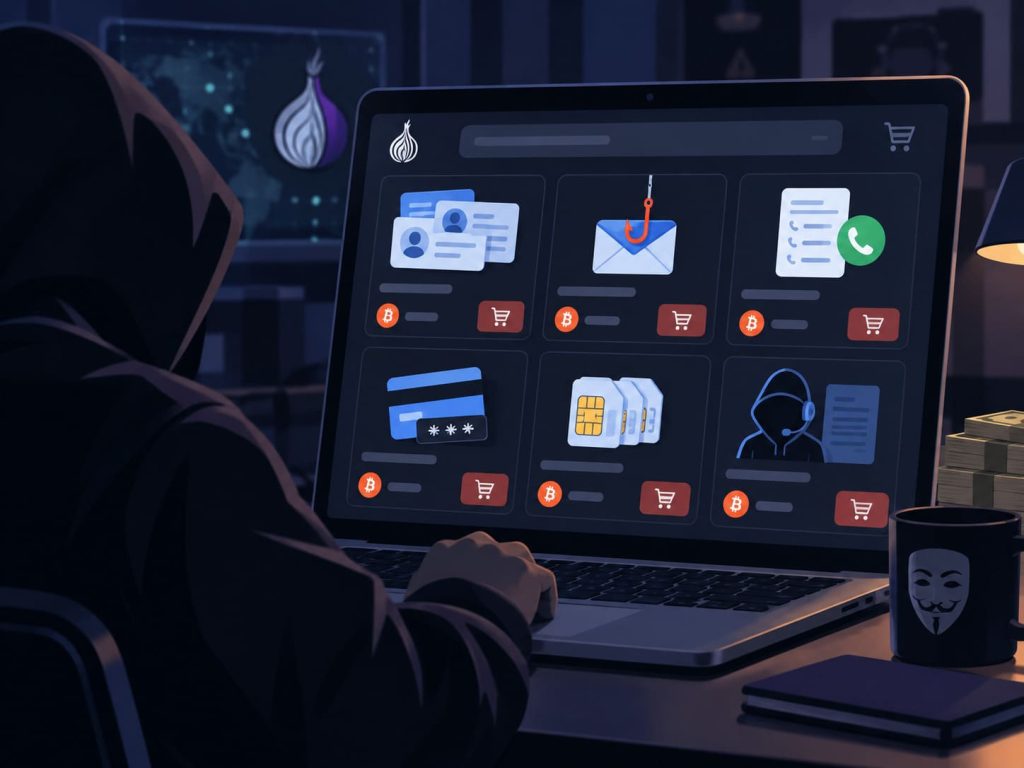
Almost every tool needed to run a scam can now be bought rather than built, phishing kits, malware, calling scripts, even rented access to already-compromised accounts, sold on dark web marketplaces the way software is sold anywhere else.
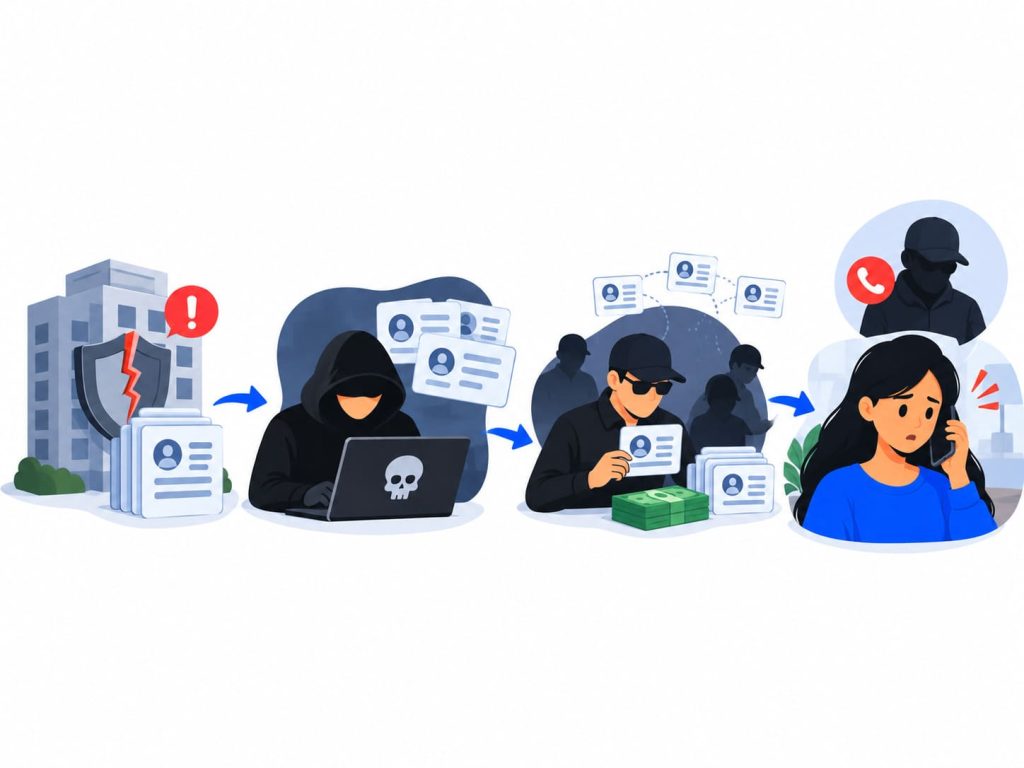
This division of labour means the people who steal data are rarely the same people who call victims. One group harvests credentials, another packages and sells them, a third buys them specifically to run a scam, each earning a share without ever meeting the others.
Operation RapTor, conducted in May 2025, seized 200 million dollars worth of assets and resulted in 270 arrests across multiple countries, targeting dark web markets selling stolen credentials, malware kits, and fraud tools. Despite the seizure, replacement marketplaces emerged within weeks, a clear sign of how industrialised this economy has actually become.
This structure is precisely why shutting down one scam call centre rarely stops the pattern for long. The tools, the data, and the buyers are all still there, ready to supply the next operation that opens.
Pricing inside this economy works much like any legitimate supply chain, with wholesale discounts for bulk data, subscription models for ongoing access to phishing kits, and even customer support forums where buyers rate sellers on reliability. The cybercrime economy did not invent these business mechanics. It simply borrowed them.
What Are Scam Compounds and Fraud Factories?
Some of the largest scam operations run out of physical compounds, often in Southeast Asia, staffed by workers trained and scripted to run romance, investment, and job scams at industrial scale, hundreds of calls and chats managed like a call centre’s daily targets.
A significant number of the people working inside these compounds are not there willingly. Reports from India’s Ministry of External Affairs have documented Indian nationals trafficked with fake job offers, only to be trapped and forced to run scams themselves under threat, a form of what has come to be called cyber slavery.
This detail matters for how you think about the person on the other end of a scam call. Some operators are willing criminals. Others are victims of a different, earlier scam themselves, coerced into running the one that eventually reaches you, which does nothing to reduce the harm caused but does explain why arrests alone rarely dismantle the wider operation.
India’s Indian Cyber Crime Coordination Centre has worked with international partners on identifying and disrupting these compounds, since the scale of the operation means individual arrests rarely address the structure producing the next one.
The scripts used inside these compounds are often remarkably consistent from one victim’s experience to the next, which is one of the clearest signs that a call is coming from a large, organised operation rather than an individual acting on their own initiative.

How Do Credential Markets Move Your Data From Breach to Crime?
A single data breach at a company you may have never even heard of can be the true starting point of a scam call you receive months later, your details sold, resold, and combined with other leaked data along the way.
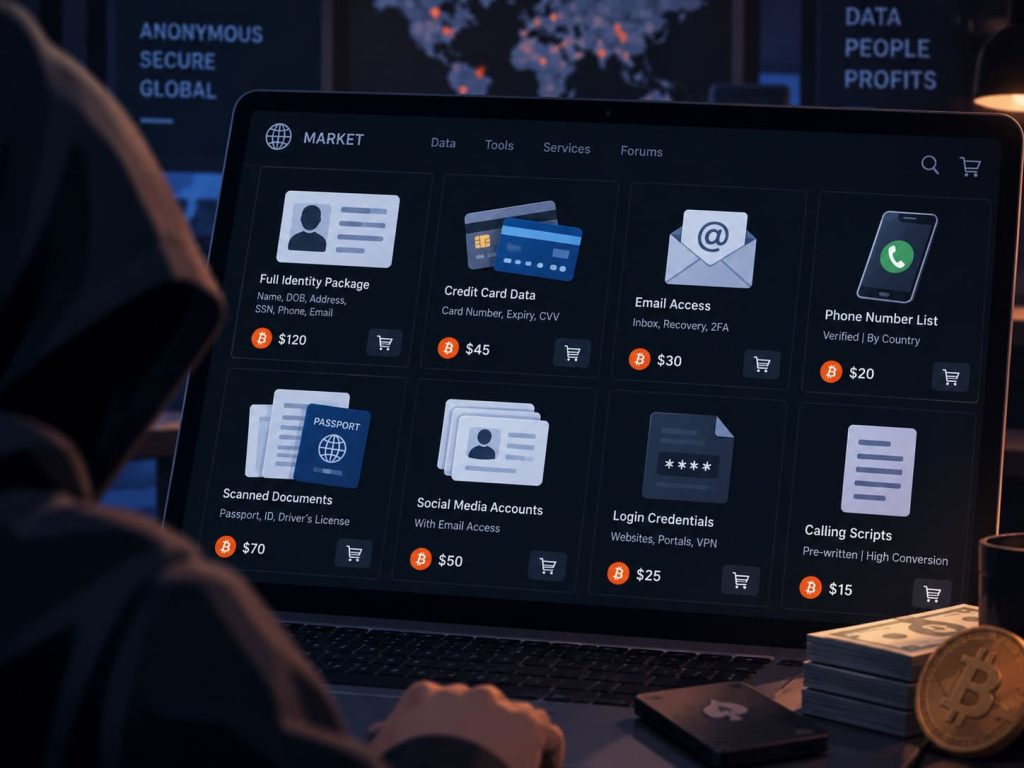
Dark web markets featured over 140 million stolen credit card records in 2025, with credential theft driving nearly two-thirds of all dark market transactions, according to Krebs on Security’s analysis of dark web activity. This connects directly to the personal information economy covered in our guide to why your personal information is worth real money, since a leaked email and phone number combination is exactly what fuels the “personalised” opening line in a convincing scam call.
Prices in these markets vary by how complete and how fresh the data is, a full identity package with banking details commanding far more than a bare email address, since more complete data supports a more convincing scam further down the chain.
Understanding the cybercrime economy this way also explains why deleting an old account rarely feels like it solves anything on its own. Data already sold into this economy tends to stay in circulation for years, resurfacing in new combinations long after the original breach has been forgotten.
Why Should This Remove the Shame, Not Add to It?
You were not targeted because you did something wrong. You were targeted because you exist inside a world where personal data has been commodified and traded at industrial scale, and reachable people are the product this economy runs on.
Understanding the economics behind why you were targeted removes a layer of shame that keeps many people from reporting what happened to them at all. Shame is, in its own way, useful to this industry too, since a victim too embarrassed to speak up rarely warns anyone else in time.
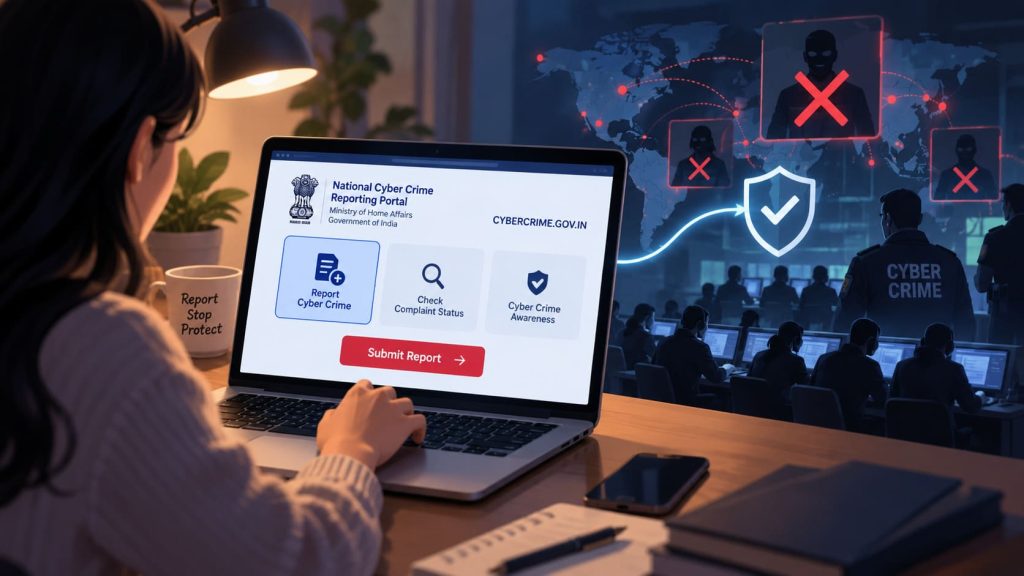
Report any scam you encounter through India’s National Cyber Crime Reporting Portal or the 1930 helpline, even if no money was lost, since every report contributes to the pattern-recognition work that eventually helps disrupt these larger operations.
This is industrial fraud, not a personal failure. Treating it that way changes how you talk about it, and how quickly you are willing to ask for help the next time something feels wrong, a shift covered in more depth in our guide on recovering your confidence and your safety after a digital attack.
Frequently Asked Questions
Are scam callers usually part of organised criminal groups?
Often, yes. Many scams are run through structured operations with defined roles, from data brokers to callers, rather than a single person acting alone.
Is everyone who runs a scam call doing it willingly?
Not always. Reports have documented workers trafficked into scam compounds and forced to run fraud under threat, which does not excuse the harm caused but is worth understanding.
Why does reporting a scam matter even if I did not lose money?
Reports help authorities identify patterns across a much larger criminal operation, contributing to investigations that a single unreported incident never could on its own.
What This Comes Down To
The cybercrime economy runs on scale, structure, and stolen data moving through several hands before it ever reaches you as a phone call or a message.
The one shift that matters: being targeted reflects the size of this industry, not a personal failure on your part. Report what happens to you, and share what you have learned with the people around you, especially anyone who might feel too embarrassed to speak up first.
If this was useful, share it with someone who needs to know.