

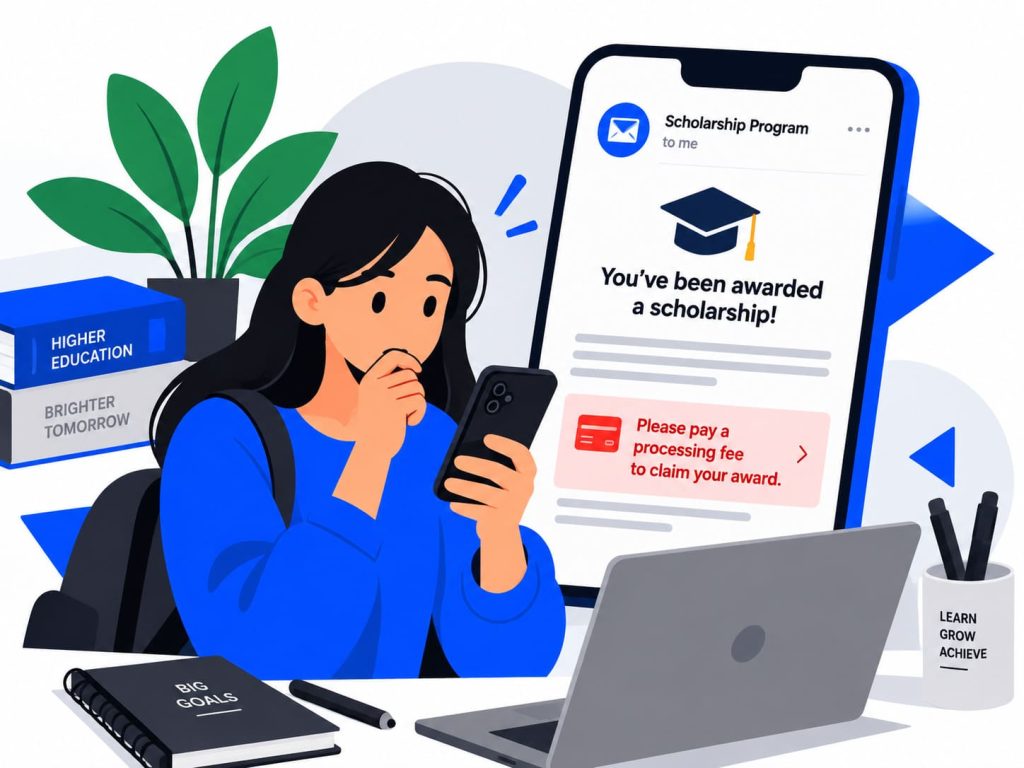
A scholarship scam usually arrives as good news: a generous award, no application required, just a small processing fee to claim it.
For a student already stretching a budget, or a parent trying to cover rising tuition, that message can feel like exactly the relief they were hoping for.
The fee is paid. The scholarship never arrives, because it was never real to begin with.
This post covers how these offers are structured, the separate world of fake degrees and credential fraud, and exactly how to verify a scholarship or institution before trusting either. It is part of our wider guide to the most common online scams.
How Are Fake Scholarship Offers Structured?
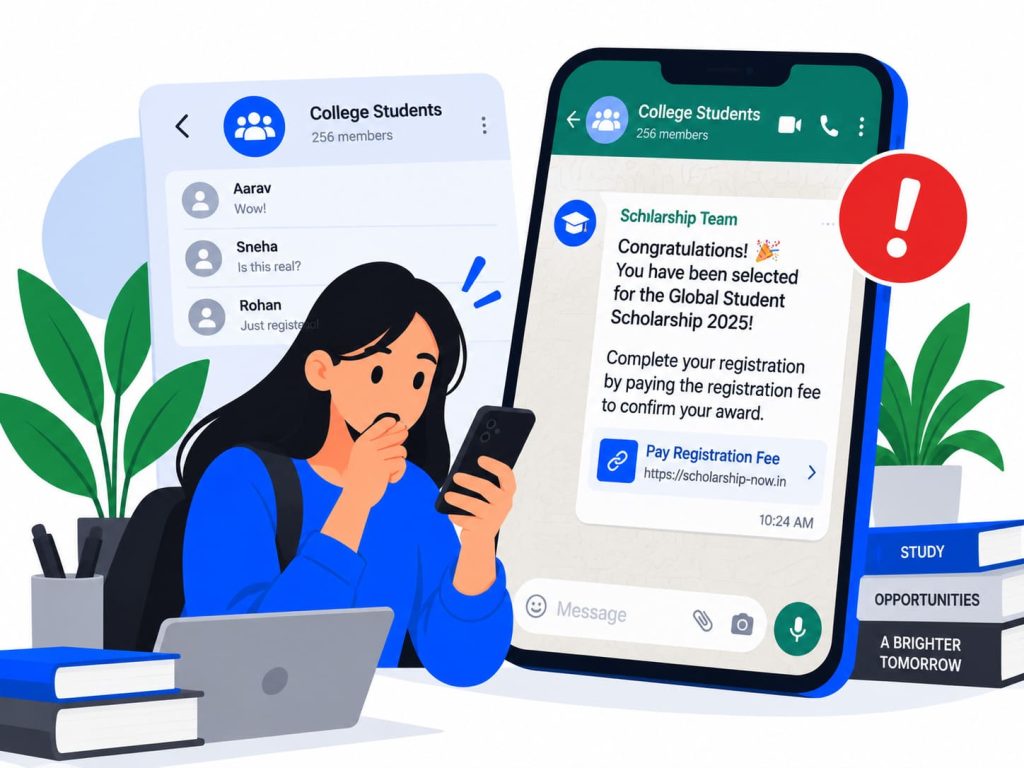
The offer arrives unprompted, often by email or WhatsApp, congratulating the student on being “selected” for an award they never applied for.
No legitimate scholarship works this way. Genuine awards require an application, and the organisation offering money to a student has no reason to ask that student for any in return.
A scholarship scam usually asks for a “processing,” “verification,” or “registration” fee first, sometimes followed by a second and third request once the first is paid, each framed as the final step before funds are released.
Fake scholarship scams surged in 2025, with the FTC warning that scammers were specifically targeting students with offers requiring an upfront processing fee to claim an award. Students and young adults between 18 and 24 reported the highest rate of fraud victimisation by volume that year, according to FTC Consumer Sentinel data, even though their individual losses tended to be smaller than older victims. This is US data, but the same unsolicited scholarship message circulates constantly on Indian student WhatsApp groups and coaching centre forums.
Some versions target parents directly instead of students, framed as a fee waiver or an education loan pre-approval tied to a specific coaching institute, timed around exam results season when families are already actively searching for funding options.
The pressure to respond quickly is deliberate here too. A “limited seats” or “offer expires today” line pushes a family to pay before checking whether the scholarship body or the coaching institute actually exists.
How Do Fake University Degrees and Credential Fraud Work?
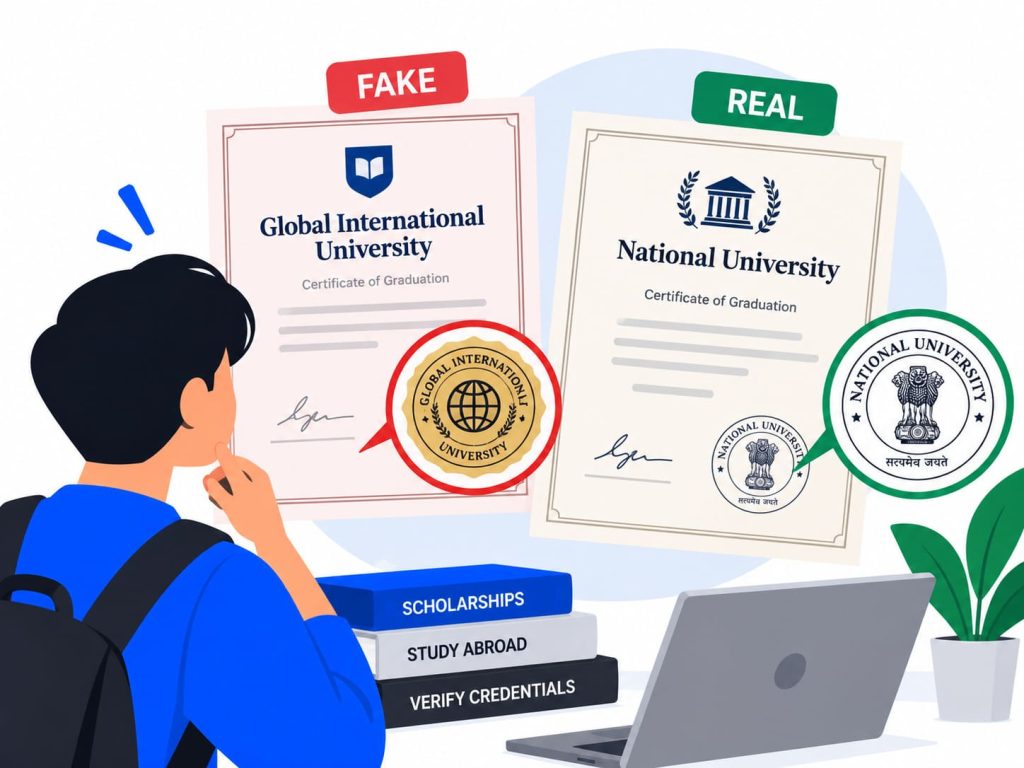
A separate but related scam sells a degree outright, no coursework, no examinations, sometimes no attendance at all, from an institution built to look accredited without actually being recognised by any real regulator.
These “degree mills” often use names deliberately similar to well-known, genuine universities, close enough that a quick search does not immediately reveal the difference.
Fake university degree mills continued operating through 2024 and 2025, with several shut down by the FTC for selling worthless credentials to people who believed they were purchasing a legitimate qualification.
Some of these operations even offer a full “campus experience,” a website with student testimonials, a fake admissions office, and staff who answer emails promptly, all built specifically to survive the kind of casual check most people would think to do.
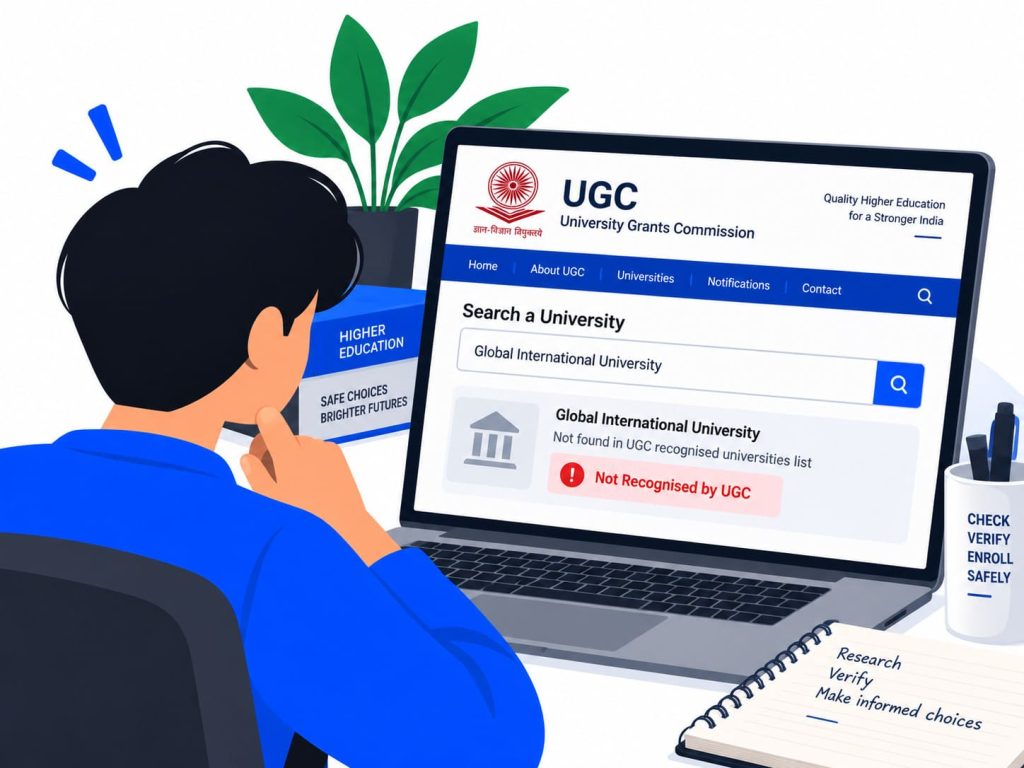
In India, the University Grants Commission maintains a public list of institutions it has identified as fake, since a “university” that never received UGC recognition cannot legally award a valid degree, regardless of how official its certificates look. This mirrors the broader pattern covered in our guide to verifying fake credentials and impersonation, where a polished certificate or website says nothing about whether the authority behind it is real.
How Do You Verify a Scholarship or Institution Before Trusting Either?
No legitimate scholarship ever requires payment to claim an award you have already won. If a fee is requested first, the offer is not a scholarship.
A short call to the awarding organisation’s official phone number, found independently rather than from the offer itself, settles the question in a couple of minutes. A real scholarship body will confirm or deny an award instantly, without hesitation or pressure to pay first.
Check any Indian university or institution directly against the University Grants Commission’s official list of recognised universities and its published list of fake ones before applying, paying fees, or accepting an admission offer.
EdTech platforms and “free” study apps deserve the same scrutiny, since some collect far more personal and academic data than they need, sometimes reselling it to other marketers or scammers who then target the same students with further fake offers. Reviewing what a platform actually does with your data before signing up is worth the extra few minutes, particularly for anything requesting Aadhaar or bank details during registration.
Job scams frequently use the same playbook aimed at recent graduates specifically, promising fast placement for a fee, a pattern covered in more depth in our guide to how fake job offers steal your money and identity.
How Do You Report Academic Fraud?
If you have already paid a fee for a fake scholarship or enrolled at an institution you now believe is unrecognised, gather every email, message, and payment receipt connected to it.
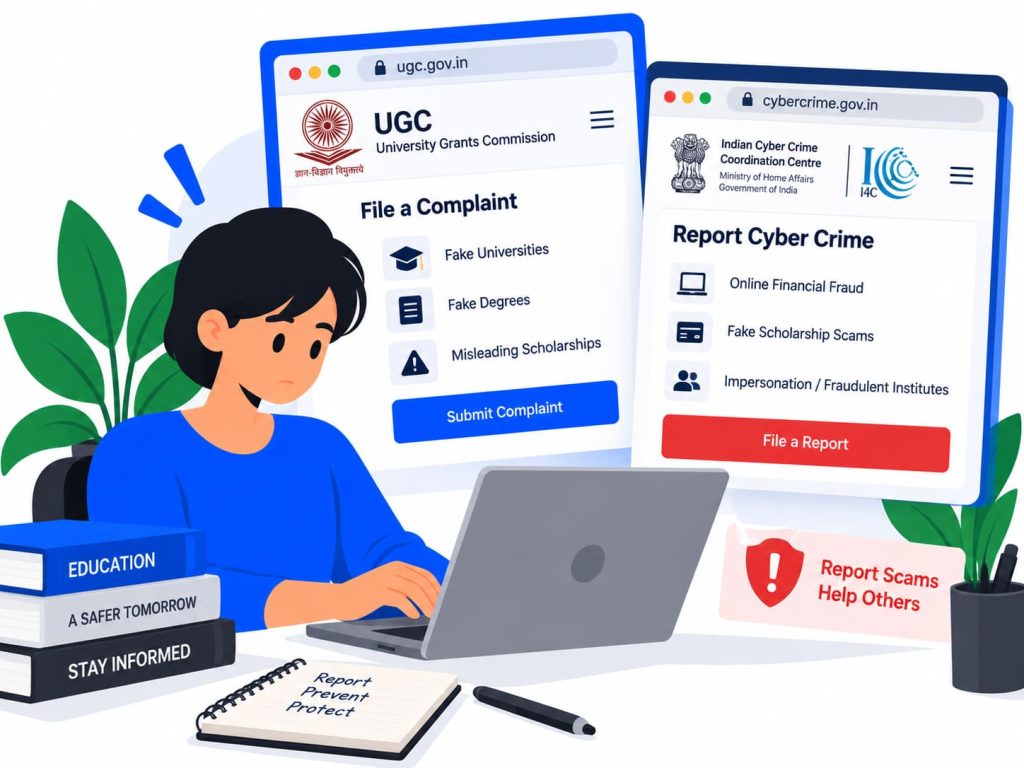
Report the payment through India’s National Cyber Crime Reporting Portal or the 1930 helpline, since these details help a cyber cell trace exactly where the money actually went, and how quickly.
Report a suspected fake or predatory institution directly to the University Grants Commission, which maintains updated guidance for students and parents on verifying institutions carefully before enrolment.
If your identity documents were shared during a fake application process, monitor for unfamiliar loan or credit applications in the months that follow, since Aadhaar and academic details collected this way are sometimes reused for identity theft well beyond the original scam, a connection covered further in our guide on why your personal information is worth real money.
Sharing what happened with your college, coaching centre, or student union is worth doing too, even if it feels embarrassing. The same offer is almost always being sent to dozens of other students at the same time, and one report can prevent several more.
Frequently Asked Questions
Can a real scholarship ask me to pay a fee before releasing the award?
No. A genuine scholarship never requires payment from the recipient to claim money already awarded. Any request for a processing or registration fee first is a scholarship scam.
How do I check if a university or degree is genuinely recognised in India?
Check the institution against the University Grants Commission’s official list of recognised universities, and separately against its published list of fake universities, before applying or paying any fee.
What should I do if I already paid a fee for a fake scholarship?
Report the payment through cybercrime.gov.in or the 1930 helpline with your payment receipts and messages, and report the offer itself to the UGC if a fake institution was involved. Warn other students in the same group or class as soon as you can, since the same offer is rarely sent to only one person.
What This Comes Down To
A scholarship scam and a fake degree work the same underlying trick: offering something a student genuinely wants, then asking for money or trust that a real institution would never require upfront.
The one habit that protects you: verify directly with the UGC or the awarding body before paying anything, or accepting any offer that simply arrived unprompted, out of nowhere.
If this was useful, share it with someone who needs to know.




1 comment
Comments are closed.