

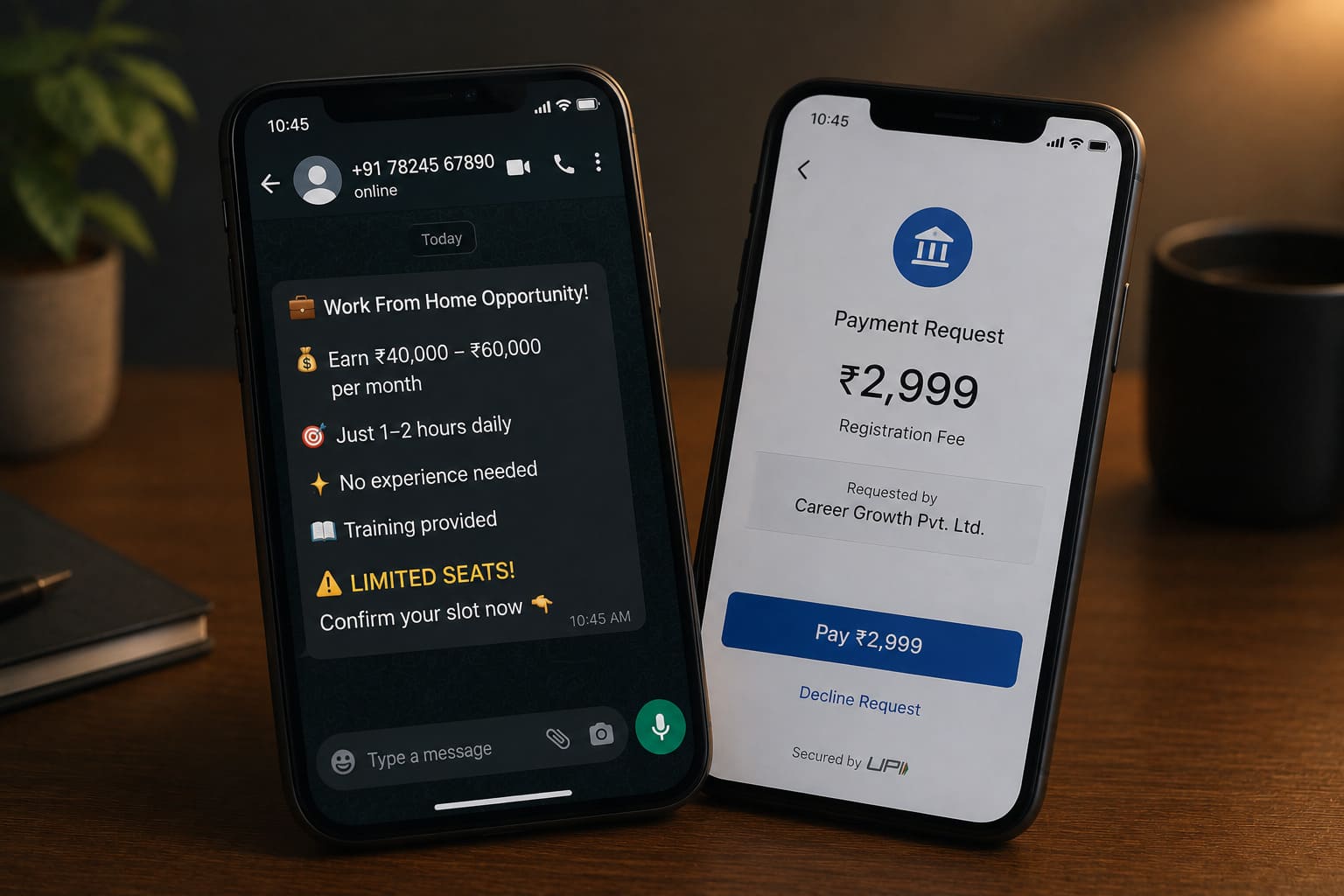
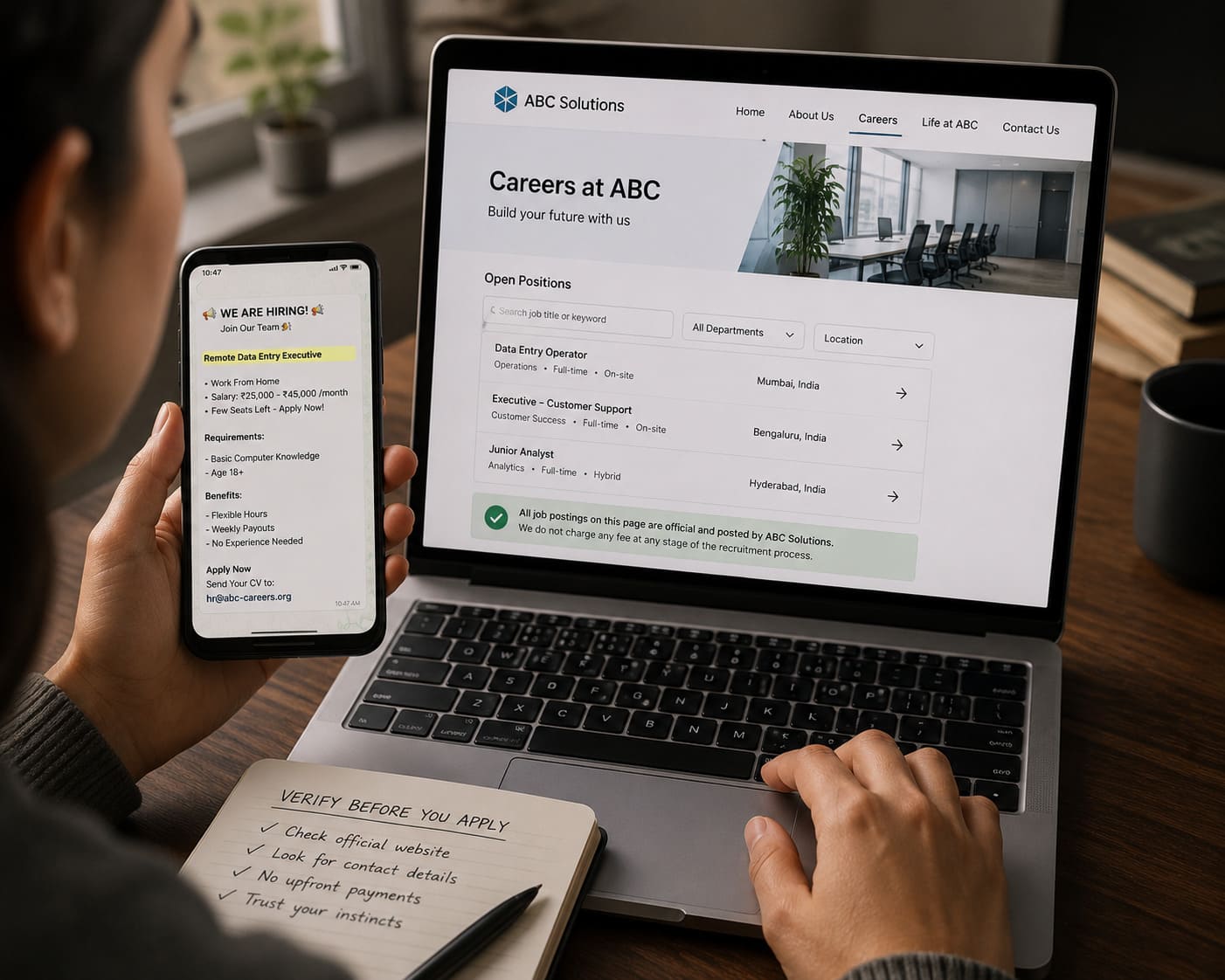
A fake job offer scam usually arrives exactly when you are hoping for good news: a message on WhatsApp or a job portal, offering flexible hours, unusually high pay, and a start date of today.
The pattern has grown quickly enough that job scams now sit among the most reported fraud categories for students and young adults specifically, alongside older workers looking for a flexible second income.
All you need to do first is pay a small fee, for a starter kit, training material, or “registration.” Or perhaps just send a photo of your Aadhaar card and PAN, so HR can “process your onboarding.”
By the time it becomes clear nothing about the job was real, the fee is gone, and sometimes your identity documents are gone with it.
This post covers how these listings are built to look legitimate, how the payment and identity theft actually happen, and the specific checks that expose a fake offer before you hand over anything. It is part of our wider guide to the most common online scams.
How Are Fake Job Listings Built to Look Real?
The pay is the first hook: often double or triple what a comparable real role would offer, for work described as simple, flexible, and requiring no experience. Data entry, product reviews, and package “verification” are common covers.
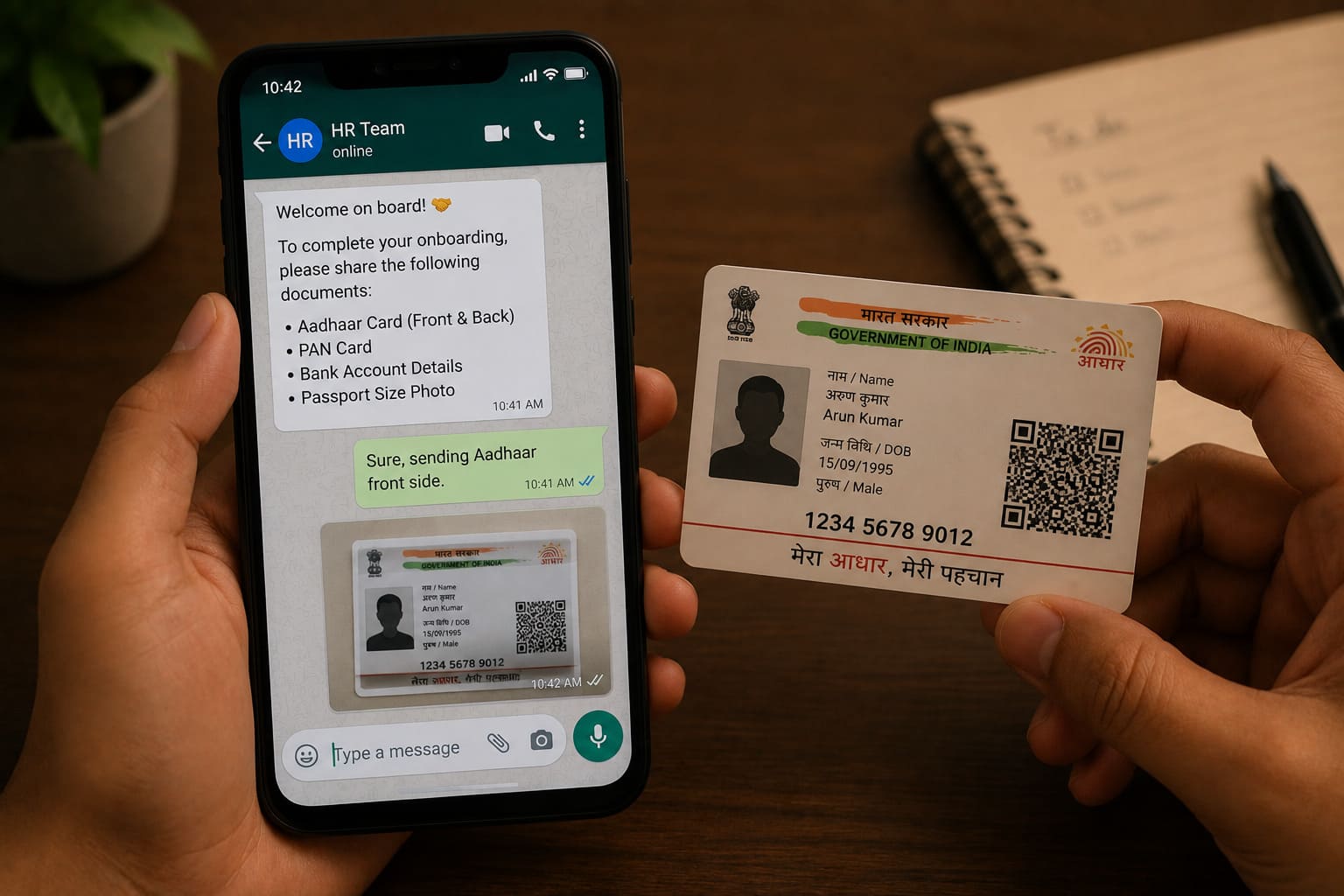
The listing itself borrows real company names and logos, sometimes copying an entire careers page almost exactly, or posting under the name of a genuine recruiter whose profile photo was lifted from LinkedIn.
Interviews, where they happen at all, are often conducted entirely over chat, with generic questions and near-instant approval regardless of what you answer. A real hiring process almost never moves that fast, and slowing down to notice that speed is itself one of the clearest signs something is wrong.
Some listings recruit through paid social media ads rather than job portals, targeting people specifically searching terms like “work from home,” “part time job,” or “student earning.” The ad itself often disappears or gets reported within days, only to reappear under a new account with a nearly identical script the following week.
How Does the Advance Payment Request Actually Work?
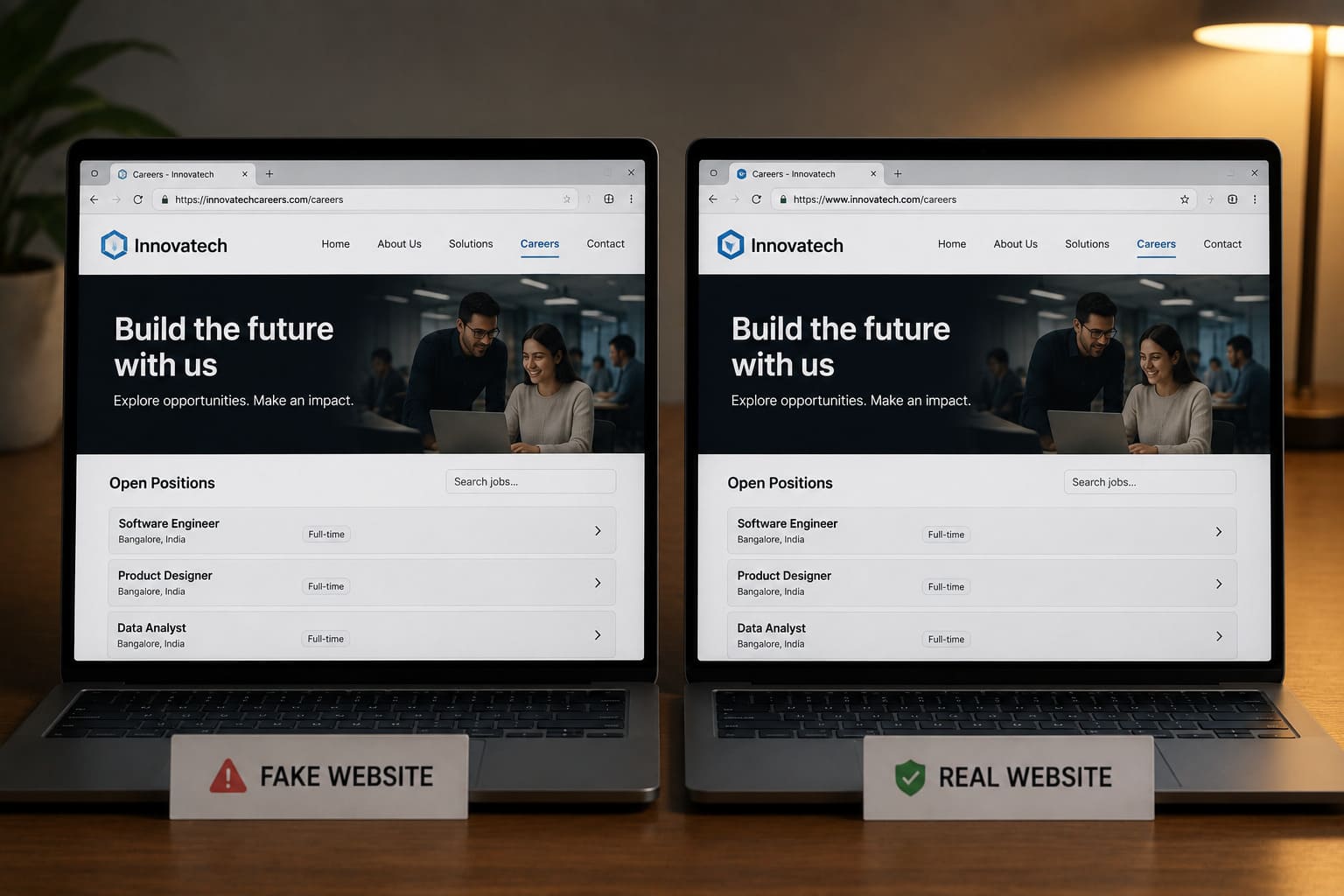
Once you have expressed interest, a fee appears: for a “starter kit,” a laptop or software licence you are told to buy from a specific link, a background check, or simply a “registration deposit” that will supposedly be refunded in your first pay cheque.
In the US, job and employment scams cost consumers 501 million dollars in reported losses in 2024, with work-from-home offers the fastest-growing variant, according to FTC Consumer Sentinel data. The same structure runs constantly in India through fake data entry, parcel-forwarding, and “like and earn” job schemes circulated on WhatsApp and Telegram groups.
The refund, of course, never arrives, because the job itself never existed. Some victims are asked to pay several times, each time told one more small fee stands between them and their first pay cheque.
Task-based variants add a twist: you complete a handful of small paid “tasks” and are shown a real, modest payout to build confidence, before being told a larger task requires you to first deposit your own money to “unlock” a bigger reward. That deposit is the actual goal of the entire scheme, and it is never returned.
How Do Job Applications Turn Into Identity Theft?
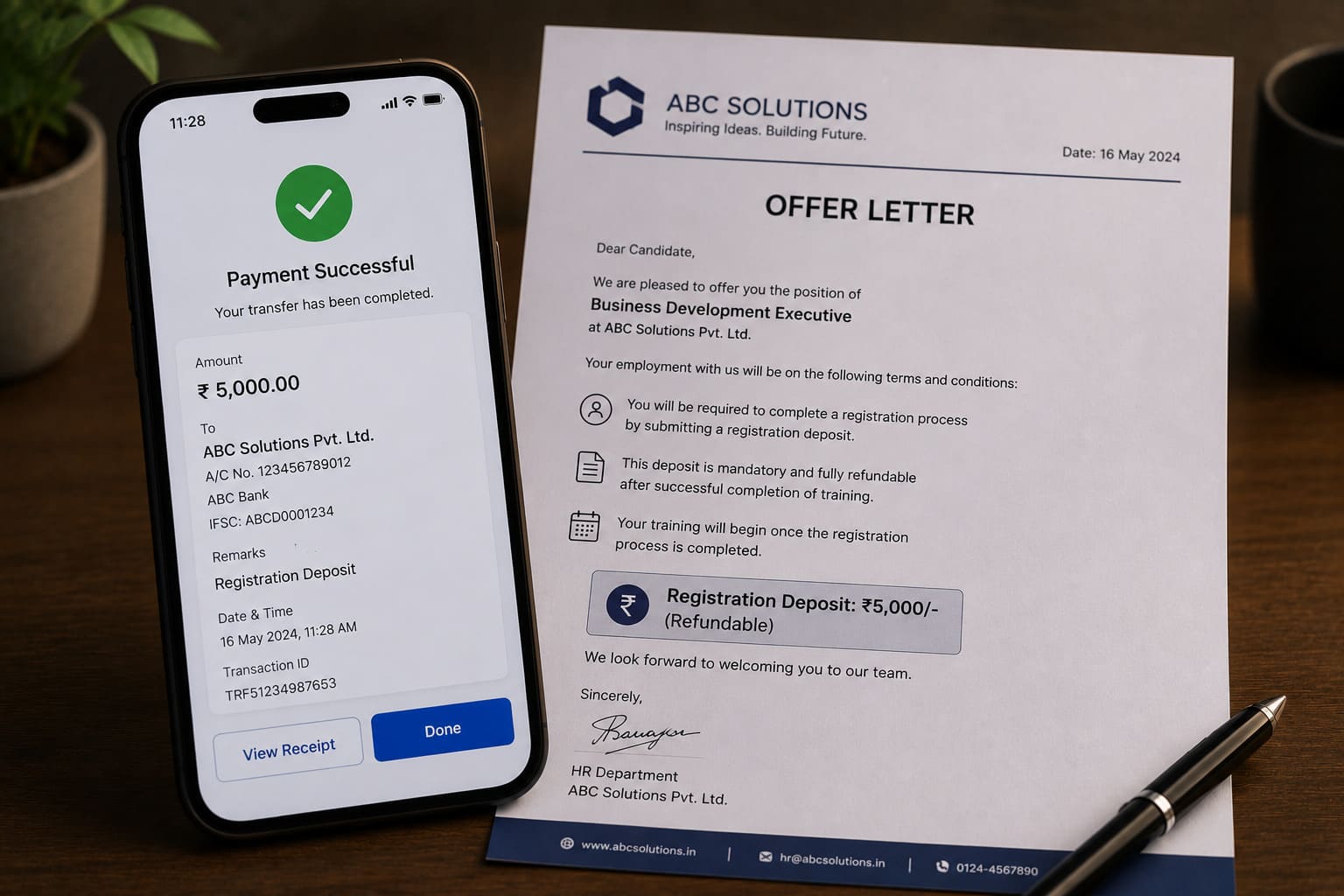
A genuine employer eventually needs identity documents, but only after a real offer, on a secure company system, not over WhatsApp during a first chat.
Fake recruiters ask for Aadhaar, PAN, bank account details, and sometimes a selfie holding your ID, all framed as standard onboarding. These details are enough on their own to open a fraudulent loan, register a SIM card in your name, or build a convincing profile for further scams targeting you later.
A smaller number of listings go a step further, asking successful “hires” to receive and forward money through their own bank account as part of the role. This turns the victim unknowingly into a money mule, moving funds from other frauds and carrying the legal risk themselves once banks or investigators notice the pattern.
The Reserve Bank of India has repeatedly warned bank customers against allowing their account to be used by a third party for any purpose, since the account holder, not the scammer who recruited them, is the name a bank freezes first when suspicious transactions are traced.
The identity documents collected this way rarely stay with just one scammer. They are often resold, feeding directly into the same market for stolen personal information that drives identity theft, loan fraud, and SIM swap attacks well after the fake job itself is forgotten.
How Do You Verify a Job Offer Before Sharing Anything?
Search the company’s name alongside the word “scam” before responding to anything, and check whether the listing appears on the company’s own official careers page.
No legitimate employer asks you to pay for a starter kit, software licence, or “registration” before you have started working, and none will conduct an entire hiring process purely over chat with no phone or video call at all. This mirrors the same red flag covered in our guide to verifying fake credentials and impersonation more broadly.
Never send Aadhaar, PAN, or bank details until you have a signed offer letter from a verified company email address, not a personal Gmail or WhatsApp number. If you have already shared documents or paid a fee, report it through India’s National Cyber Crime Reporting Portal or the 1930 helpline, and monitor your credit report for any unfamiliar loan applications.
The FTC’s job scam guidance covers many of the same warning signs for readers researching work-from-home offers from outside India, since the underlying tactics travel well beyond one country’s job market. Fake job offers are also a documented entry point for workplace-targeted fraud generally, covered in more depth in our guide to workplace and business email threats.
Frequently Asked Questions
Is it normal for a job to ask for payment before I start working?
No. A legitimate employer pays you, not the other way around. Any request for a fee, deposit, or purchase before your first day is a strong sign of a fake job offer scam.
How do I quickly check if a job offer is a fake job offer scam?
Search the exact wording of the offer alongside the word “scam,” and confirm the listing appears on the company’s own official careers page rather than only in a message you received.
What if the company name in the job listing is real?
Scammers frequently copy real, well-known company names and logos to appear credible. Confirm any offer directly through the company’s official careers page or a verified company email, not the contact details in the message itself.
What should I do if I already shared my Aadhaar or bank details?
Report it immediately through cybercrime.gov.in or the 1930 helpline, and keep an eye on your credit report for unfamiliar loan or credit applications opened in your name over the following months.
What This Comes Down To
A fake job offer scam works by matching urgency with hope, offering exactly what someone searching for work wants to hear, timed to arrive before there is a reason to doubt it.
The one habit that protects you: never pay to get a job, and never send identity documents before a verified offer letter exists. If either is requested first, the job is the scam.
If this was useful, share it with someone who needs to know.




3 comments
Comments are closed.