

A fake health cure usually appears exactly when someone is desperate for one: a chronic condition that has not improved, a diagnosis that feels overwhelming, a weight loss goal that has not budged despite real effort.
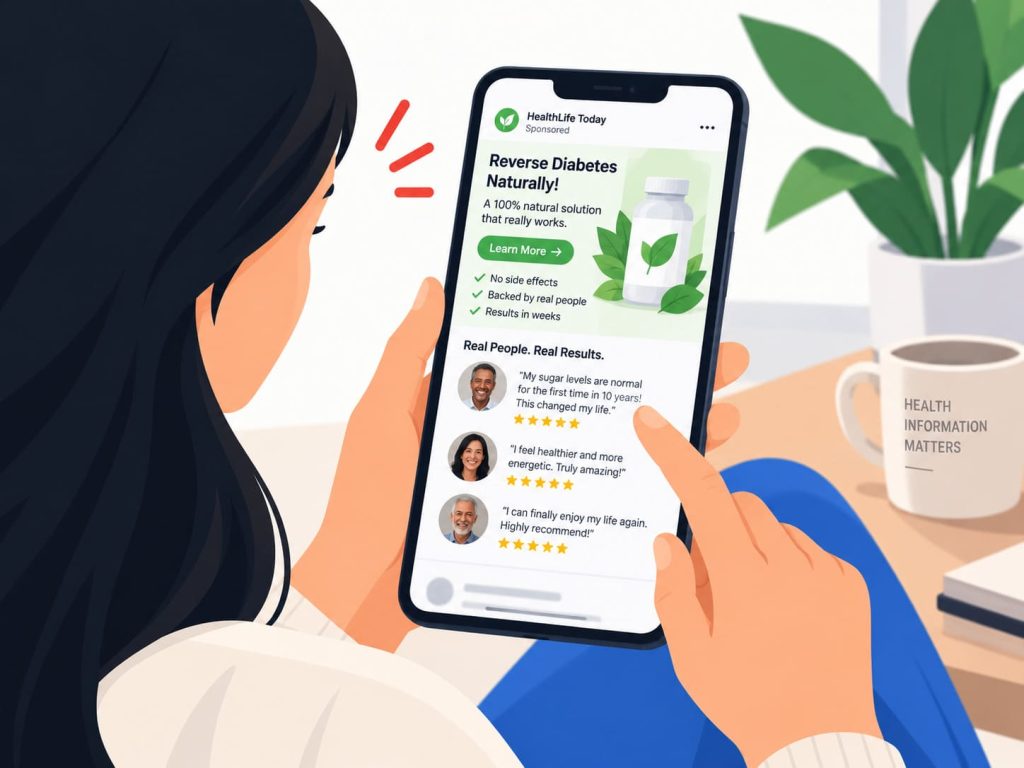
An ad appears with a product that claims to reverse the condition entirely. The testimonials are glowing. The language sounds clinical enough to feel credible.
None of it has been through the process real medicine goes through before reaching a patient.
This post covers how these scams exploit medical anxiety specifically, the real risk behind fake prescription platforms and counterfeit medication, and exactly how to verify a product or practitioner before you trust either. It is part of our wider guide to the most common online scams.
How Do Health and Pharmaceutical Scams Exploit Medical Anxiety?
Health desperation is one of the most reliably exploited emotional states there is, because a person in pain or fear is looking for relief, not for reasons to doubt what is being offered.
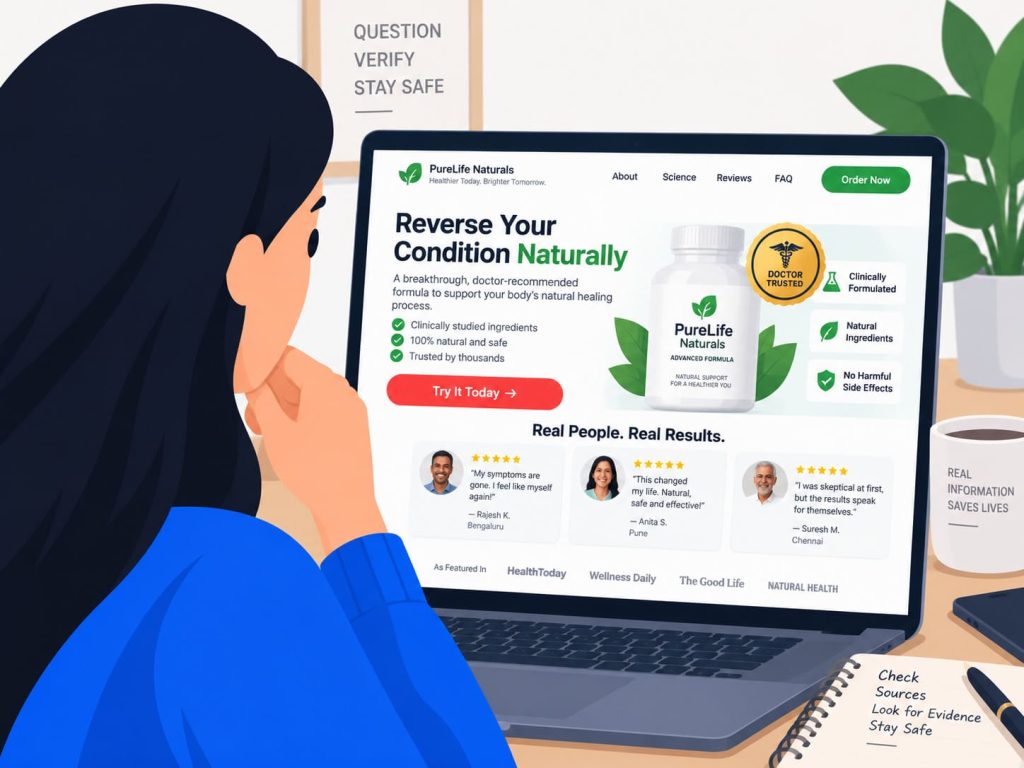
The language used is deliberately clinical: words like “clinically proven,” “doctor recommended,” or a specific-sounding percentage improvement, none of which is checked or regulated the way a genuine medical claim would be.
Testimonials do most of the persuading. A stranger describing a dramatic recovery feels more convincing than a data sheet, even though a single story proves nothing about whether a product actually works for anyone else.
A related version targets health insurance and billing directly, a fake “government health scheme” call asking for personal or banking details to process a rebate or claim that was never actually filed. Telemedicine platforms with no real doctor behind them follow the same shape, collecting a consultation fee for advice that was never medically reviewed at all.
Social media makes the exploitation easier to scale. A short video showing a dramatic “before and after” transformation, paired with a limited-time discount code, borrows the same urgency used across many other scam categories, compressing the time a buyer has to research the product properly before paying.
Chronic conditions are targeted more than acute ones specifically, since a person managing diabetes, joint pain, or a long-term illness for years is more likely to have tried several treatments already and be open to trying one more, even an unproven one.
What Are the Risks of Fake Prescription Platforms and Counterfeit Medication?
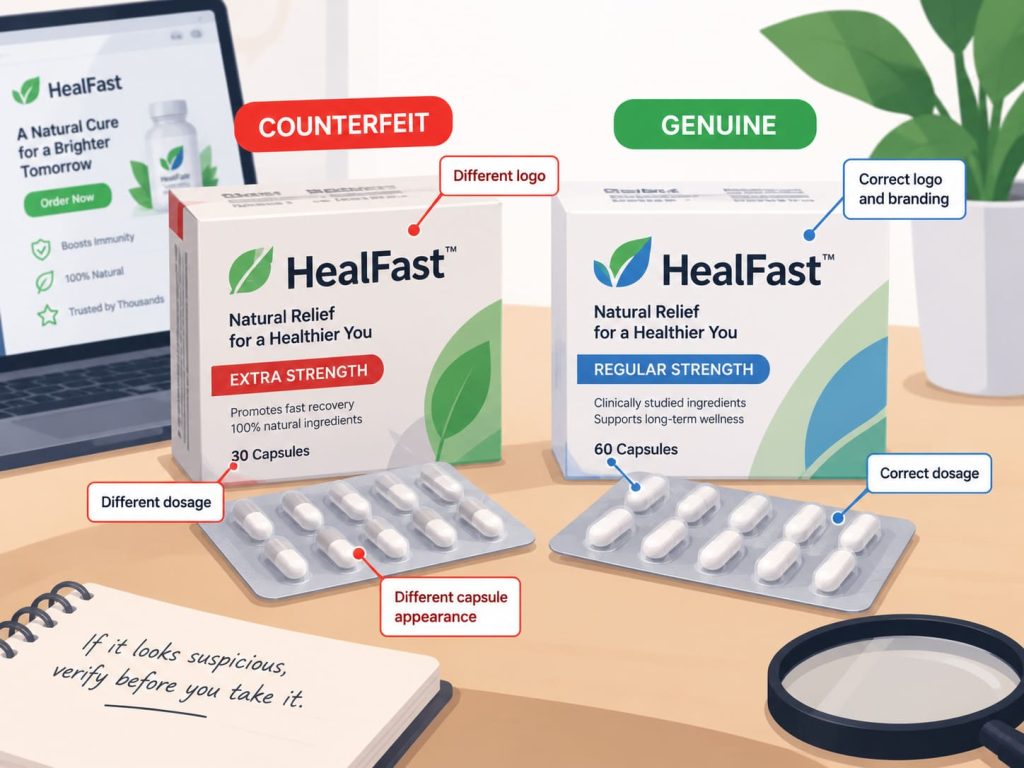
Fake GLP-1 weight loss drug listings, versions claiming to be Ozempic or Wegovy, proliferated online in 2025 as genuine demand outstripped supply. The FDA issued multiple warnings about counterfeit and compounded versions sold through unverified websites, some found to contain incorrect doses or harmful substances entirely. This is US data, but the same pattern of counterfeit weight loss and lifestyle medication appears through unregulated online sellers in India too.
Health and wellness scams cost US consumers over 5 billion dollars annually, with supplement fraud and fake prescription platforms among the fastest-growing categories, according to FTC health claims data. A platform that sells prescription medication with no actual prescription requirement is not offering convenience. It is skipping the exact safety check that exists to catch a wrong dose or a dangerous drug interaction.
Medical device fraud follows a similar pattern, unlicensed or unapproved devices marketed with exaggerated claims about diagnosing or treating a condition, sold directly to consumers with no clinical oversight at all.
Fake health apps add a further layer, offering a “diagnosis” from a photo or a short questionnaire, with no licensed professional reviewing the result at any point. A confident-sounding answer from an app is not the same thing as a medical opinion, even when the interface looks polished enough to suggest otherwise.
Some counterfeit medication is packaged closely enough to the genuine product that even a careful buyer struggles to tell the difference without lab testing, which is exactly why buying only from a licensed, verifiable pharmacy matters more than price.
How Do You Verify a Health Product or Practitioner Is Legitimate?
Any product claiming to cure, reverse, or eliminate a medical condition without a prescription almost certainly cannot, since a claim that strong would require regulatory approval that a supplement or wellness product does not have.
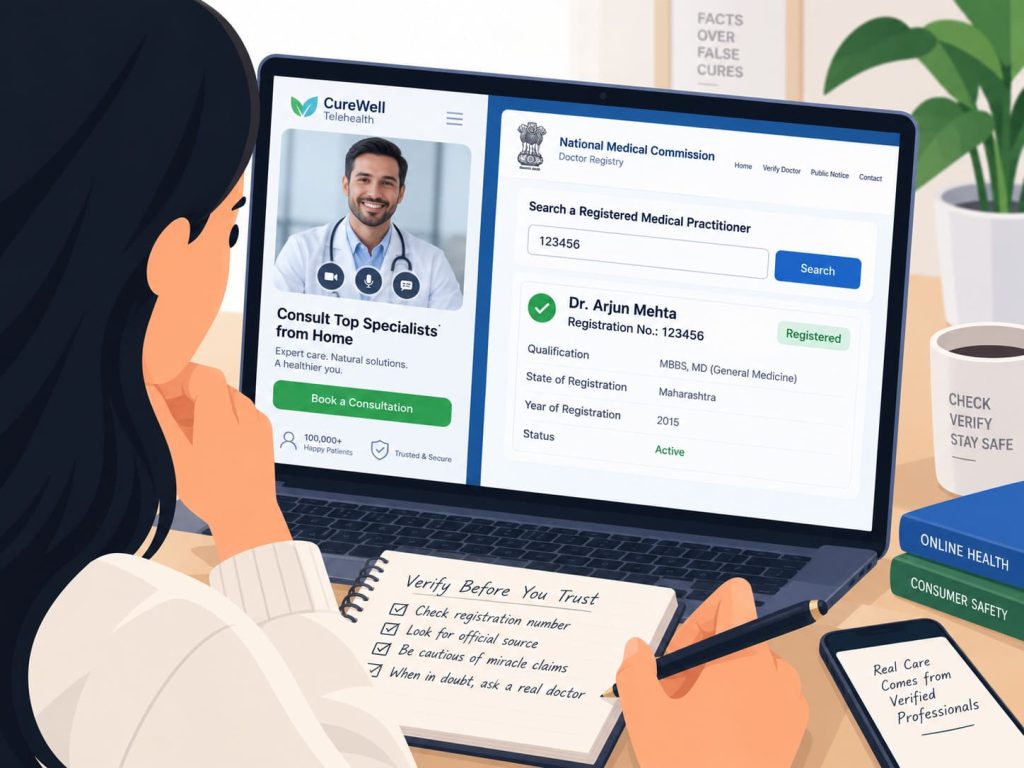
Verify a practitioner’s registration directly through India’s Medical Council or the relevant state medical council before trusting any diagnosis or treatment plan, particularly one offered entirely online with no examination.
Fake health apps and diagnostic platforms follow the same warning signs covered in our guide to verifying fake credentials and impersonation: a polished interface says nothing about whether a real, licensed professional is actually behind it.
Buy prescription medication only from a licensed pharmacy, and treat any online seller offering prescription drugs without asking for one as an immediate red flag rather than a convenience.
A second opinion from a real, registered doctor before starting any product that claims to treat a serious condition costs very little compared with the risk of an unregulated substance, and a genuine practitioner will never discourage you from seeking one.
How Do You Report Medical Fraud?
Elderly relatives are frequently targeted specifically because chronic health conditions and fixed incomes make a promised cure especially appealing, a pattern covered in more depth in our guide to why scammers target seniors, children and immigrants.
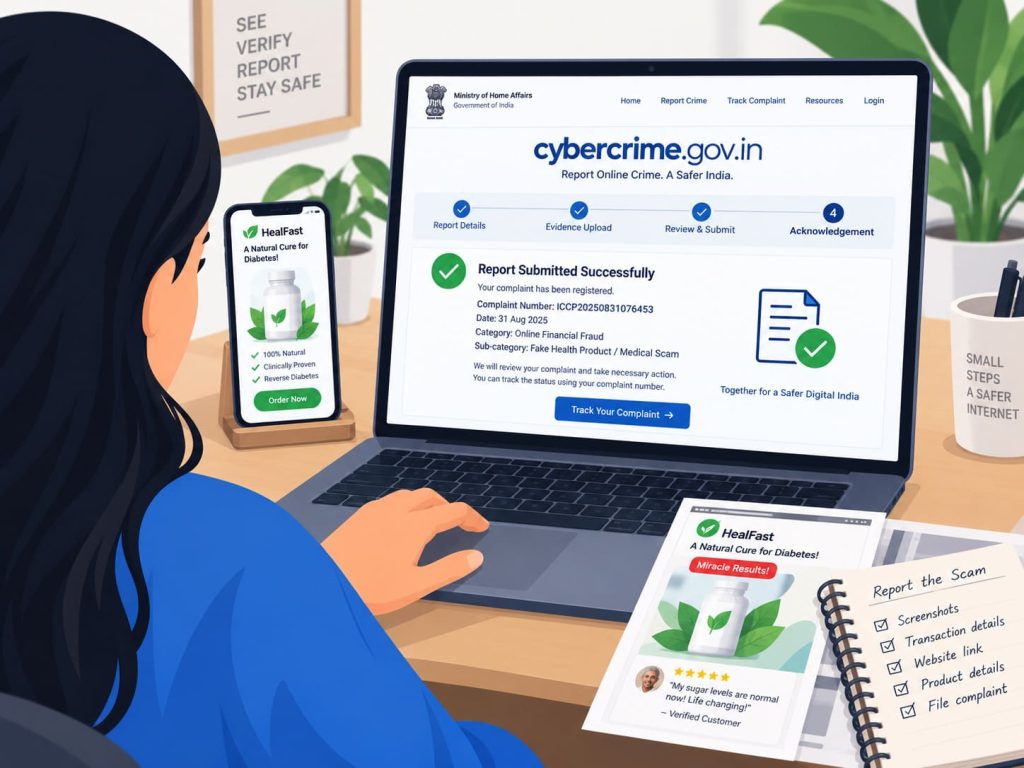
If you have already purchased a product or paid for a fake consultation, keep every receipt, message, and screenshot of the original claim, since these details matter for any report.
Report a suspicious health product or platform through India’s National Cyber Crime Reporting Portal or the 1930 helpline if payment was involved, and file a separate consumer complaint through the National Consumer Helpline for billing or service disputes with a registered platform.
If you have taken a counterfeit medication or suspect a device is unsafe, stop using it and speak to a doctor promptly, since the health risk matters more in the moment than the financial one. Keep the packaging and any remaining product where possible, since it may help a doctor or pharmacist identify exactly what was actually inside it.
Frequently Asked Questions
How can I tell if a health product is a fake health cure?
Be sceptical of any product claiming to cure, reverse, or eliminate a medical condition without a prescription. Genuine treatments rarely make guarantees that strong, and regulatory approval would be required for any claim of that scale.
Is it safe to buy prescription medication from an online pharmacy?
Only from a licensed pharmacy that requires an actual prescription. A seller offering prescription drugs without asking for one is not a convenience, it is a strong warning sign.
What should I do if I already paid for a fake health cure or consultation?
Stop using any product involved and speak to a doctor if you have concerns about your health. Report the payment through cybercrime.gov.in or the 1930 helpline, and file a consumer complaint if a registered platform was involved.
What This Comes Down To
A fake health cure works by offering certainty that real medicine, honestly, usually cannot promise. That gap between hope and honesty is exactly where the scam lives.
The one habit that protects you: treat any guaranteed cure with no prescription and no licensed practitioner behind it as a claim to verify, not a solution to trust.
If this was useful, share it with someone who needs to know.


1 comment
Comments are closed.