
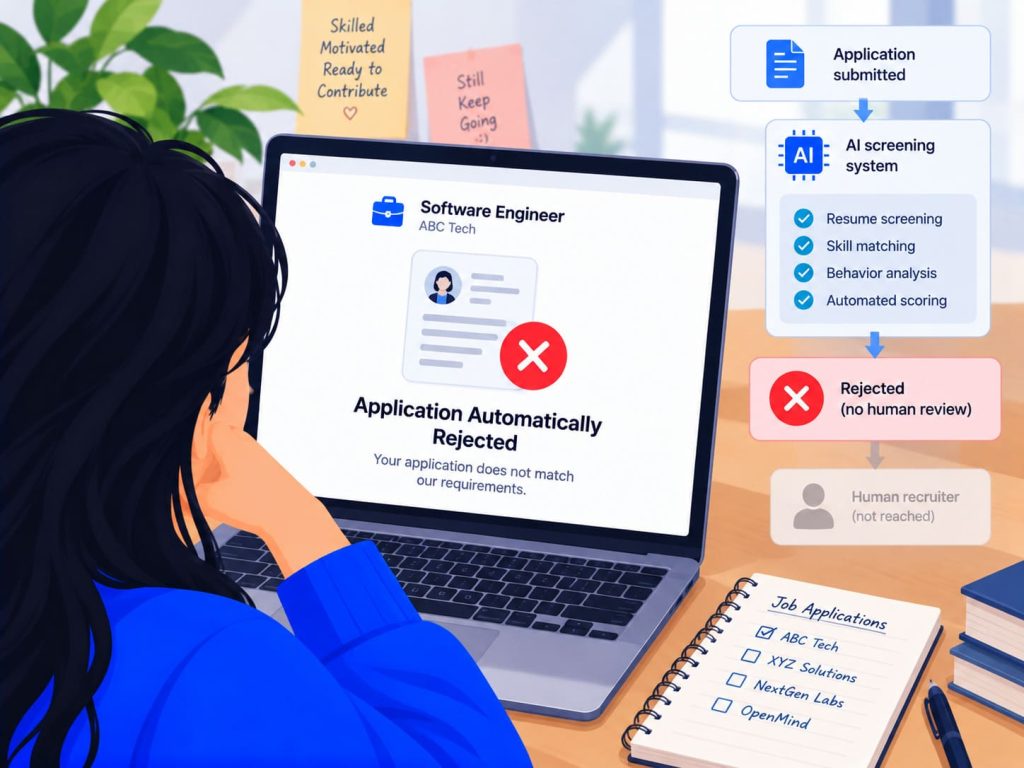
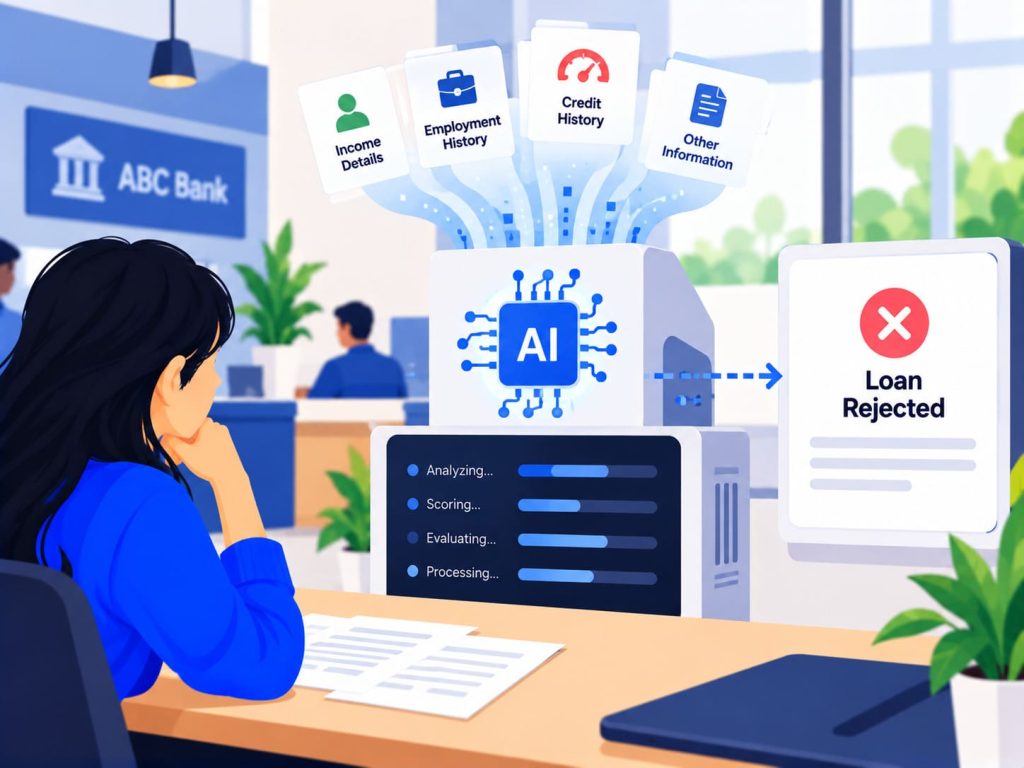
Algorithmic bias makes it possible for a job applicant to be rejected before a single human ever reads their application, for a loan to be denied by a system that offers no real explanation, and for a person to be quietly shown only certain opportunities based on data they never knew was being used against them.
None of this requires a single individual to make a deliberately unfair decision at any point in the process.
The system was simply trained on data that already contained the bias, then applied that bias consistently, at a scale no human reviewer could ever match.
This post covers how bias shows up in AI hiring, lending, and insurance decisions, how training data bias creates unfair outcomes at scale, why algorithmic decisions are often unexplainable, and how to actually challenge one. It is part of our wider guide to how AI and algorithms quietly shape what you think and buy.
Where Does Bias Show Up in AI Hiring, Lending and Insurance Decisions?
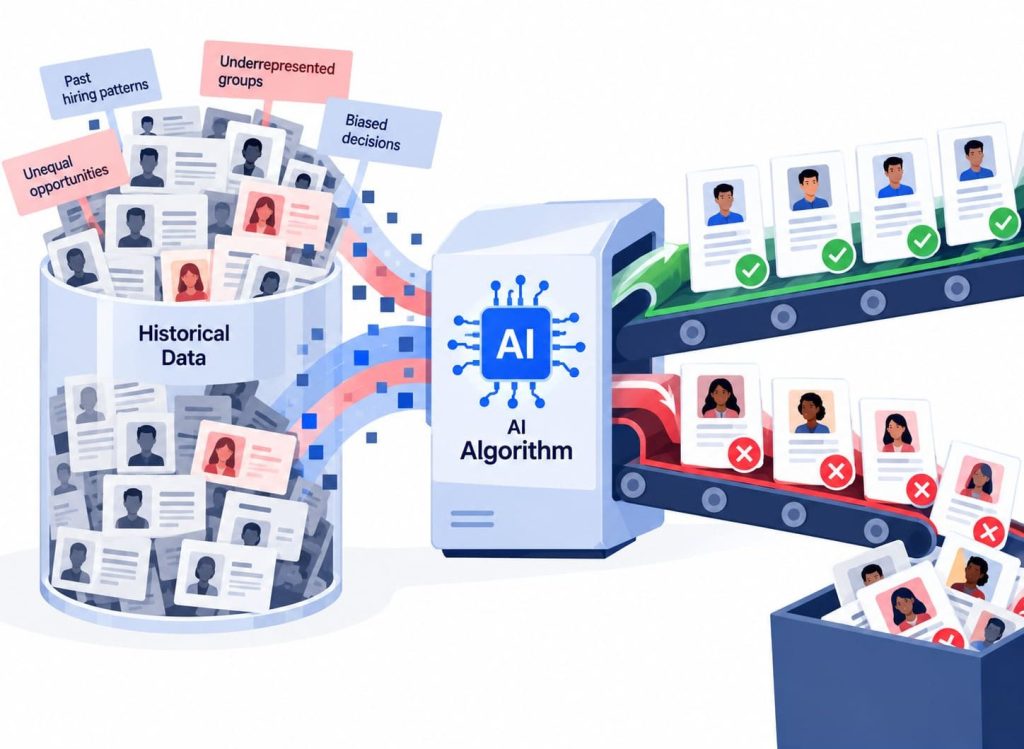
Hiring algorithms often screen resumes for keywords and patterns learned from a company’s past hiring decisions, which means any historical bias in who got hired before quietly becomes the template for who gets hired next.
A qualified candidate can be filtered out simply for phrasing their experience differently from the pattern the system was trained to recognise, with nothing about their actual ability factored into that specific rejection.
Lending decisions follow a similar logic, a system trained on historical approval patterns can end up penalising an applicant for factors correlated with, rather than genuinely relevant to, their real, present ability to repay a loan.
Insurance pricing carries the same risk, an algorithm setting a premium based on patterns in past claims data that may reflect unequal historical treatment rather than any individual person’s actual risk.
None of these systems announce the presence of algorithmic bias to the person affected by it. The rejection, the denial, or the missed opportunity simply arrives, indistinguishable on the surface from an ordinary, individually considered decision.
64 percent of industry respondents in 2025 cited AI and deepfake concerns as a top fraud threat, reflecting growing recognition that biased or manipulated AI systems create risks that extend well beyond any single incident, according to Sumsub’s Annual Identity Fraud Report for 2025.
How Does Training Data Bias Create Unfair Outcomes at Scale?
An algorithm learns entirely from the data it was trained on, and if that historical data already reflects unequal treatment, the system inherits that pattern automatically, without anyone specifically instructing it to discriminate.
What makes this different from an individual human’s bias is scale. A biased loan officer affects the applicants they personally review. A biased algorithm applies the same pattern to every single applicant that passes through the system, everywhere, at once.
Who gets shown which job listing, which loan offer, or which piece of content is also shaped by this same underlying mechanism, a pattern that connects closely to the targeted persuasion covered in more depth in our guide to how AI learns to persuade you specifically.
None of this requires malicious intent from the people who built the system. The bias arrives baked into the data long before anyone writes a single line of code.
This is exactly why fixing algorithmic bias rarely comes down to fixing one bad rule. The unfair pattern is distributed across thousands of small weightings, each individually reasonable-looking, that only becomes visible in the aggregate outcome. Auditing a system this way takes real, deliberate effort, which is part of why so few organisations actually do it thoroughly.
Why Are Algorithmic Decisions So Often Unexplainable?
A US federal judge ruled in April 2025 that Google had illegally monopolised the publisher ad-server and ad-exchange markets, finding that algorithmic self-preferencing had systematically disadvantaged competitors and publishers for years, largely hidden inside decisions few outsiders could actually examine.
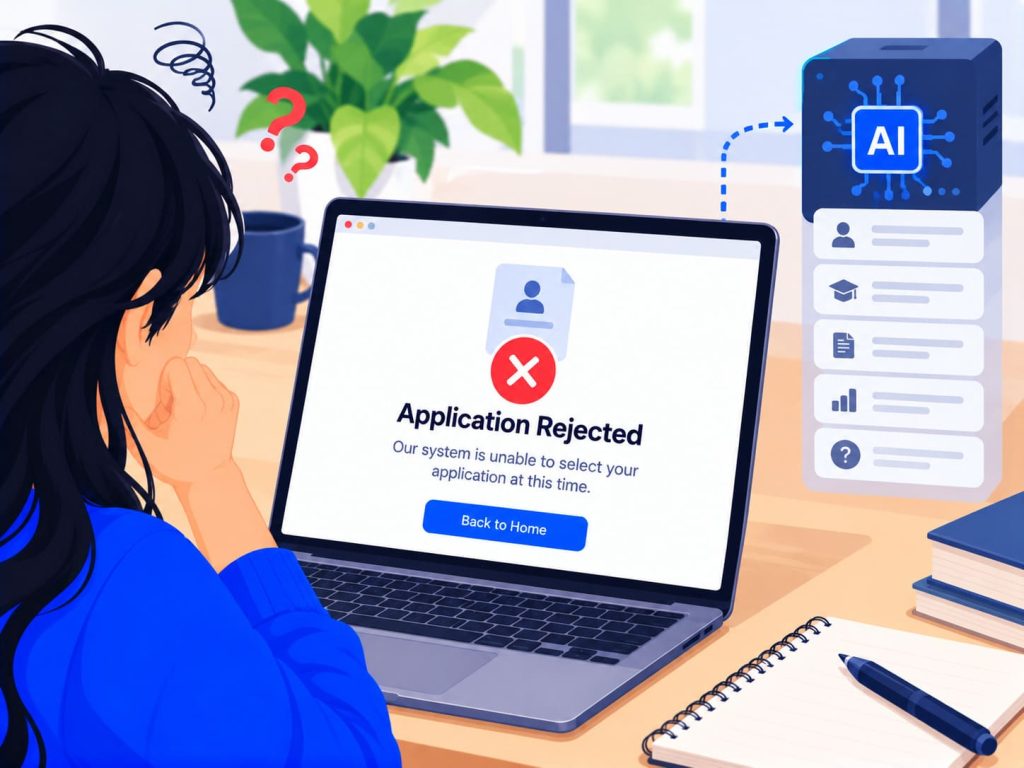
Complex systems weighing thousands of factors simultaneously rarely produce a decision any single person, including the engineers who built the system, can explain in plain language.
Companies also have a commercial incentive to keep the exact weighting of these systems private, treating the underlying logic as a trade secret rather than something owed to the people affected by its output.
This opacity is precisely why a rejected applicant is so often told nothing more specific than “not a fit,” since the system genuinely may not offer a clear, singular reason even to the organisation actually using it day to day.
Political advertising exploits a related kind of opacity too, a subject covered in more depth in our guide to how political ads are personalised to your fears without you knowing, since a targeting decision can be just as unexplainable as a hiring one.
How Do You Actually Challenge an Algorithmic Decision?
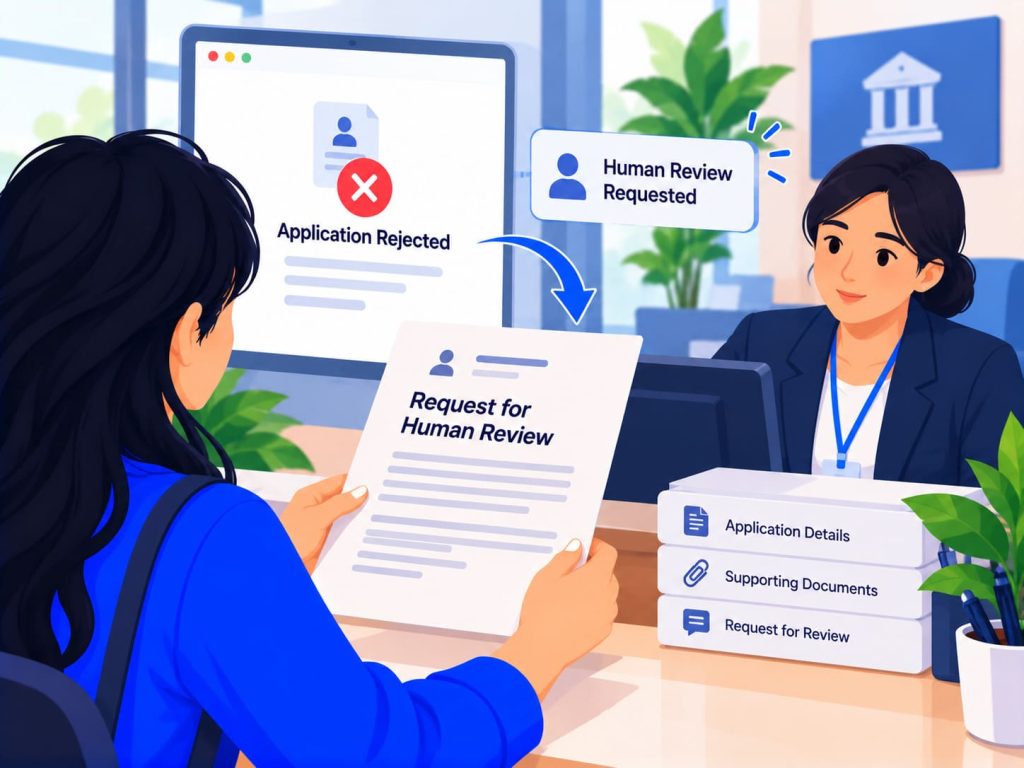
Ask directly whether a decision was made or significantly influenced by an automated system, and request a human review specifically, since many organisations offer this option quietly, without advertising it clearly to applicants.
Algorithm Watch publishes accessible investigations into exactly where bias and opacity show up in hiring, lending, and insurance systems, useful reading before you push back on a specific decision.
Document the decision, the date, and any explanation you were given, since a paper trail strengthens any formal complaint or appeal you decide to file afterward.
Comparing notes with others who applied for the same role, loan, or policy sometimes reveals a pattern that a single individual rejection would never show on its own, genuinely useful evidence if algorithmic bias turns out to actually be at play.
Where a decision involves a regulated area such as lending or insurance in India, the Reserve Bank of India’s grievance redressal process offers a formal route for challenging an unexplained or unfair outcome from a regulated financial institution.
If you suspect a fraudulent or discriminatory outcome specifically, you can also report it through India’s National Cyber Crime Reporting Portal or the 1930 helpline for a formal record.
Frequently Asked Questions
Can I find out why an AI system rejected my job or loan application?
You can ask directly for a human review and a clearer explanation, though the organisation may not always be able to provide a single specific reason, since complex systems often weigh many factors at once.
Is algorithmic bias intentional?
Usually not. It typically comes from historical data that already contained unequal patterns, which the system then learns and applies automatically, without anyone specifically instructing it to discriminate.
What can I actually do if I believe I was treated unfairly by an algorithm?
Request a human review, document everything about the decision, and use formal complaint channels where they exist, such as the RBI’s grievance process for regulated lending and insurance decisions.
What This Comes Down To
Algorithmic bias works quietly, applying a historical pattern at a scale that makes it feel impersonal even when the outcome is genuinely unfair to the specific person on the receiving end of it.
The one habit that helps most: ask for a human review whenever a decision feels off, and document what you were told, since transparency is a right worth exercising even when a system makes it hard to.
If this was useful, share it with someone who needs to know.