
How would you actually know if someone was monitoring your phone, your location, and your communications without your knowledge? For many people, they would not know, not until they noticed a pattern that was too specific to be coincidence. Recognising digital stalking early starts with trusting that instinct.
Digital stalking typically escalates. It rarely begins with something dramatic, and that gradual build is precisely what makes it hard to recognise early, when recognising it early would matter most.
The earlier this pattern is identified and documented, the more options remain available to the person being targeted, both for immediate safety and for any legal action later.
This post explains how digital stalking by known people typically works, how location tracking and device surveillance enable it, and how to document evidence safely if you need to seek protective action. This connects to the broader guide on the full guide to online harassment.

How Does Digital Stalking by Known People Actually Show Up?
It often starts with small, specific details that should not be knowable: a comment about somewhere you were, a reference to a conversation you had privately, a message arriving right after you posted something, even briefly, before deleting it.
These details accumulate slowly, which is exactly why they are easy to dismiss individually. Taken together over weeks, a pattern of someone knowing more than they reasonably should becomes much harder to explain away as coincidence.
Most digital stalking is carried out by someone the victim already knows, a former partner, a current partner, or occasionally a family member, rather than by a stranger, which shapes both how it is detected and how safely it can be addressed.
This dynamic makes digital stalking meaningfully harder to recognise than stalking by a stranger, since the person doing it often still has some form of legitimate access or history, a shared account, an old device, mutual friends who unknowingly share updates. That legitimate history is precisely what allows the monitoring to hide in plain sight for so long, since any single piece of evidence can plausibly be explained away as leftover access rather than active, ongoing surveillance.
How Do Location Tracking and Device Surveillance Enable This?
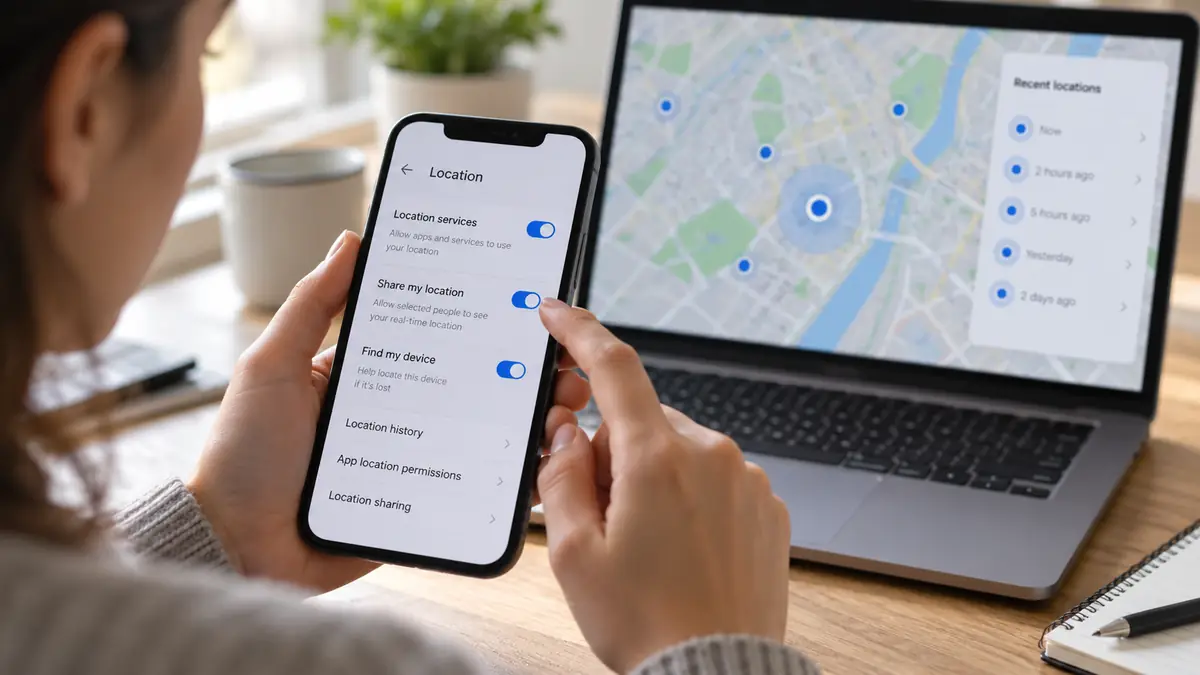
Shared location features, originally set up for convenience or during a relationship, are frequently never revoked after the relationship ends, quietly continuing to report a person’s movements to someone they no longer trust.
Stalkerware, installed with brief physical access to a device, extends this further into messages, calls, and browsing history, all without any visible sign to the person being monitored. This connects directly to stalkerware and spyware installed by someone you know.
Approximately one in ten people has experienced some form of tech-enabled stalking, with former intimate partners being the most common perpetrators, according to Coalition Against Stalkerware research.
Shared family or partner accounts, streaming services, cloud photo libraries, smart home systems, are a frequently overlooked route into this same kind of ongoing access. Unlike stalkerware, which requires deliberate installation, a shared account simply continues working exactly as it always did after a relationship ends, unless someone actively thinks to remove access, which makes it easy to overlook specifically because nothing about it looks unusual or newly installed.
Smart home devices installed during a relationship add a further, physically embedded layer to this same risk. A doorbell camera, a connected thermostat, or a voice assistant left behind in a shared home can continue reporting activity and presence long after one partner has moved out, particularly where the account controlling the device was never transferred or where login credentials were never changed.

What Is the Escalation Pattern From Digital to Physical Threat?
Digital monitoring frequently precedes physical escalation rather than replacing it. Knowing a person’s schedule and location in advance, through tracking, removes the element of chance that would otherwise make an unplanned physical encounter less likely.
Documented cases show that real-time location data specifically has been linked to ambush scenarios, where an abuser used tracking to intercept a victim at a predictable time and place rather than encountering them by chance.
This is why safety organisations consistently advise against confronting a suspected stalker directly before consulting a support service, since revealing that you have noticed the monitoring, without a plan already in place, can prompt exactly the kind of escalation this pattern is already trending toward.
Recognising digital stalking as a potential precursor to physical danger, rather than treating it as a separate, lesser concern, is part of what makes early documentation and action genuinely protective rather than merely precautionary.

How Do You Document Evidence for a Protective Order?
Keep a dated log of every specific instance where someone demonstrated knowledge they should not have had, including exact wording where possible, since courts and law enforcement generally require specific, dated evidence rather than a general sense of being watched.
Screenshot messages, location app histories, and any account activity logs that support the pattern, storing copies somewhere the person you are documenting cannot access or delete.
Note the specific device or account through which each instance of knowledge seemed to travel, since identifying the likely access point, a shared streaming account, an old phone backup, a mutual friend’s public post, helps investigators and support organisations move faster than a general description of feeling watched.
Store this evidence somewhere entirely separate from any device or account the other person might have access to, a personal email the other person has never had a password to, a printed copy kept somewhere physically secure, or a trusted friend’s device. Evidence stored only on a shared or previously accessible device can be discovered and deleted before it is ever used, which defeats the purpose of documenting it in the first place.
Contact a local domestic violence or stalking support organisation before filing formally where possible, since they can help assess risk level and connect the digital pattern to the specific legal protections available in your jurisdiction. This overlaps with how your phone’s location data creates physical safety risks and with documenting and reporting online harassment safely.
These resources go deeper on this topic: NNEDV’s Safety Net Project, EFF’s Surveillance Self-Defense guide, and the Cyberbullying Research Center.

Frequently Asked Questions
Is digital stalking a crime?
In many jurisdictions, yes, particularly when combined with location tracking or repeated unwanted contact, though the specific legal definition and evidence requirements vary by country and region.
Should I confront the person I suspect is stalking me digitally?
Generally not directly, and not before consulting a support organisation or law enforcement first. Confrontation can accelerate escalation in situations where the underlying risk is not yet fully understood.
Digital stalking typically escalates, and the earlier it is recognised and documented, the more options remain available to the person being targeted.
If a pattern feels familiar as you read this, start a dated log today, even before you decide what to do with it, since documentation collected early is often the hardest to rebuild later, and a log kept from the start gives you a genuine, dated record of the pattern rather than scattered, half-remembered incidents pieced together weeks later under pressure.
If this was useful, share it with someone who needs to know.
