

AI and algorithms decide what shows up in your feed, which headline you see first, and which advert seems to know exactly what you were thinking about buying.
None of that happens by accident. Every recommendation, every ranked result, every “you might also like” is the output of a system built to hold your attention and steer your decisions, most of the time without you ever noticing the steering.
What makes this different from an ordinary scam is scale. A single AI system can personalise its approach for millions of people simultaneously, each one seeing a slightly different version tuned specifically to what that system has already learned about them individually, in ways no single human operator ever could.
This builds on the wider pattern covered in our guide to how fake messages, emails and calls deceive people every day, since the content shaping your view of the world now often comes from a system rather than a single scammer working alone.
This guide walks through five distinct ways AI and algorithms shape what reaches you: synthetic content passed off as genuine, biased decisions made invisibly, the filter bubble narrowing what you see, persuasion tuned specifically to you, and AI systems that sound certain while being wrong.
None of these five mechanisms announce themselves. A biased hiring algorithm does not display a warning label, and a personalised advert does not disclose which of your fears it was built around. Learning to notice each pattern is the only real substitute for a warning that will never arrive on its own.

What Do All Five of These Algorithmic Influences Have in Common?
Every mechanism covered in this section optimises for something other than your best interest by default, engagement, conversion, time-on-platform, rarely accuracy or your actual wellbeing.
None of it requires malicious intent from a single person. AI and algorithms simply do what they were trained to do, and what they were trained to do is keep you clicking, watching, or buying.
64 percent of industry respondents in 2025 cited AI and deepfake concerns as a top fraud threat, reflecting growing recognition that biased or manipulated AI systems create risks well beyond any single incident, according to Sumsub’s Annual Identity Fraud Report for 2025.
What separates a system working against you from one working for you is rarely visible from the outside. The training data, the ranking weights, and the optimisation target all sit behind a wall few users ever get to see.
Understanding the mechanism behind each influence matters more than trying to spot every instance individually, since these systems keep changing while the underlying incentive to hold your attention barely does.
None of this means AI and algorithms are inherently harmful. A recommendation system can genuinely help you find something useful. The concern is narrower and more specific: these systems rarely disclose what they are optimising for, and that gap is exactly where influence slips in unnoticed.
These five patterns show up constantly in Indian digital life too, a WhatsApp forward built by an AI text generator, a loan application processed by an opaque scoring model, a YouTube feed narrowing steadily toward one point of view, each one the same underlying mechanism wearing a different surface.
Businesses adopting AI and algorithms into hiring, lending, and marketing decisions face a growing expectation of transparency too, and a company unwilling to explain how a decision was reached is worth treating with the same scepticism you would apply to an unexplained rejection anywhere else.
How Is AI-Generated Content Passed Off as Genuine?
Deepfake investment scam videos using AI-generated versions of well-known celebrities were deployed at scale across major platforms in 2025, directing viewers to fake crypto investment platforms that vanished with their money.
Platforms removed thousands of these videos, and new ones reliably appeared within hours, an arms race that shows no sign of favouring the people trying to take them down.
Indian social media has seen a version of the same trick, celebrity faces and voices attached to fake investment app endorsements, often circulated through short video reels specifically because that format makes a quick, careless glance far more likely than a careful, deliberate check.
Research found that 41 percent of AI-generated e-commerce web components contained dark patterns or deceptive elements, according to the AI Incident Database’s 2025 tracking, suggesting AI tools are now producing manipulative content at scale on their own, without a human deliberately designing the deception each time.
The practical challenge is that AI-generated content is not always wrong. It is frequently unverifiable, which means the right habit is treating it as a starting point for checking rather than a finished, trustworthy answer.
Read the full guide: AI-Generated Content Is Everywhere, Here’s How to Spot It

How Does Algorithmic Bias Cause Invisible Discrimination?
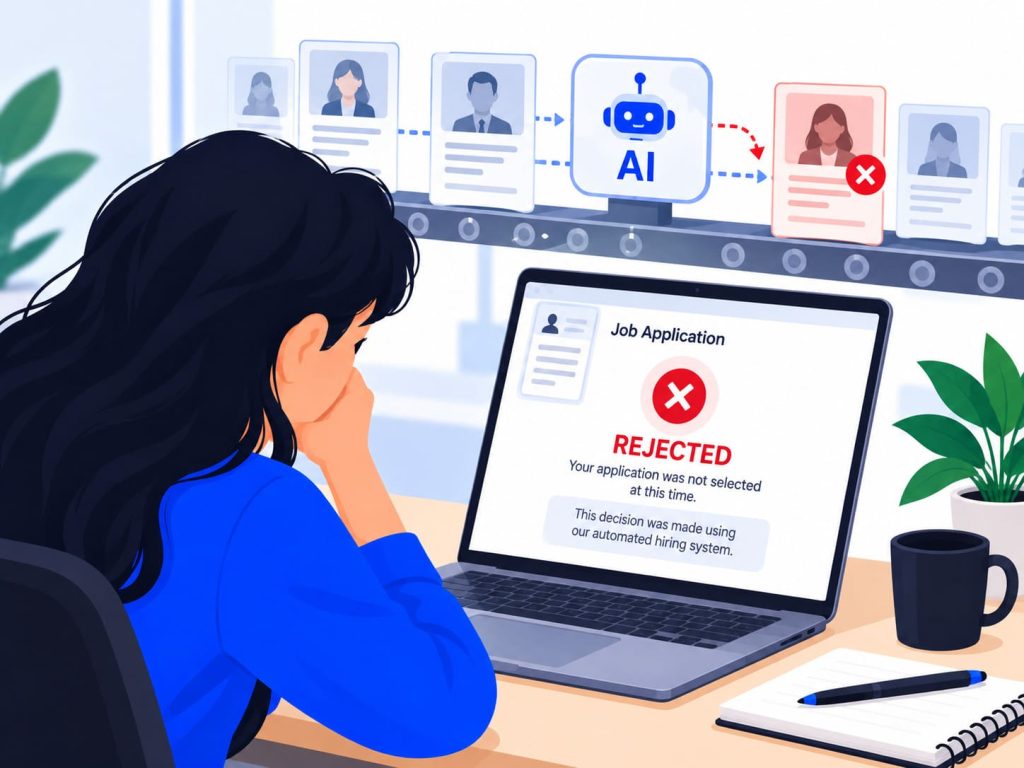
A job application rejected before a human ever reads it. A loan denied by a system that cannot explain why. Both outcomes can happen without a single person making a deliberately unfair decision.
A US federal judge ruled in April 2025 that Google had illegally monopolised the publisher ad-server and ad-exchange markets, finding that algorithmic self-preferencing had systematically disadvantaged competitors and reduced revenue available to publishers for years.
Opacity is a core part of the problem here. A rejected applicant is rarely told which specific factor in an automated system actually drove the final decision, which makes the outcome feel arbitrary even when it technically was not.
Algorithms are not neutral. They encode the biases of the data they were trained on, then apply those biases at a scale no single human reviewer could ever match.
Organisations such as Algorithm Watch monitor and analyse these decision-making systems specifically, publishing accessible investigations into exactly where bias and opacity show up in automated hiring, lending, and insurance decisions.
Challenging an algorithmic decision is genuinely possible in many cases, requesting a human review, or the specific reason for a rejection, though few people realise this option even exists until the moment they actually need it.
Read the full guide: When an Algorithm Decides Your Future, and Gets It Wrong
How Do Filter Bubbles Quietly Narrow What You See?
Instagram’s recommendation algorithm was found, through internal Meta research reinforced by 2025 congressional testimony, to actively amplify content that triggered strong emotional reactions, including content that increased anxiety in teenage girls, because it drove longer engagement.
Algorithmically curated feeds now account for over 70 percent of content consumed on major platforms, according to the Reuters Institute’s Digital News Report 2025, meaning most people see content chosen by a system rather than by their own deliberate search.
Political and social polarisation is amplified by exactly this design, since a feed that keeps showing you content you already agree with rarely presents the contrary evidence that might otherwise soften a strongly held existing view.
The algorithm is not showing you the world. It is showing you a version of the world calibrated specifically to keep you scrolling, and those are genuinely different things.
The Center for Humane Technology, founded by a former Google design ethicist, publishes accessible research on exactly how these filter bubbles form and what deliberately breaking out of one actually looks like in practice.
Read the full guide: Are You Living in a Filter Bubble Without Knowing It?

How Does AI Learn to Persuade You Specifically?
The advert you just saw was not built for everyone using the platform. It was built for you, based on what the system has inferred about your fears, desires, and current emotional state.
The European Commission fined Google 2.95 billion euros in September 2025 for abusing its dominance in advertising technology, finding that its AI-powered ad systems systematically directed advertisers toward its own exchange at the expense of open competition.
Emotional triggers get identified and activated quite specifically, since a system that has learned what makes you anxious, hopeful, or insecure can time an advert to arrive exactly when that emotion is most likely to override careful judgement entirely.
Global digital advertising revenue exceeded 700 billion dollars in 2025, with AI-powered personalisation enabling micro-targeted persuasion at a scale that was simply impossible a decade earlier, according to Georgetown Law’s Denny Center for Democratic Capitalism.
The Markup’s free Blacklight tool scans any website and shows exactly which trackers and targeting systems are feeding data into the profile a platform builds on you, a genuinely useful first step toward understanding your own exposure.
Personalised persuasion is not simply a feature of these platforms. It is the product itself, and understanding that shifts how much weight a perfectly timed advert deserves.
Read the full guide: How AI Learns to Persuade You Specifically

Why Do AI Systems Sound Certain While Being Wrong?
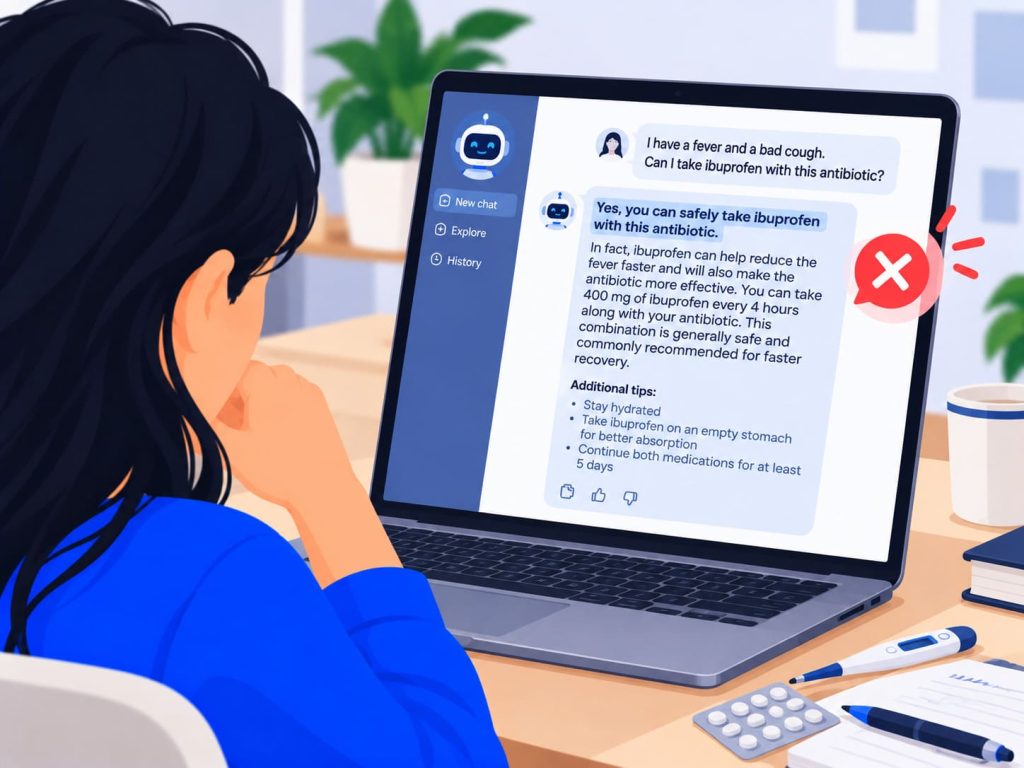
Someone asks an AI assistant for medical information, legal advice, or financial guidance. The answer arrives detailed, confident, and authoritative. Parts of it are simply invented.
The FBI’s 2025 IC3 Annual Report included AI-related scams as a distinct fraud category for the first time, reflecting how often AI systems are now used both to deceive victims directly and to generate false information people rely on for real decisions.
Medical, legal, and financial questions carry the highest stakes here, since a confidently wrong answer in any of these specific areas can lead directly to a real, costly decision made on entirely fabricated grounds.
AI confidence is not correlated with AI accuracy, and the most dangerous outputs are consistently the wrong ones that sound exactly like the right ones, a pattern documented in the Stanford HAI AI Index for 2025.
AI tools also tend to agree with whatever a user suggests, a quirk that makes them genuinely poor at challenging a mistaken assumption unless specifically and deliberately prompted to push back on it instead.
Read the full guide: When AI Lies Confidently, the Problem With AI Hallucinations
Frequently Asked Questions
Can I actually tell when a video or image is AI-generated?
Not always on sight, since detection is genuinely getting harder every year. Free tools such as the AI Incident Database’s tracking and dedicated deepfake detectors can help, but verifying through an independent source remains the single most reliable check available to you.
How do I know if an algorithm is showing me a biased or narrow view of a topic?
Deliberately seeking out sources that disagree with your usual feed, and noticing whether your feed consistently shows only one perspective on a topic, are both practical starting points for spotting a filter bubble.
Is it safe to rely on AI chatbots for medical or legal advice?
No, not on their own. Use AI tools as a starting point for research rather than a final answer, and verify anything important, especially medical, legal or financial guidance, with a genuine qualified professional before acting on it in any meaningful way.
What Every One of These Algorithmic Influences Comes Down To
AI and algorithms now shape a striking share of what you see, believe, and buy, usually without a single visible decision point where you could reasonably have said no or opted out of the process entirely.
Every pattern in this guide, from a synthetic celebrity endorsement to a biased hiring system to a chatbot inventing a legal citation, depends on you trusting the output without checking where it actually came from.
None of these five mechanisms are going away, and most are only becoming more capable over time. Building the habit of asking what a system is optimising for, rather than simply accepting what it shows you, is the skill that keeps pace with that change.
Start with the one habit that helps against all five: treat anything AI or algorithm-generated as a starting point for verification, never as a finished, trustworthy answer on its own, no matter how confident or personalised it looks.
Report anything that clearly crosses into fraud through India’s National Cyber Crime Reporting Portal or the 1930 helpline, since AI-enabled scams are now tracked as their own distinct category by investigators worldwide.
If this was useful, share it with someone who needs to know.
