
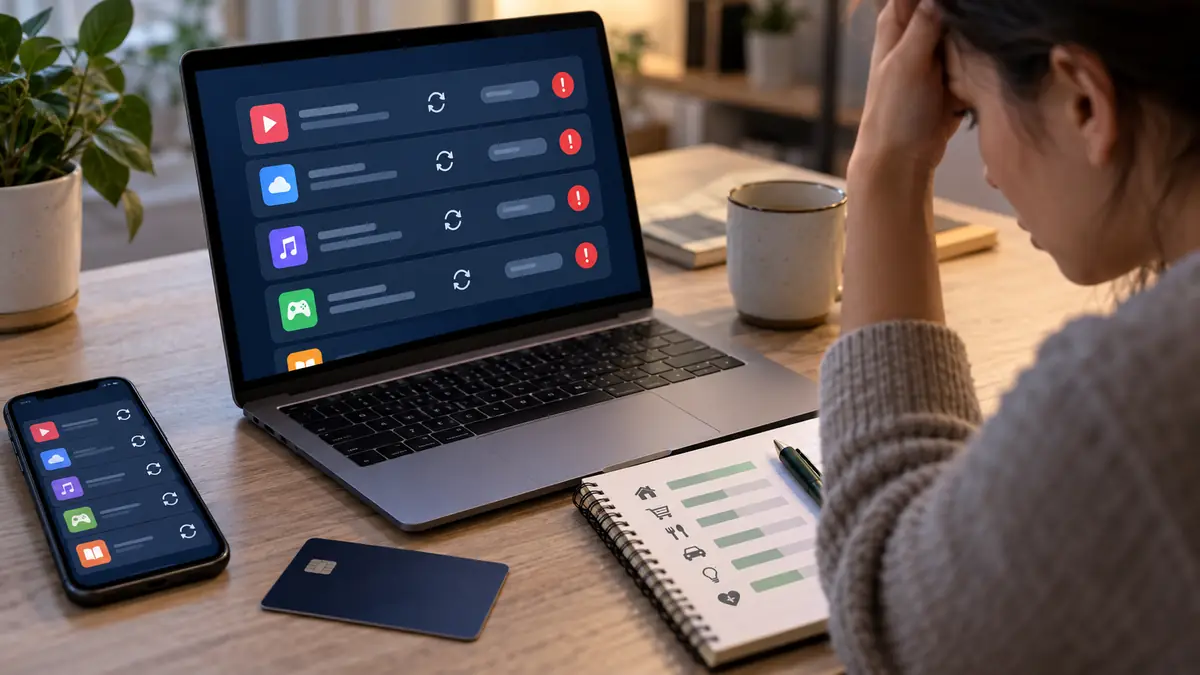
Open your bank statement and scroll through the last three months. Somewhere in there is a subscription you do not remember starting, or one you tried to cancel months ago and are apparently still paying for. These are subscription traps, and they are not accidental.
You are not careless. You are dealing with subscription traps, and they are built by design teams whose job is specifically to make sure you stay.
Signing up takes one tap and thirty seconds. Cancelling, on the same app, can take four screens, a hidden menu, and sometimes a phone call during limited business hours.
This post walks through exactly how that gap is engineered, why free trials are the easiest place for it to happen, and how to actually get out of a subscription that no longer serves you. This connects to the broader guide on the full guide to dark patterns.
How Do Free Trials Turn Into Charges You Never Agreed To?
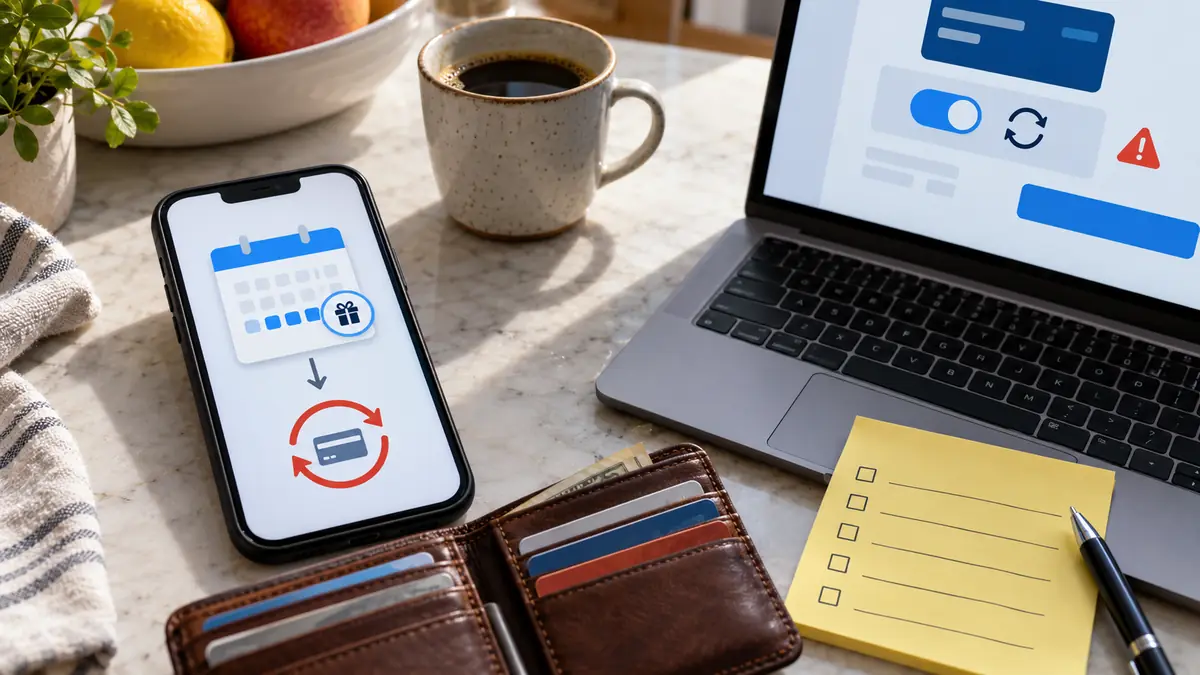
A free trial almost always asks for your card details upfront. That single step changes everything about what happens next.
The trial period ends quietly. No prominent reminder arrives on the day billing starts, just a routine charge that looks like every other line on your statement. By the time you notice, you may have paid for two or three months you never used.
This is not an oversight. Requiring payment details before the free period even begins removes the one moment where you might have said no. Once your card is stored, the default outcome is that billing continues unless you actively intervene.
Care.com paid the US Federal Trade Commission 8 million dollars in 2025 for exactly this pattern: fast, frictionless sign-up paired with a deliberately confusing path out.
Why Is Cancelling So Much Harder Than Signing Up?
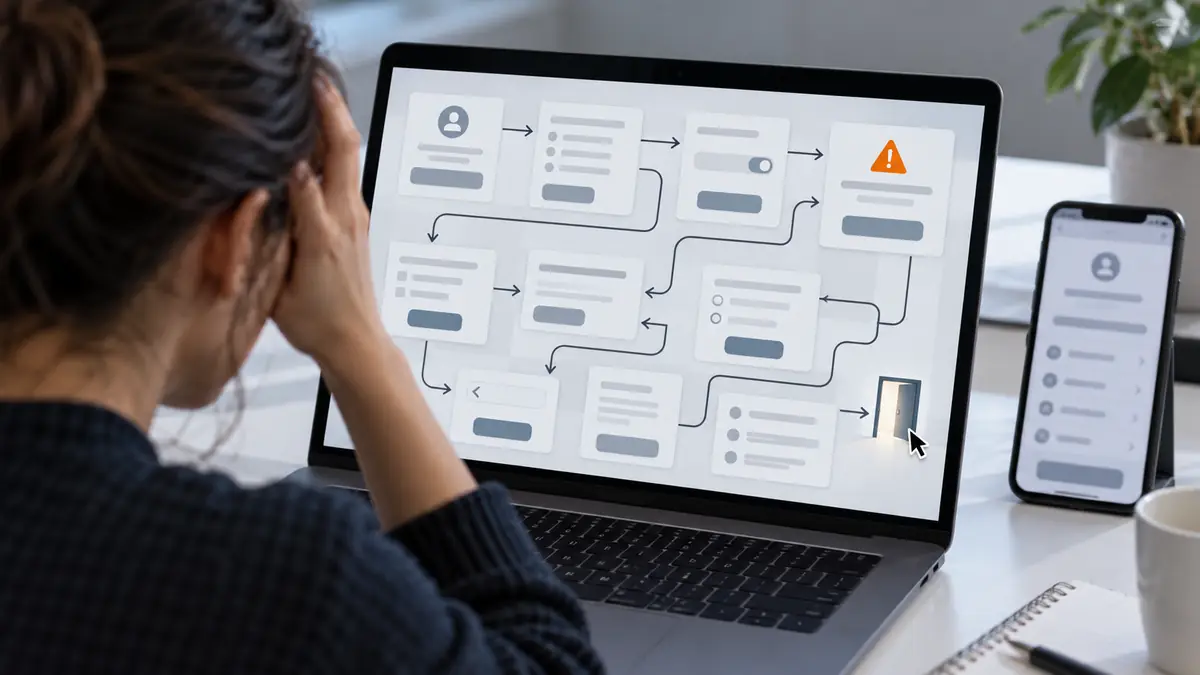
Interface designers have a name for this pattern: the roach motel. Easy to enter, deliberately difficult to leave.
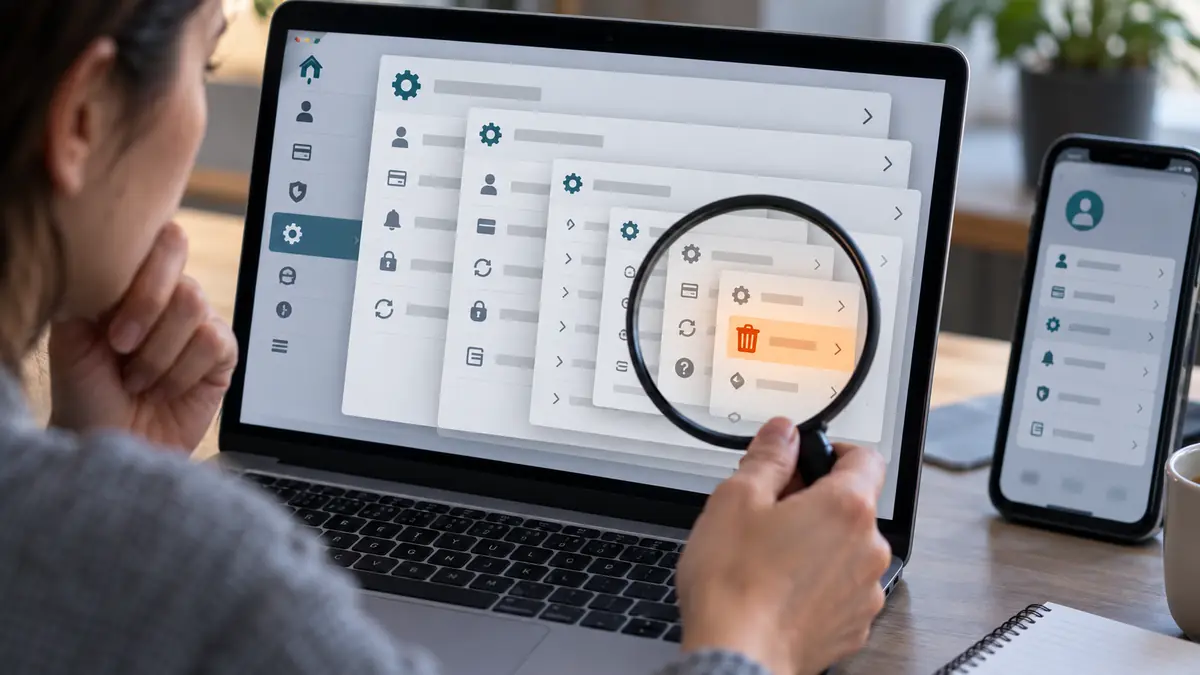
Sign-up is usually a single screen inside the app itself. Cancellation is frequently routed somewhere else entirely: a separate website, a support ticket, a phone line only staffed on weekdays, or a “retention flow” that offers you three discounts before finally showing the cancel button.
Every one of those extra steps is friction, and friction works. A person who intended to cancel gets interrupted by a phone call, closes the tab, and forgets. The subscription survives not because the person changed their mind, but because the company made changing course expensive in time and attention.
Retention offers add a further psychological layer once you finally reach the cancel screen. A discount appears, or a message reminds you what you will lose, framing a routine decision as a loss to be avoided rather than a neutral choice. Saying no twice, once to the retention offer and once more to complete the actual cancellation, is often what the flow is counting on you not having the patience for.
Indian streaming and fitness apps run the same flow. Sign-up happens inside the app with saved UPI or card details. Cancellation, on several popular platforms, requires navigating to a web browser rather than the app itself, a deliberate extra step that a meaningful share of users never complete.
What Are the Warning Signs Worth Watching For?
Subscription traps show up through a few consistent signals. Card details requested before a “free” trial has even started. No reminder email as the trial period ends. A cancellation button that is not visible from the main account screen and instead sits several menus deep.
Watch for charges from unfamiliar third-party names on your statement. Some subscriptions are bundled through partnerships you never directly interacted with, so the charge appears under a company name you do not recognise even though you technically agreed to it somewhere in a checkout flow.
Billing language is often written to obscure the real annual cost. “Just ₹99 a week” reads far smaller than the ₹5,148 it actually totals over a year, and that framing is chosen deliberately rather than by accident.
The average consumer now unknowingly pays for more than two subscriptions they have forgotten about or cannot easily cancel, adding up to over 200 dollars a year in quiet, unreviewed charges, according to C+R Research’s Subscription Commerce Report. Multiply that across an entire household with shared streaming, fitness, and cloud storage accounts, and the total becomes significant without anyone consciously deciding to spend it. Deceptive.design’s roach motel pattern library documents named companies caught using exactly this design.
How Do You Actually Cancel and Stay Out?
Set a calendar reminder the day you start any free trial, two days before it ends, not the day it ends. That two-day buffer accounts for exactly the kind of interruption the design is counting on.
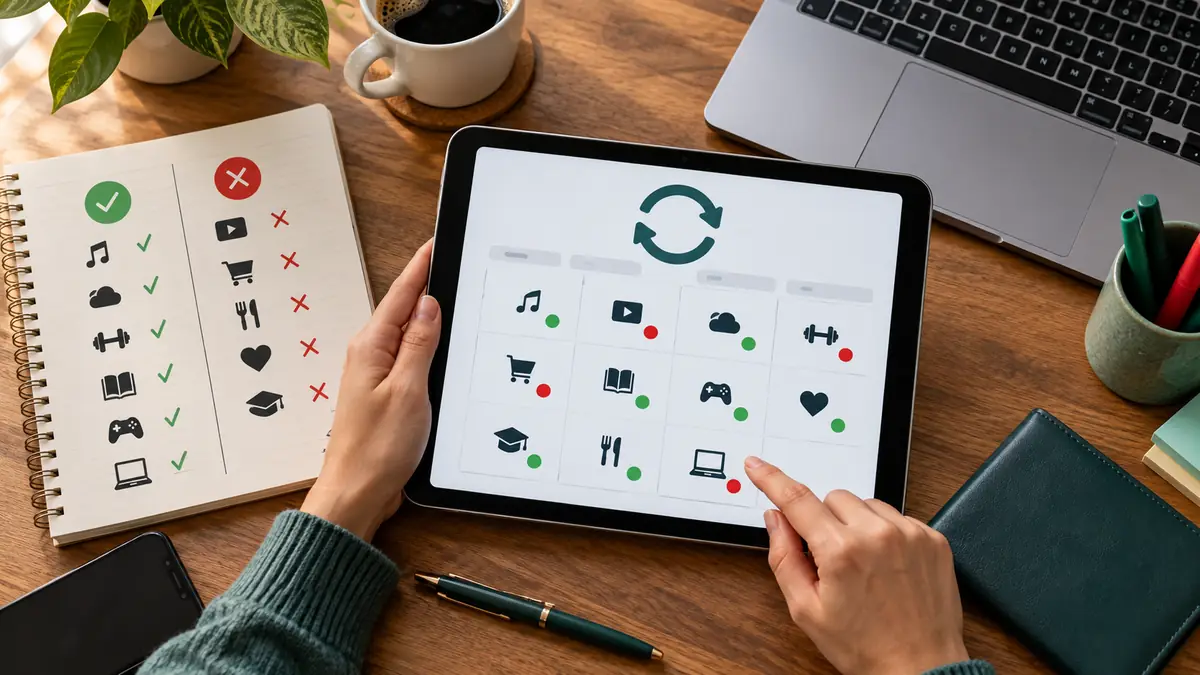
Check your bank or UPI app’s recurring payments list every few months rather than relying on memory. Most banking apps now show a dedicated view of standing instructions and auto-debits, which is often the fastest way to spot a subscription you forgot.
If cancellation is deliberately buried, use your bank’s dispute process. Under Reserve Bank of India e-mandate rules, banks are required to let you cancel a recurring auto-debit directly, even if the merchant’s own app makes it difficult. You do not need the company’s cooperation to stop the charge.
Before starting any new free trial, search briefly for how other users describe the cancellation process. A trial that looks identical to every other trial on the surface can hide a wildly different exit experience underneath, and five minutes of research now saves months of unwanted billing later.
This same design logic shows up in manufactured urgency and artificial scarcity tricks, where the goal is also to get you to act before you think it through. And once a subscription becomes hard to leave, it often connects to BNPL shadow debt if you started paying for it in instalments.
These resources go deeper on this topic: the FTC’s click-to-cancel rule, the Consumer Financial Protection Bureau, and the Deceptive Design pattern library.
Frequently Asked Questions
Can I cancel a subscription directly through my bank instead of the app?
Often, yes. In India, RBI e-mandate rules give you the right to cancel a standing auto-debit through your bank, independent of how difficult the merchant’s own cancellation flow is. Contact your bank or check your UPI app’s mandate management screen.
Why did I get charged again after I thought I cancelled?
Some cancellation flows only pause the account rather than terminate the billing mandate, or require a final confirmation step that was easy to miss. Always request written confirmation of cancellation and check your next statement to be sure.
These subscription traps rely on one simple fact: leaving takes more effort than staying, and most people run out of patience before the company runs out of screens.
Pick one subscription today, the one you are least sure you still use, and actually go through the cancellation flow to the end, rather than closing the tab the moment it starts asking why, since that question screen is deliberately designed to make finishing feel harder than the process actually is, and the discomfort itself is the last remaining obstacle.
If this was useful, share it with someone who needs to know.