

Fake credentials and impersonation make it possible for someone to reach out with advice that sounds specific, confident, and completely credible, a doctor recommending a treatment, a lawyer offering to settle a dispute, a financial advisor promising to protect your savings.
None of it requires the person on the other end to hold a single genuine qualification.
The advice sounds right. The credentials look right. And the entire thing was fabricated in less time than it took you to read the first message.
This post covers how fake credentials and professional titles are actually constructed online, how doctors, lawyers, and financial advisors specifically get impersonated, how spoofed caller ID and fake verification badges work, and exactly how to verify any professional before acting on their advice. It is part of our wider guide to how fake messages, emails and calls deceive people every day.
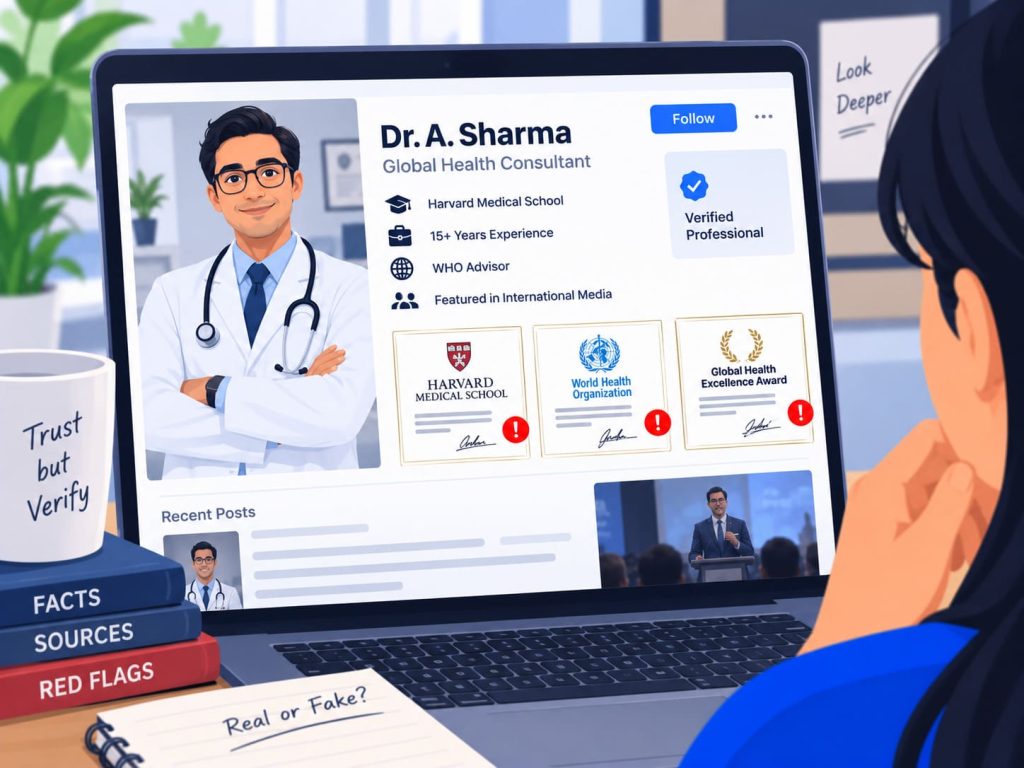
How Are Fake Credentials and Professional Titles Actually Constructed Online?
A professional title, a certification badge, and a polished bio can all be assembled from templates and stock photography within an hour, no genuine qualification required at any point in the process.
Attacks on M&S, Co-op, and Harrods in 2025, attributed to the group known as Scattered Spider, succeeded through exactly this kind of impersonation, callers convincing staff to reset credentials, rather than through any technical hacking at all. The FBI’s breakdown of business email compromise covers the workplace version of this same tactic in detail.
The group’s members were reportedly in their late teens and early twenties, operating from the US and UK, a detail that shows fake credentials and impersonation require no advanced technical skill, only confidence and a convincing script.
Business email compromise built on exactly this kind of fabricated authority cost businesses 2.8 billion dollars in 2024, according to the FBI’s Business Email Compromise awareness page, much of it built on a fabricated executive or vendor identity rather than any actual system breach.
Indian businesses face the same version constantly too, a fabricated “vendor” or “CEO” email or WhatsApp message requesting an urgent payment change, relying entirely on a fabricated title rather than any technical compromise of the company’s systems.
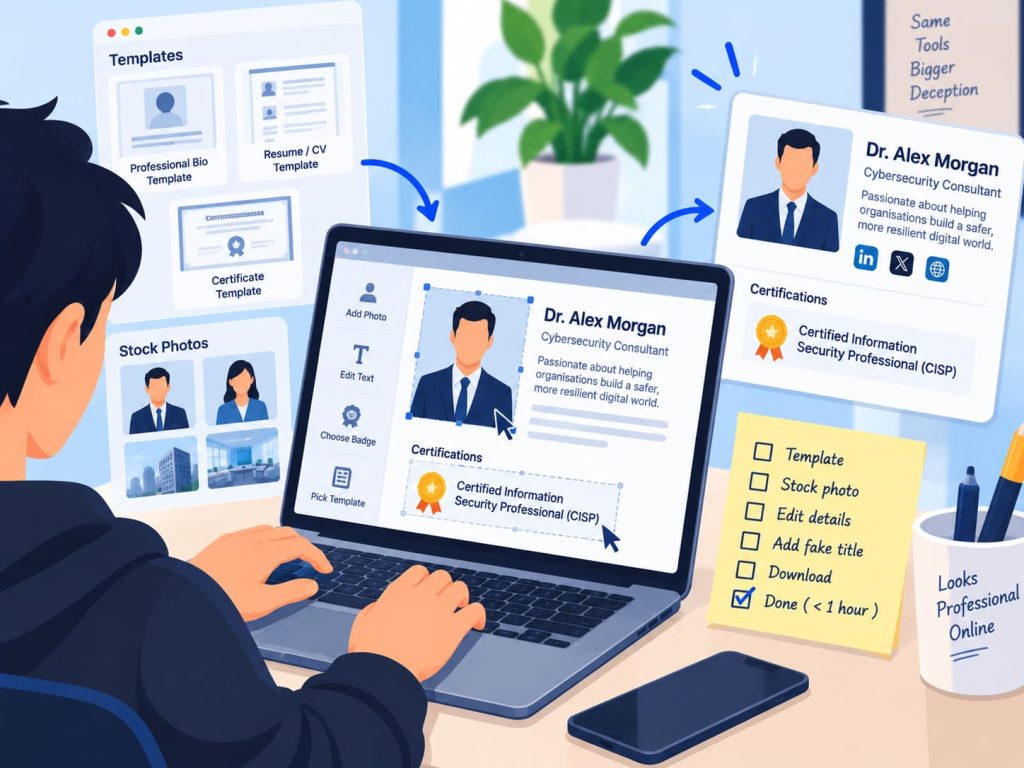
How Are Doctors, Lawyers and Financial Advisors Specifically Impersonated?
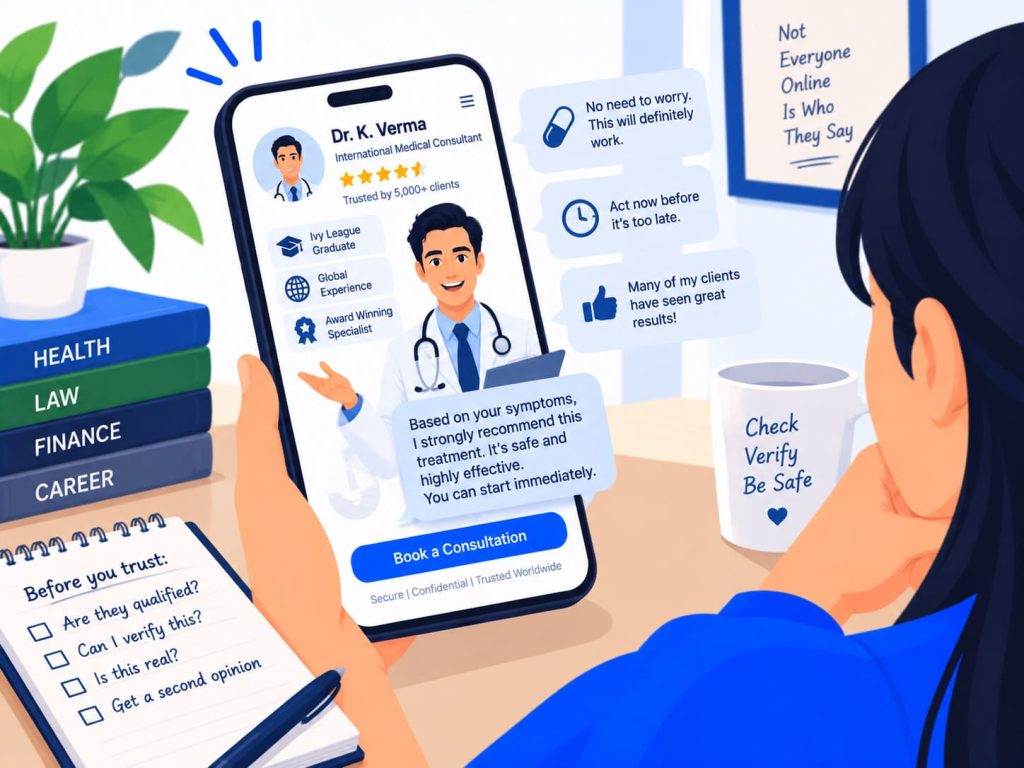
A fake doctor’s advice often arrives with specific, confident medical language, enough to sound credible to someone who is worried and searching for reassurance rather than a second opinion.
A fake lawyer typically appears at a moment of genuine legal stress, offering to resolve a dispute or a debt quickly, in exchange for a fee that a real lawyer would never request in quite the same way.
A fake financial advisor leans on authority and urgency together, a pattern that connects closely to the wider dynamic covered in our guide to why people obey scammers pretending to be authorities, since a confident, official-sounding tone does much of the persuasive work on its own.
Job scams frequently borrow this exact playbook too, a fabricated recruiter or HR credential used to look legitimate long enough to collect a fee, a pattern covered in more depth in our guide to how fake job offers steal your money and identity.
Fake credentials and impersonation tend to work best on someone already under pressure, worried about a diagnosis, a legal deadline, or a shrinking window to protect their savings, since urgency leaves little room for the pause a careful check would normally take.
How Do Spoofed Caller ID and Fake Verification Badges Work?
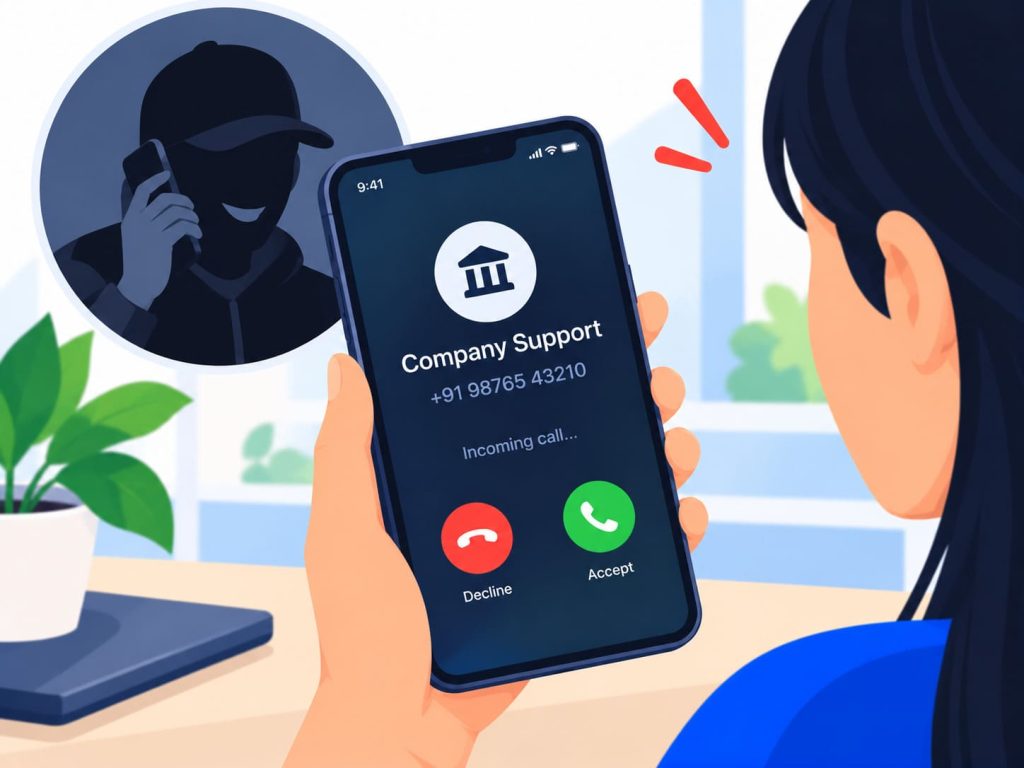
Caller ID spoofing displays a name or number chosen entirely by the caller, which means a screen showing a trusted contact or an official-looking number proves nothing about who is actually calling.
Verification badges follow a similar trick on some platforms, a checkmark or “verified” label that was never actually reviewed or issued by anyone with real authority to confirm the account behind it.
Some platforms sell verification as a paid subscription feature rather than granting it after any genuine identity check, which means the badge alone confirms almost nothing about who is actually behind an account.
This mirrors the deeper trust-building pattern covered in our guide to how scammers build trust before they strike, where a small, official-looking signal does a disproportionate amount of work in convincing someone to lower their guard.
Neither a familiar caller ID nor a verification badge should ever replace an independent check, since both can be faked by anyone willing to spend a small amount of time setting them up.
A caller who grows impatient or defensive when asked to verify their identity through an official channel is telling you something important on its own, since a genuine professional rarely objects to a reasonable check.
How Do You Verify Any Professional’s Credentials Before Acting on Their Advice?
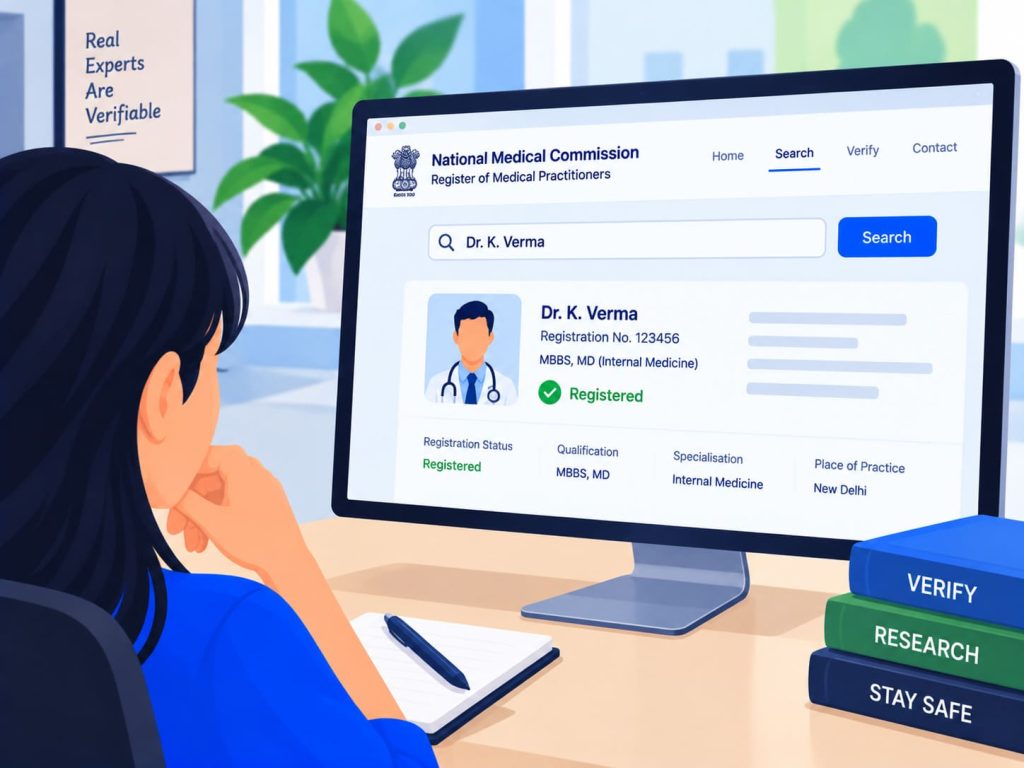
A fabricated credential can be built in minutes. A genuine professional can usually be verified in about the same amount of time, through the licensing body or organisation’s own official contact details rather than the number the caller provides.
Treat that rough equivalence as the whole point: the time it takes to fabricate something roughly matches the time it takes to check it, so there is rarely a good reason to skip the check.
For doctors, checking registration with the relevant state medical council settles the question directly and quickly, and a genuine doctor’s registration number can be verified independently online in a couple of minutes without much effort at all.
For lawyers, checking enrolment with the Bar Council confirms whether someone is actually licensed to practise, rather than simply claiming to be.
A genuine professional in any of these fields will never object to being verified this way, and most will happily wait while you check, since transparency of this kind costs a genuine expert nothing at all.
For financial advisors, checking registration with SEBI’s list of registered investment advisors before acting on any financial recommendation removes almost all of the risk this particular scam depends on entirely.
If you have already acted on advice from someone you now believe was fake, report it as soon as possible through India’s National Cyber Crime Reporting Portal or the 1930 helpline.
Frequently Asked Questions
How can I check if a financial advisor is actually registered in India?
Check the advisor’s name directly against SEBI’s public list of registered investment advisors before acting on any recommendation. A genuine advisor will have a verifiable registration number.
Can a scammer really fake a “verified” badge on social media?
Yes, some verification badges can be obtained or faked without genuine review, so a badge alone is not proof of a real, credentialed professional behind the account.
What should I do if I already acted on advice from someone I now think was fake?
Report it through cybercrime.gov.in or the 1930 helpline, and if money changed hands, contact your bank immediately to flag the transaction.
What This Comes Down To
Fake credentials and impersonation work because a confident title and a polished profile are far easier to fabricate today than most people assume, and far harder to spot on sight than an old-fashioned, typo-filled scam ever was.
The one habit that protects you: verify any professional independently through their official licensing body before acting on advice, no matter how credible the credentials look.
If this was useful, share it with someone who needs to know.


2 comments
Comments are closed.