
You open an app to check one notification, and twenty minutes later you feel worse than when you started, though nothing bad actually happened to you in that time. FOMO and social comparison, working together, are exactly what produced that feeling.
FOMO and social comparison online are not simply a side effect of being connected to more people. They are a predictable outcome of a feed built specifically to surface the version of everyone’s life most likely to make you keep scrolling.
What you see is not a random sample of other people’s lives. It is a highlight reel, filtered and re-filtered by an algorithm that has learned exactly which kind of content keeps you looking longer.
This post explains how curated feeds distort your sense of what is normal, why status anxiety intensifies online specifically, and how to reset your baseline without deleting every app you use. For the full section overview, see how platforms exploit your brain.

Why Does Everyone Else’s Life Look Better Than Yours Online?
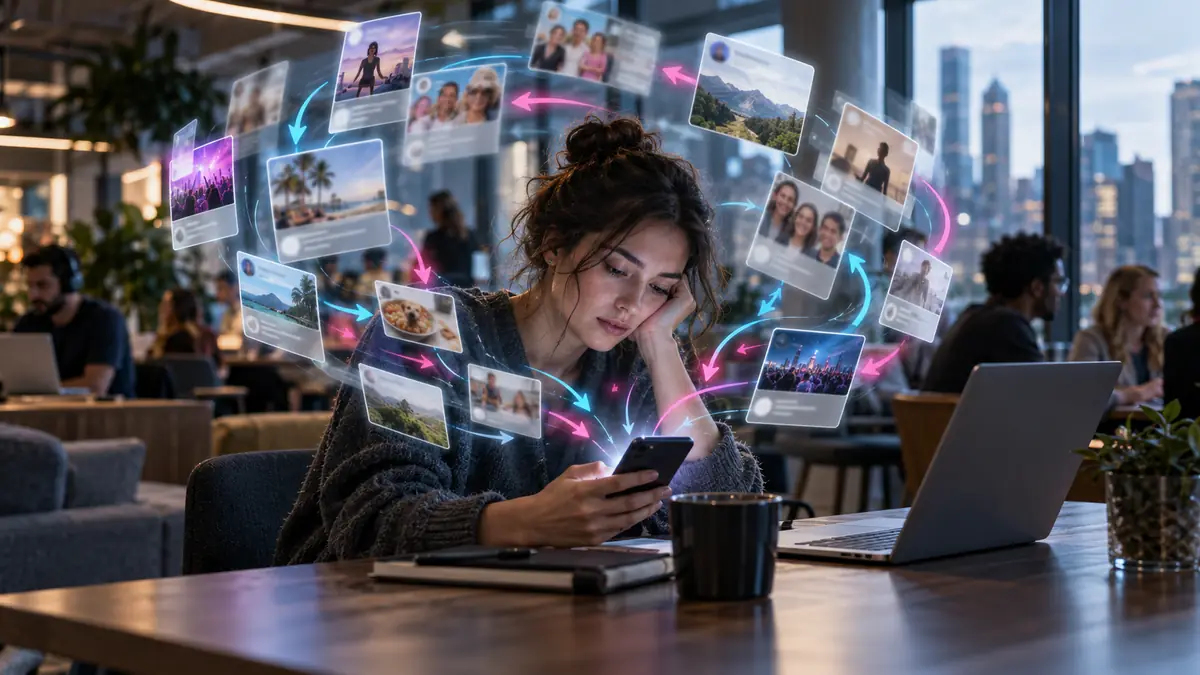
People overwhelmingly post the best moment of their week, not the average one, and platforms then further select which of those already-curated moments get shown to you, favouring whatever historically produces the strongest engagement.
The result is a feed built from two layers of filtering stacked on top of each other, first by the person posting, then by the algorithm distributing it, so what reaches you is closer to a highlight reel of highlight reels than to anyone’s actual daily experience.
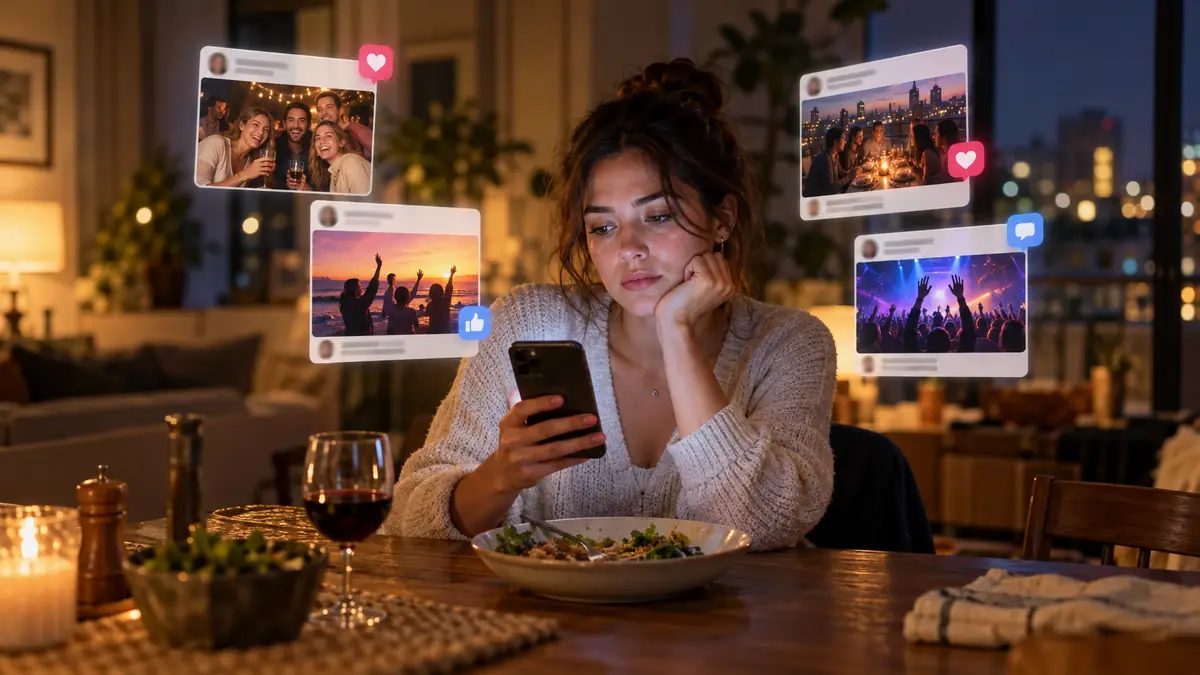
Comparing your unfiltered Tuesday, the traffic, the pending deadline, the ordinary dinner, against someone else’s filtered best moment is not a fair comparison, yet it is the comparison your brain makes automatically dozens of times a day without you choosing to make it.
This is worth naming explicitly because it changes how you interpret the feeling that follows. The gap you notice between your life and theirs is not evidence that your life is actually falling short. It is evidence that you are comparing two categories of content that were never comparable in the first place.
Why Does Status Anxiety Feel So Much Stronger Online Specifically?
Offline, your reference group for comparison was naturally limited to people you actually knew, neighbours, classmates, coworkers. Online, that reference group expands to include the most successful, most photogenic, most financially visible people on the entire platform, and your brain does not automatically discount for that difference in scale.
This expanded reference group is a big part of why status anxiety has intensified alongside social media use specifically. You are no longer comparing yourself to people genuinely similar to you. You are comparing yourself to a curated, global set of outliers, and measuring your own ordinary life against theirs by default.
This connects directly to social proof and why we copy what others appear to be doing, since status anxiety and social proof frequently reinforce each other, each new comparison making the next one feel more urgent to keep pace with.
Visible metrics compound the effect further. Follower counts, like counts, and public engagement numbers turn status into something quantified and constantly updated, rather than something felt privately and occasionally, which is a genuinely new condition that earlier generations never had to manage on a daily basis.
Financial comparison has become a specific, intensified strand of this same pattern in India, where posts showing new purchases, holidays, or lifestyle upgrades circulate alongside a wider culture of visible consumption on festivals and family occasions. This visible spending pressure has been linked by financial counsellors to impulsive borrowing, including the buy-now-pay-later products covered in how BNPL apps are designed to create debt, since the comparison itself can push a purchase decision that would not otherwise have felt urgent.

How Does FOMO Get Deliberately Engineered Into App Design?
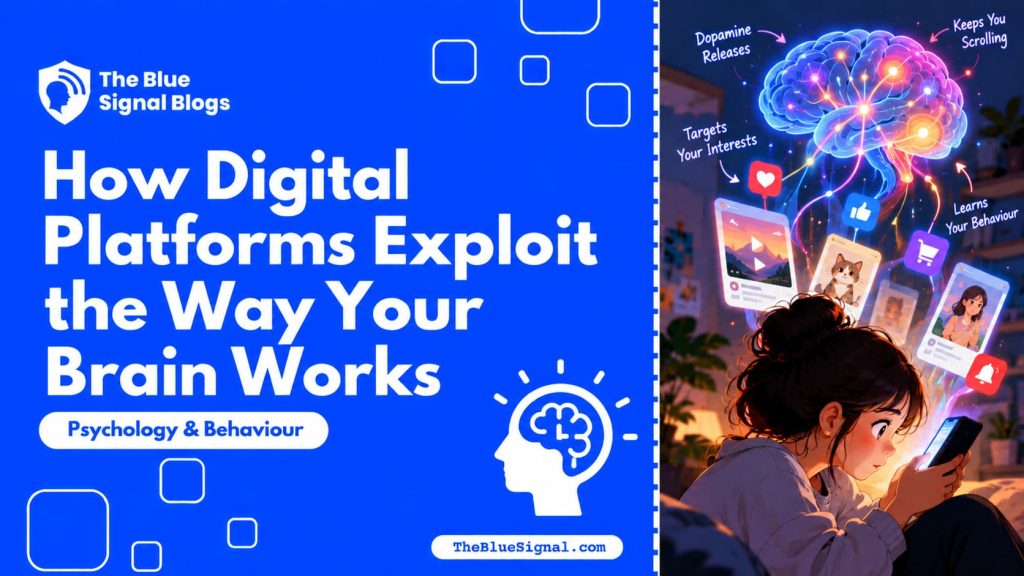
Features like disappearing stories, live notifications, and “seen by” indicators are not incidental design choices. Each one is built specifically to create a small, urgent sense that something is happening right now that you will miss if you do not check immediately.
This overlaps closely with how infinite scroll and notifications are engineered to keep you hooked, since FOMO is one of the specific emotional levers that infinite-scroll design relies on to keep sessions running longer than intended.
Streaks, limited-time content, and algorithmically boosted “trending now” labels all serve the same underlying function, manufacturing urgency around content that, on any objective measure, will still exist and still matter just as much an hour from now.
None of this is accidental or incidental to the product. Engagement metrics are the business model for most free platforms, and a user who feels a small pull of urgency dozens of times a day generates measurably more sessions than one who checks in calmly once or twice, which is precisely why these features are tested, kept, and refined rather than removed.
How Do You Reset Your Baseline Without Quitting Every App?
Notice the physical sensation that follows a scrolling session, deflated, restless, anxious, and treat it as useful data about that specific app or specific accounts, rather than as a fact about your actual life.
Curate deliberately who you follow, since the comparison group itself is the actual lever here. Muting or unfollowing accounts that consistently trigger comparison, without necessarily unfollowing the person entirely, is often enough to change how a feed feels within days.
Remind yourself specifically, and regularly, that what you are seeing is a curated highlight, filtered twice over, not a representative sample of anyone’s actual daily life, including the people whose posts feel the most enviable.
Set specific, low-friction check-in points rather than an open-ended browsing habit, a fixed time in the evening rather than any spare moment during the day, since the goal is not to eliminate use entirely but to shift it from reflexive to deliberate. This connects to digital wellbeing and the human cost of always being switched on, which covers this shift in more depth.
Worth reading further: the American Psychological Association, Common Sense Media, and the Center for Humane Technology.

Frequently Asked Questions
Is FOMO from social media a real psychological effect or just a buzzword?
It is a documented psychological response, not just marketing language. Research on social comparison theory, applied specifically to curated online content, consistently links heavy comparison-driven browsing to lower mood and higher anxiety afterward.
Does unfollowing people actually help, or does the feeling just move elsewhere?
Curating your feed measurably changes what you are shown, since algorithms adjust based on engagement with remaining accounts. It will not eliminate comparison entirely, but narrowing the comparison group consistently reduces its intensity.
FOMO and social comparison from a curated feed are not a fair measure of your actual life. They are the output of a system built to hold your attention, using the version of other people’s lives most likely to do exactly that.
Notice how FOMO and social comparison make you feel after your next scrolling session, and treat that feeling as information worth acting on rather than something to simply scroll past and forget the way the feed itself wants you to.
If this was useful, share it with someone who needs to know.