

When did you last set up a new app and actually read every default setting before tapping through? Most people never do, and platforms design their defaults knowing exactly that. Default settings data sharing is the quiet result, repeated across nearly every app you have ever installed.
Every app you use is operating on choices made on your behalf, in the company’s interest rather than yours, long before you touched a single toggle.
This is default settings data sharing, and it is one of the quietest and most effective dark patterns because it requires nothing from you at all. You do not have to click “yes.” You only have to not click “no,” and most people, most of the time, never do.
This post explains why the default matters so much more than it should, how opt-out designs work against you, and how to audit the defaults already active on your most-used apps. For the full section overview, see the full guide to dark patterns.
Why Does the Default Option Matter So Much?
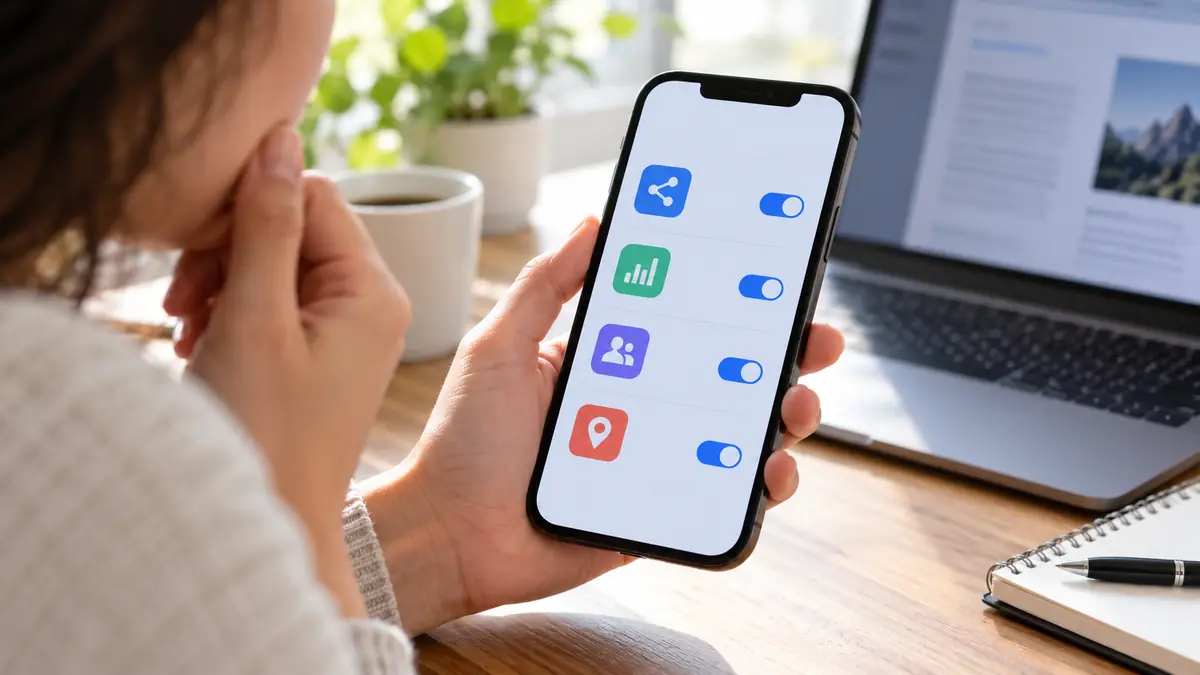
Behavioural research consistently shows that most people keep whatever option is pre-selected, regardless of whether they would have chosen it deliberately. Changing a default requires a conscious action. Keeping it requires nothing.
Companies exploit this asymmetry directly. If sharing your data with third parties is the default, the vast majority of users will share their data with third parties, not because they decided to, but because deciding not to would have required active effort they never got around to spending.
Opt-out design flips the natural order of consent. Instead of asking “may we collect this,” the interface assumes yes and asks you to actively find and disable the setting if you disagree. The FTC’s research into social media surveillance found that major platforms even collected data on people who had never created an account at all, through tracking pixels embedded on unrelated third-party websites, entirely without any opt-in step.
This is sometimes described inside the industry as “friction engineering,” deliberately calibrating exactly how many steps, screens, and taps separate a user from changing a default, since research on user drop-off shows that even two or three additional steps meaningfully reduce how many people follow through on a setting change they genuinely wanted to make.
Default settings also shape behaviour through a subtler route than pure inertia: they signal what is “normal.” A new user assumes a pre-enabled setting reflects what most people want, simply because it is already active, which quietly normalises data sharing as the expected baseline rather than a deliberate choice anyone actually made.
Why Do Companies Rely on Defaults Instead of Asking Directly?
Asking directly risks a “no.” A default risks nothing, because most people simply never revisit a setting once it is out of sight.
78% of social media users are unaware that platforms sell their data to third-party data brokers, even as fifteen to twenty personal data points are now shared per average user, two to three times more than five years ago, according to WorldMetrics’ 2026 privacy research. That gap between what people assume and what is actually happening is largely sustained by defaults nobody ever consciously agreed to. EFF’s Privacy Badger is a free tool that automatically blocks the invisible trackers these defaults enable.
This connects directly to consent manipulation and privacy tricks, where the same asymmetry appears in a different form. A pre-checked box inside a cookie preference screen is a default. An opt-out data-sharing toggle buried in account settings is the same trick applied somewhere you are even less likely to look.
Regulators have begun pushing back on this specifically. Under GDPR and similar frameworks, “privacy by default” is meant to require that the most protective setting be the starting point, not something a user has to locate and activate themselves, though enforcement varies considerably between regions and platforms continue testing how far they can push the boundary before it draws a formal complaint.
India’s DPDP Act moves in a similar direction, requiring that consent for data processing be specific and genuinely informed rather than assumed through an unread default, though the practical shift from that legal requirement to what defaults actually look like across popular Indian apps will take time to become fully visible to ordinary users.
Third-party SDKs embedded inside an app carry their own defaults, often invisible to the app’s own developers let alone the person using it. An analytics or advertising SDK bundled into a popular app can arrive already configured to share data by default, a setting nobody explicitly chose on either side of the relationship, which is part of why even a careful audit of an app’s own settings screen rarely tells the full story.
How Do You Spot a Default That Was Set Against Your Interest?
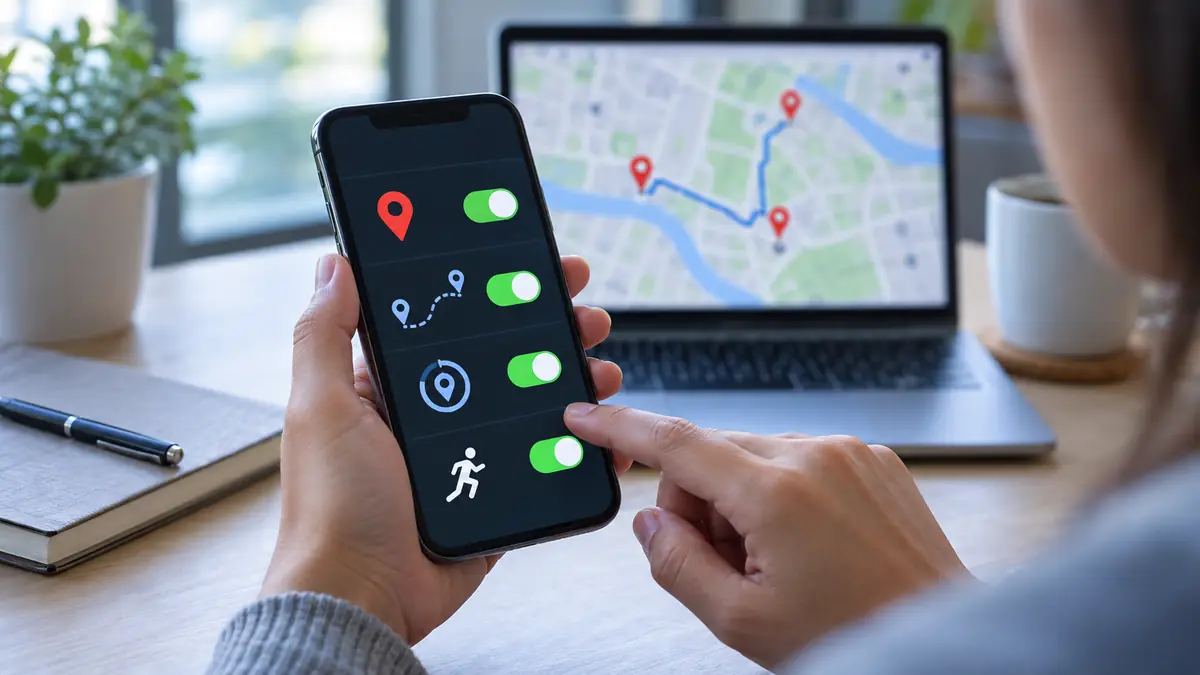
Check whether a setting was already switched on the first time you opened it, before you had made any choice at all. If so, someone else made that choice for you.
Look for settings where turning something on requires no interaction, but turning it off requires navigating to a separate screen entirely, often one not linked from the main settings page.
Pay attention to language that frames the default as normal and the alternative as unusual: “most users keep this on” is a nudge toward staying with whatever was pre-selected, regardless of whether it actually serves most users well.
Watch also for defaults that reset themselves after an app update, a change of terms, or a new feature rollout, since a setting you deliberately turned off can quietly revert to the company-preferred default without any clear notification that it happened. This is not always deliberate manipulation, sometimes it is a genuine software oversight, but the effect on your privacy is identical either way, which is why a periodic recheck matters more than a one-time fix.
What Can You Do to Audit Your Own Defaults?
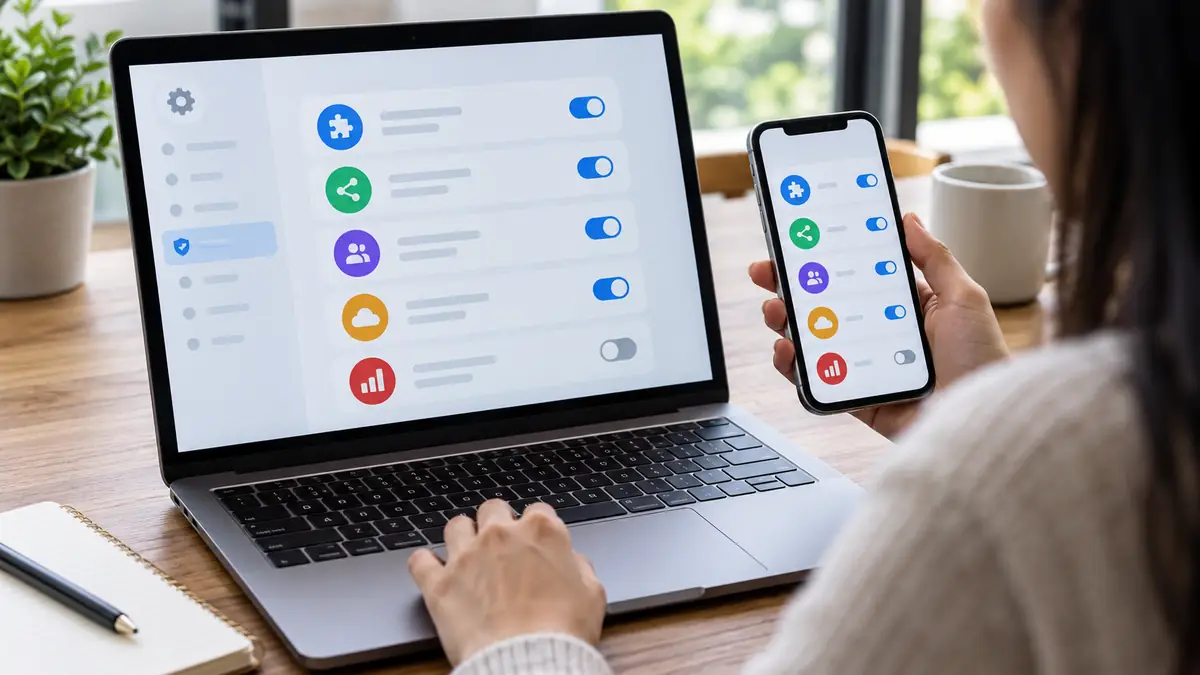
Go through the settings of your three most-used apps this week, not to change everything, but to see what was already switched on without your active agreement. Most people are surprised by what they find.
Pay particular attention to data-sharing, ad personalisation, and location settings. These three categories are consistently defaulted to the option that benefits the company, across nearly every major platform.
Once you find a default you did not choose, change it and note where it lives. The same setting tends to reset or reappear after major app updates, so a periodic recheck is worth building into a routine alongside finding the privacy settings apps bury deliberately.
The privacy settings worth changing on every platform are a practical checklist to start from, since most of the highest-impact changes take less than a minute once you know where to look.

Worth reading further: EFF’s Surveillance Self-Defense guide, the UK Information Commissioner’s Office, and the FTC’s consumer protection guidance.
Default settings data sharing is a choice someone else made on your behalf, and it was made in their interest, not yours.
Open one app today and check three default settings data sharing points you have never touched. You will very likely find at least one that was never really your decision.
If this was useful, share it with someone who needs to know.


1 comment
Comments are closed.