

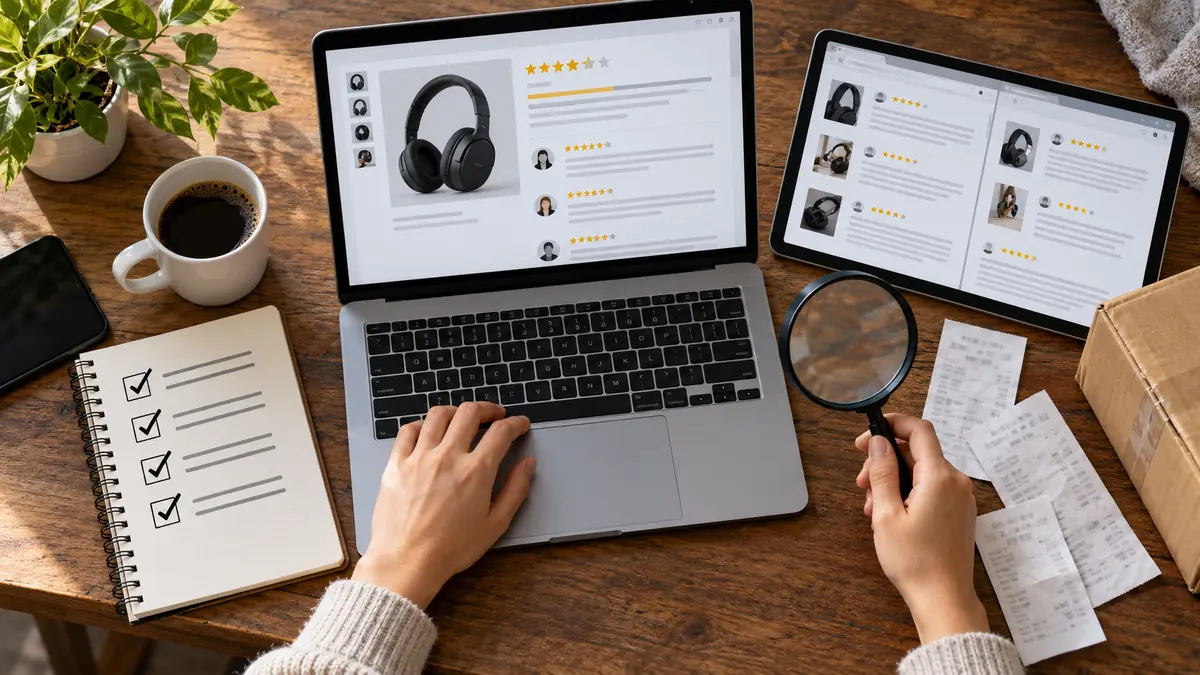
You are choosing between two nearly identical products. One has 4.8 stars from 3,000 reviews. You pick it without a second thought. This is fake reviews social proof at work, and it is worth a second look before you trust the number at the top.
You never check whether any of those 3,000 people actually exist.
Fake reviews social proof is one of the oldest tricks in commerce, dressed up in a modern interface. A star rating feels objective, almost mathematical. In reality, a meaningful share of the reviews behind it may never have come from a real customer at all.
This post explains how fake reviews and manufactured credibility are produced at scale, why star ratings still work on us even when we half-suspect this, and how to actually read reviews in a way that protects you. This connects to the broader guide on the full guide to dark patterns.
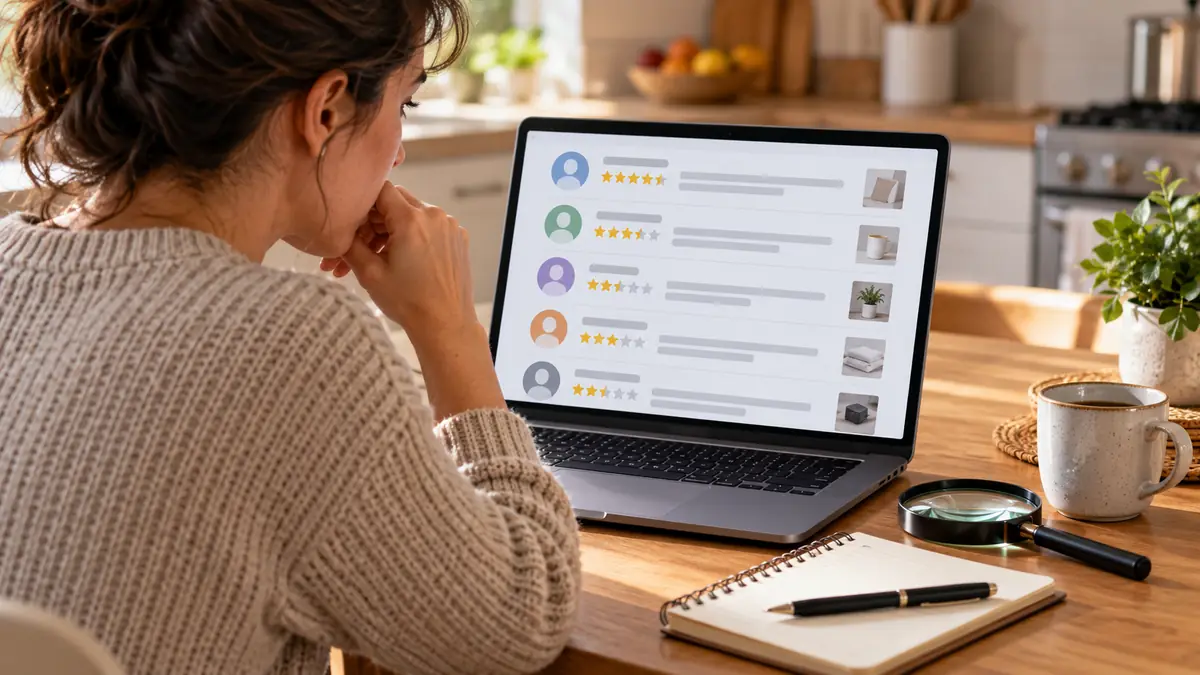
How Are Fake Reviews Actually Manufactured?
Some fake reviews come from paid review farms, groups of people compensated to leave five-star ratings on products they have never used, often coordinated through private messaging groups that assign specific products and review timing.
Bot accounts generate a second wave. These are automated profiles that post generic, positive-sounding text at scale, sometimes hundreds of nearly identical reviews across dozens of unrelated products in a single day.
Verification badges and trust signals compound the problem. A “Verified Purchase” label only confirms that a transaction happened, not that the review is honest, and some sellers deliberately send free or heavily discounted products specifically in exchange for a five-star review that then carries that verified label.
The US Federal Trade Commission’s fake reviews rule, which took effect in October 2024, led to its first enforcement actions in 2025, targeting companies that had paid for manufactured five-star reviews on major platforms including Amazon and Google.
A more subtle variant involves “review gating,” where a seller only invites customers who indicated satisfaction through a private pre-survey to leave a public review, quietly filtering out dissatisfied buyers before they ever reach the platform’s public rating system. This practice sits in a grey area many platforms now explicitly prohibit, precisely because it produces a technically genuine but systematically skewed set of reviews.
Old reviews carried forward onto a redesigned or rebranded product add a final, less obvious version of the same distortion. A listing can inherit years of accumulated five-star ratings from an entirely different, discontinued item, simply because the seller reused the same product page rather than creating a new one, leaving the displayed average almost entirely disconnected from the item actually being sold today.
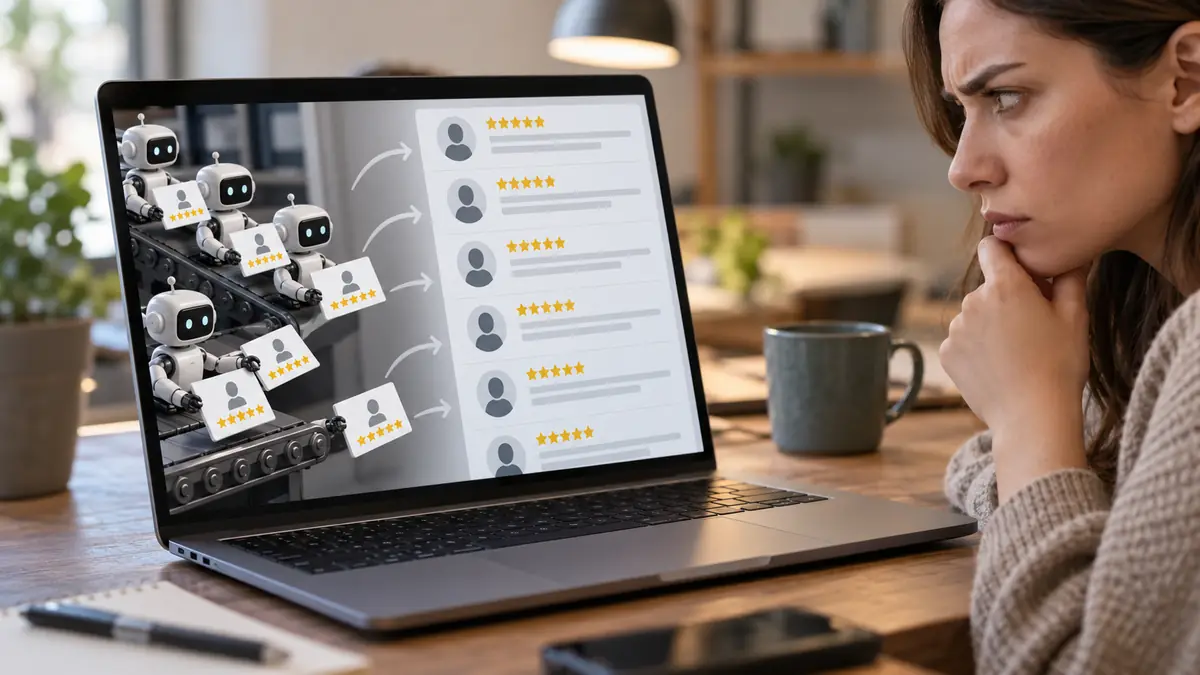
Why Do Star Ratings Still Work on Us Even When We Suspect Fakes?
Social proof is a deep, largely automatic shortcut. When many other people appear to have made a choice and approved of it, it feels safer to make the same choice, even without examining the evidence closely.
A high star count also short-circuits the effort of individual research. Reading each review, checking for patterns, comparing across platforms, takes real time. A single 4.8 number promises to have already done that work for you, which is exactly why it is worth being sceptical of.
An estimated 30 to 40% of online reviews on major shopping platforms are fake or incentivised, according to research cited in the FTC’s own rulemaking record. That means a meaningful share of what shapes purchase decisions across the internet was manufactured specifically to shape them.
This same shortcut extends well beyond shopping. Follower counts, like totals, and “trending” labels all rely on the identical psychological mechanism, treating a visible quantity as a stand-in for genuine quality or popularity, which is precisely why manufactured engagement has become valuable enough to buy across nearly every platform that displays a public number.
The specific number matters less than people assume, too. A jump from a 4.2 to a 4.8 rating feels significant, but research on how people actually process star ratings shows most buyers cannot reliably distinguish between anything above roughly 4.0, treating the entire upper range as simply “good” without weighing the precise decimal, which makes even a modest amount of review manipulation disproportionately effective at nudging a product across that threshold.
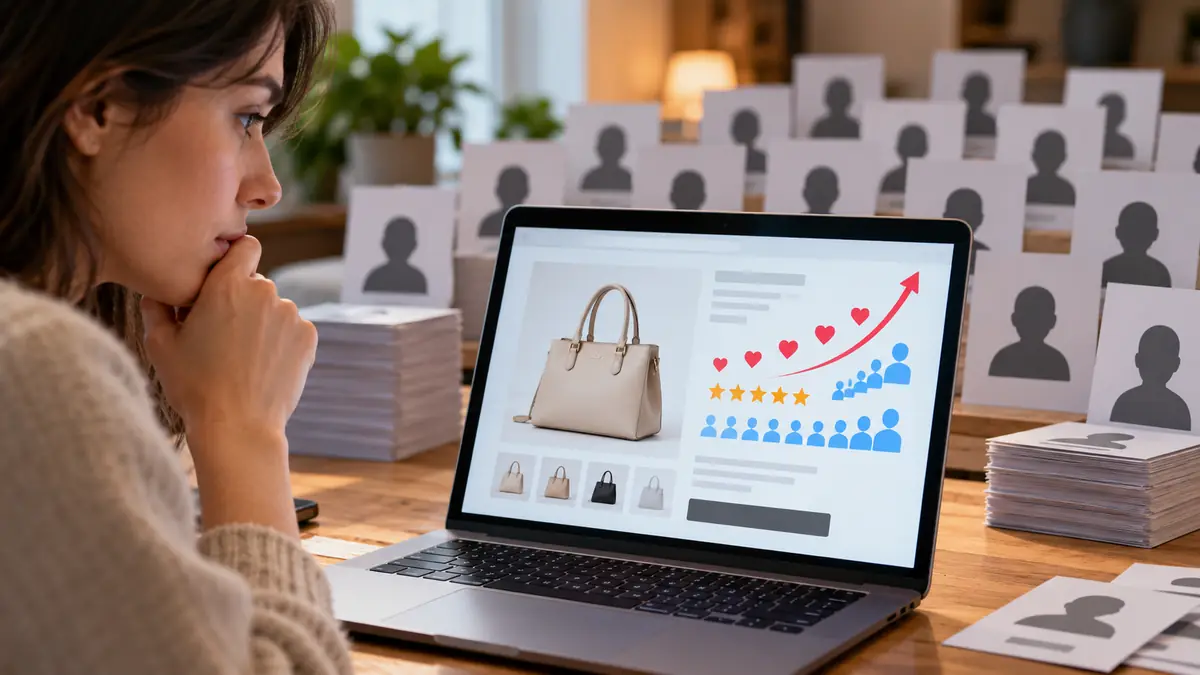
How Can You Actually Spot a Fake Review?
Look for reviews posted in tight clusters, dozens appearing within the same day or two, especially soon after a product launch when genuine usage would still be limited.
Read past the star rating into the text itself. Genuine reviews usually mention specific, sometimes negative, details, a delay in delivery, a texture that surprised them. Fake reviews often stay vague and uniformly positive, praising the product in general terms without describing an actual experience.
Check the reviewer’s history where the platform allows it. An account that has reviewed dozens of completely unrelated products, all five stars, all within a short window, is a strong signal of a paid or bot-driven pattern rather than a genuine customer.
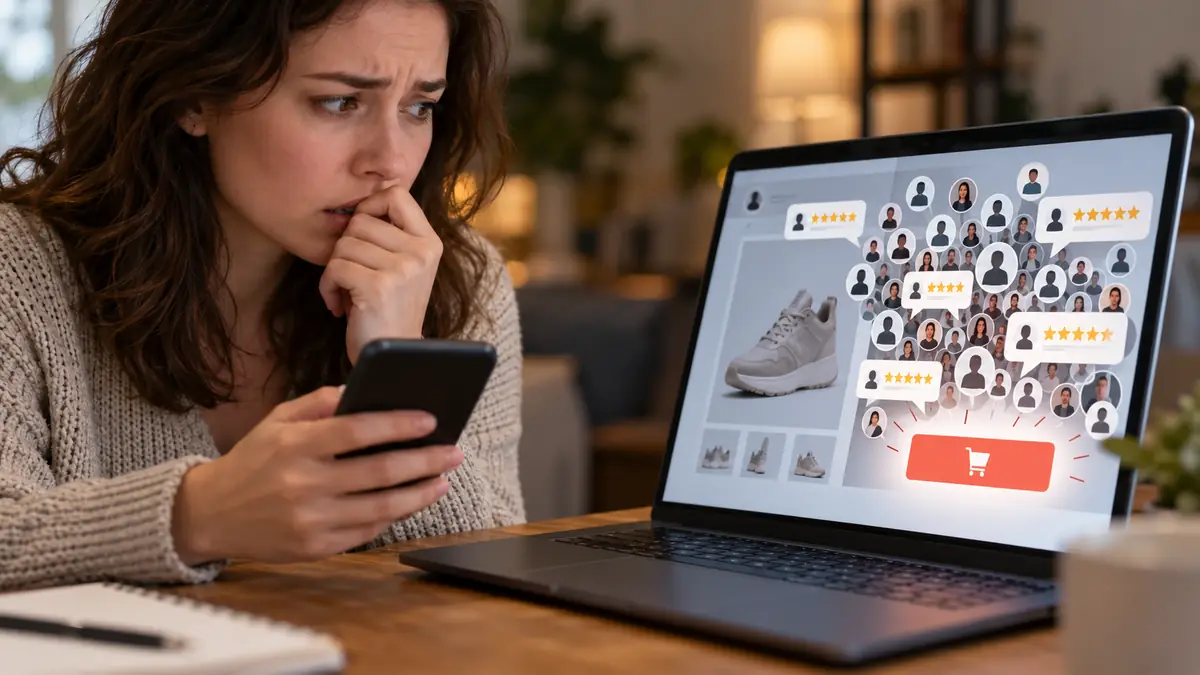
What Can You Do Before Trusting a Rating?
Use independent review-checking tools that analyse posting patterns and language for signs of manufactured activity, rather than relying on the platform’s own displayed average alone.
Sort by lowest rating first occasionally. Genuine criticism, even on a good product, tells you more about real-world use than another five-star review ever will.
Cross-check a product across two unrelated platforms. If the rating and review pattern differ significantly between them, that gap itself is informative, since manufactured reviews are often concentrated on the platform where a seller has the most control.
This same manufactured trust connects closely to how scammers build trust before they strike and to influencer recommendations that may or may not be genuinely paid. Report suspected fake reviews directly to the platform and, where relevant, to your national consumer protection body, since documented patterns are what drives enforcement action.
For more on this, see the FTC’s rule on fake reviews and testimonials, the Better Business Bureau, and the Deceptive Design pattern library.
Frequently Asked Questions
Does a “Verified Purchase” label mean a review is genuine?
It confirms a transaction occurred, nothing more. Sellers can send free or discounted products specifically to secure a verified five-star review, so the label reduces one kind of fraud without ruling out another.
Can I report a product I suspect has fake reviews?
Yes. Most major platforms have a reporting option on individual reviews, and consumer protection bodies including the FTC accept complaints about manufactured review patterns as part of their ongoing enforcement work.
Fake reviews social proof only works if you trust a five-star average without checking who is actually behind it, and a meaningful share of them, on many products, are not real.
Before your next purchase, look past fake reviews social proof and read ten actual reviews instead of trusting the number at the top. The pattern underneath tells you far more than the average ever will, and it takes only a few extra minutes to notice once you actually know what pattern you are looking for in the wording itself, rather than just the single star count sitting at the very top alone.
If this was useful, share it with someone who needs to know.


3 comments
Comments are closed.